Home · Day Trips
Verona sits on the main railway across northern Italy, within about an hour of Vicenza, Padua, Venice and Mantua, with Lake Garda and the Valpolicella hills a short bus ride away.
- 1
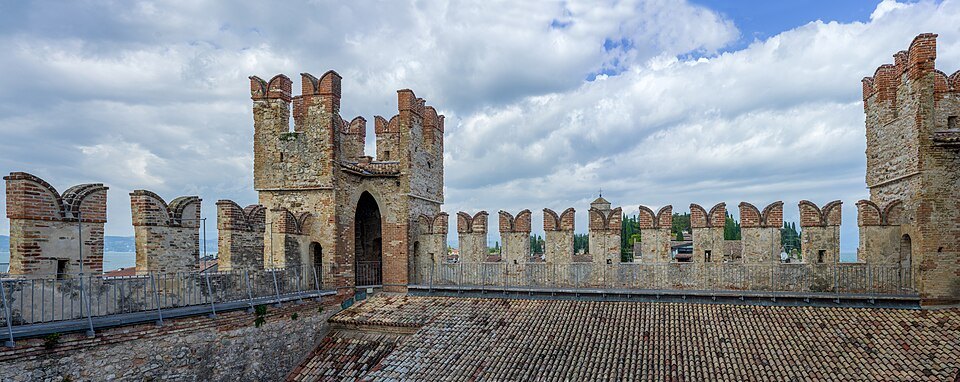
The walkway along the battlements of Sirmione's castleWolfgang Moroder, Wikimedia Commons, CC BY-SA 4.0 Sirmionebus · about an hourA peninsula town at the southern end of Lake Garda with a Scaliger harbor castle and the ruins of a vast Roman villa. There is no station, so take the direct bus, or a train to Peschiera or Desenzano and a local bus. - 2
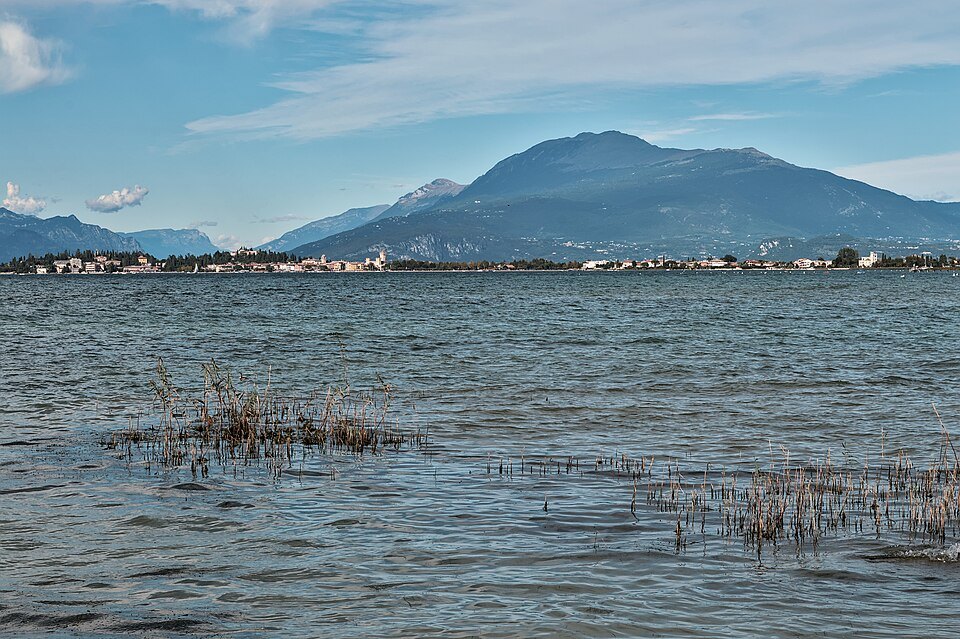
Sirmione's peninsula and Monte Baldo across the lakeFabio Pani, Wikimedia Commons, CC BY-SA 4.0 Garda and the eastern shorebus · a little over an hourA year-round bus runs from Verona through Lazise and Bardolino to Garda, below its old castle hill. Malcesine, farther north with its castle and Monte Baldo cable car, needs a change of bus at Garda. - 3
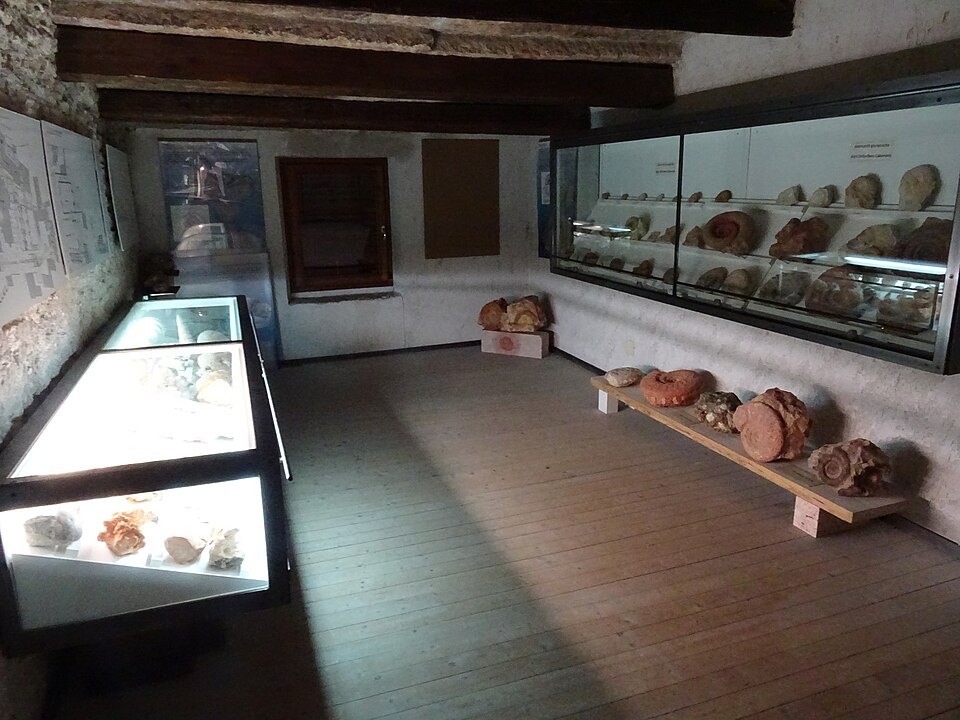
Display cases in the parish museum at San Giorgio di ValpolicellaSyrio, Wikimedia Commons, CC BY-SA 4.0 Valpolicellacar · about a quarter of an hour by car, longer by busThe wine hills north of the Adige where Amarone is made from dried grapes. Local buses reach the villages, but a car makes winery visits, arranged in advance, much simpler. - 4
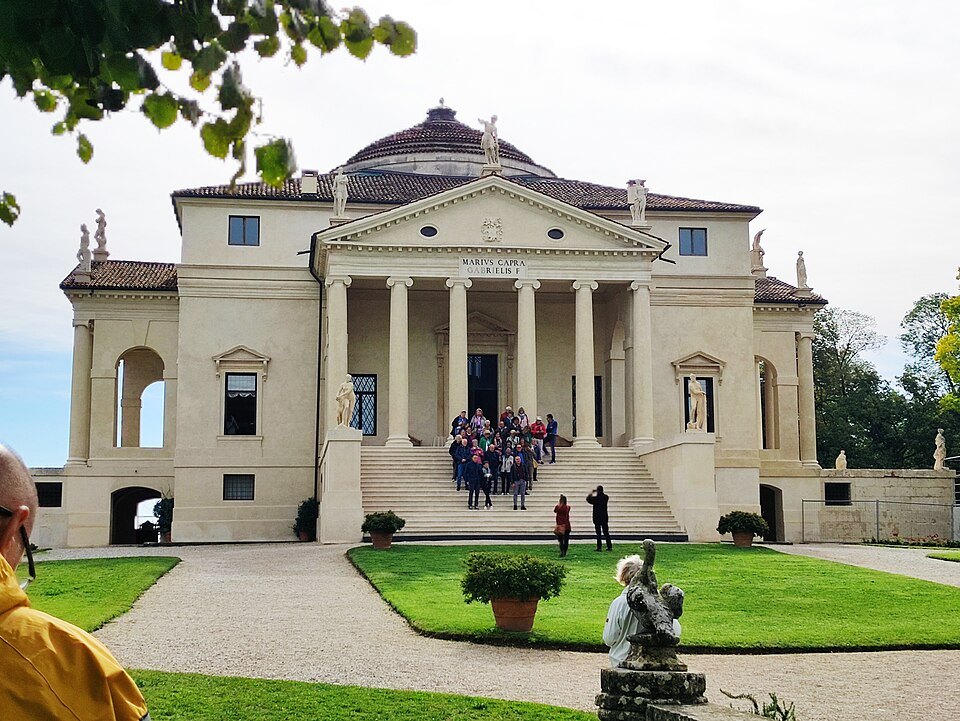
Palladio's Villa La Rotonda outside VicenzaPalickap, Wikimedia Commons, CC BY-SA 4.0 Vicenzatrain · under half an hour by fast trainThe city of Palladio, with the Basilica Palladiana and the Teatro Olimpico. A UNESCO site together with the Palladian villas of the Veneto. - 5
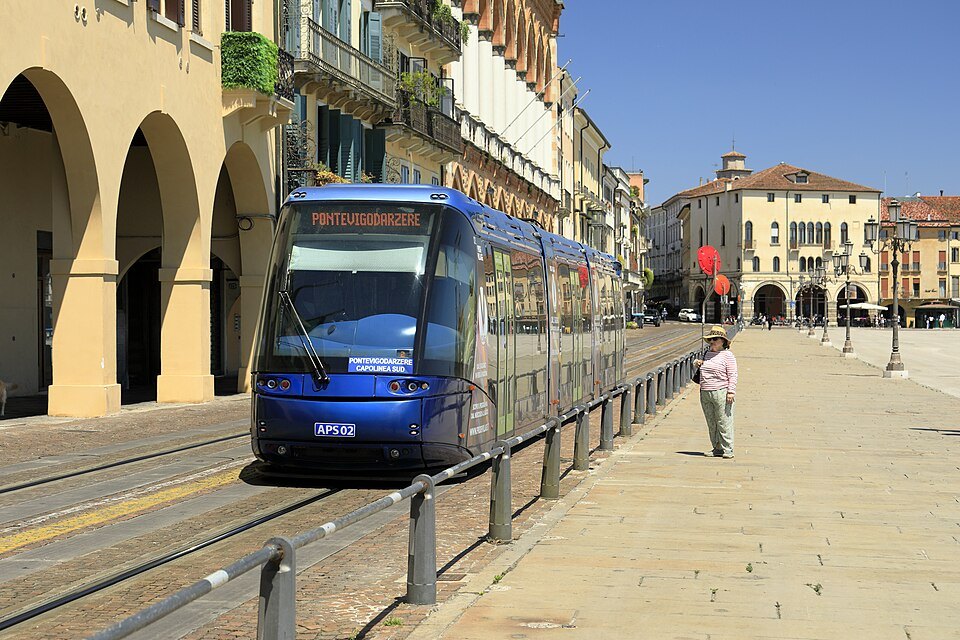
A tram in Padua by the arcades near Prato della ValleFalk2, Wikimedia Commons, CC BY-SA 4.0 Paduatrain · about three quarters of an hour by fast trainHome of Giotto's frescoes in the Scrovegni Chapel. Visits must be booked ahead and begin with a fifteen-minute wait in a climate-controlled room. - 6
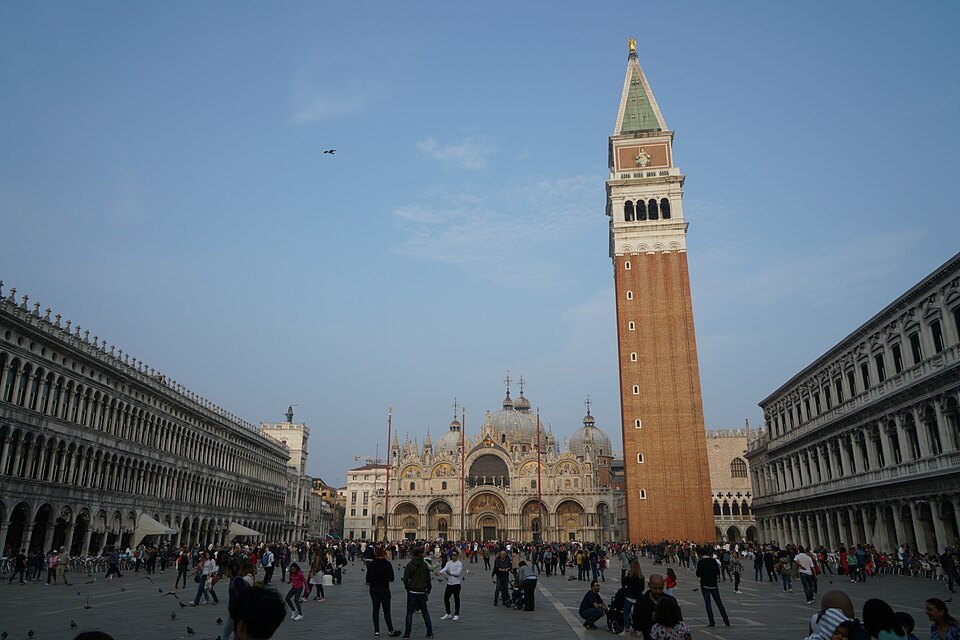
Piazza San Marco and its bell tower in VeniceRamagliolo9, Wikimedia Commons, CC BY-SA 4.0 Venicetrain · about an hour by fast trainFast trains stop at Mestre on the mainland and end at Santa Lucia in the historic city. Regional trains take longer. For Venice itself — the vaporetto, the walks and what charges visitors — see Access Venice. - 7
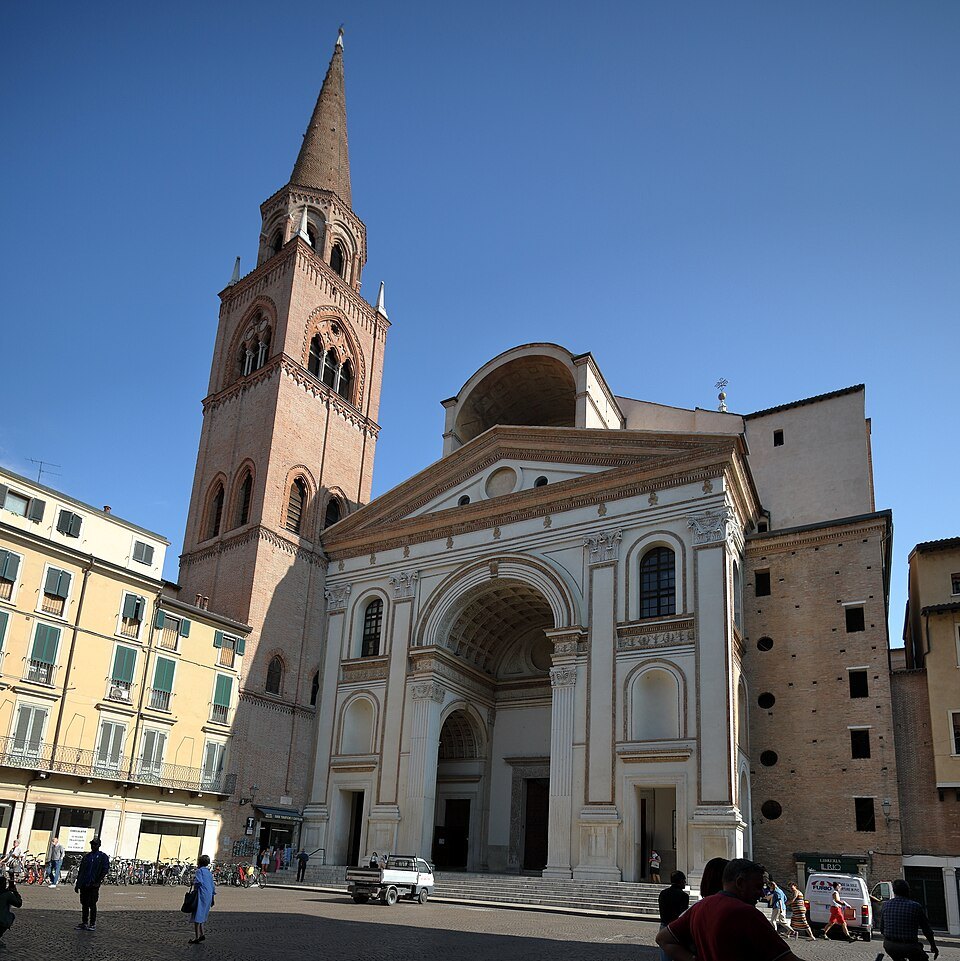
The front of Sant'Andrea in MantuaPierangeloGatto, Wikimedia Commons, CC BY-SA 4.0 Mantuatrain · about three quarters of an hourThe Gonzaga court city surrounded by lakes on three sides, where Monteverdi's L'Orfeo was first performed. Regional trains run directly from Verona Porta Nuova.
Where Verona sits
Verona is a crossroads, as it was in Roman times. The main railway between Milan and Venice runs through Verona Porta Nuova station, and a second line heads south to Mantua. That puts several of the great cities of the Veneto and Lombardy within an easy day, with trains leaving the same station throughout the day.
The countryside is different. Lake Garda lies west of the city and the wine hills of Valpolicella to the north, and neither is served well by rail. Buses from the stop outside Porta Nuova station reach the lake shore, and local buses climb into the vineyards, but a car gives more freedom for wineries and small villages.
Durations below are typical journey times; they vary with the type of train or bus and with traffic. Check the return connections before setting out, especially for buses to the lake and the hills. For arriving in Verona itself, see getting here.
Sirmione, on the southern shore
Sirmione occupies a narrow peninsula that pushes into the southern end of Lake Garda. From the first century BC wealthy families from Roman Verona built villas on this shore, and the poet Catullus, whose family owned a villa here, praised it. The Grotte di Catullo are the remains of the largest Roman private building found in northern Italy, about 167 by 105 meters.
At the entrance to the peninsula stands the Scaliger castle, begun in 1277 by Mastino I della Scala, the lord of Verona. It is a rare medieval harbor fortress, built to shelter the family's fleet, with swallowtail battlements, a moat and drawbridges. Sirmione's historic center is pedestrianized, so drivers park outside and everything is seen on foot.
Sirmione has no railway station. A direct bus from Verona takes about an hour. The alternative is a train to Peschiera del Garda, about a quarter of an hour on a fast train, or to Desenzano del Garda, about twenty minutes, followed by a local bus ride of twenty minutes or so to the peninsula.
Garda and the eastern shore
The eastern shore of the lake belongs to the Veneto and the province of Verona, with Monte Baldo rising behind its northern towns. A year-round bus line runs from Verona, stopping at Piazza Bra and the station, via Peschiera, Lazise and Bardolino to Garda, a trip of a little over an hour. Above Garda rises the Rocca, a castle site high over the town with views across the lake.
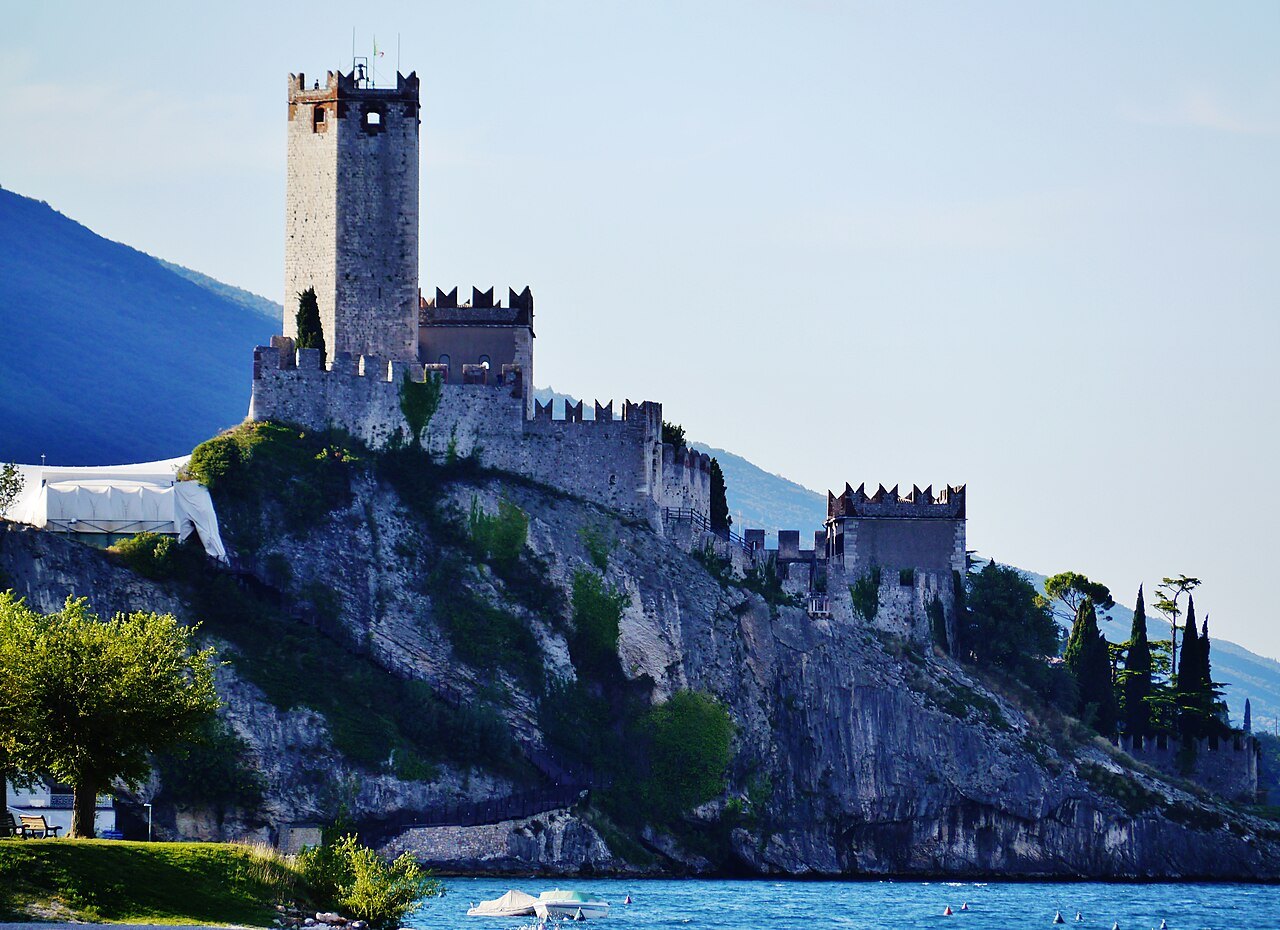
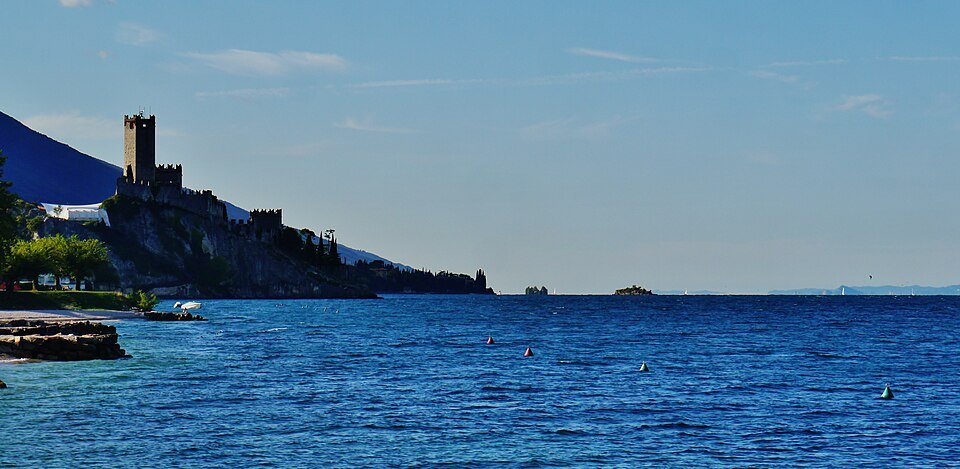
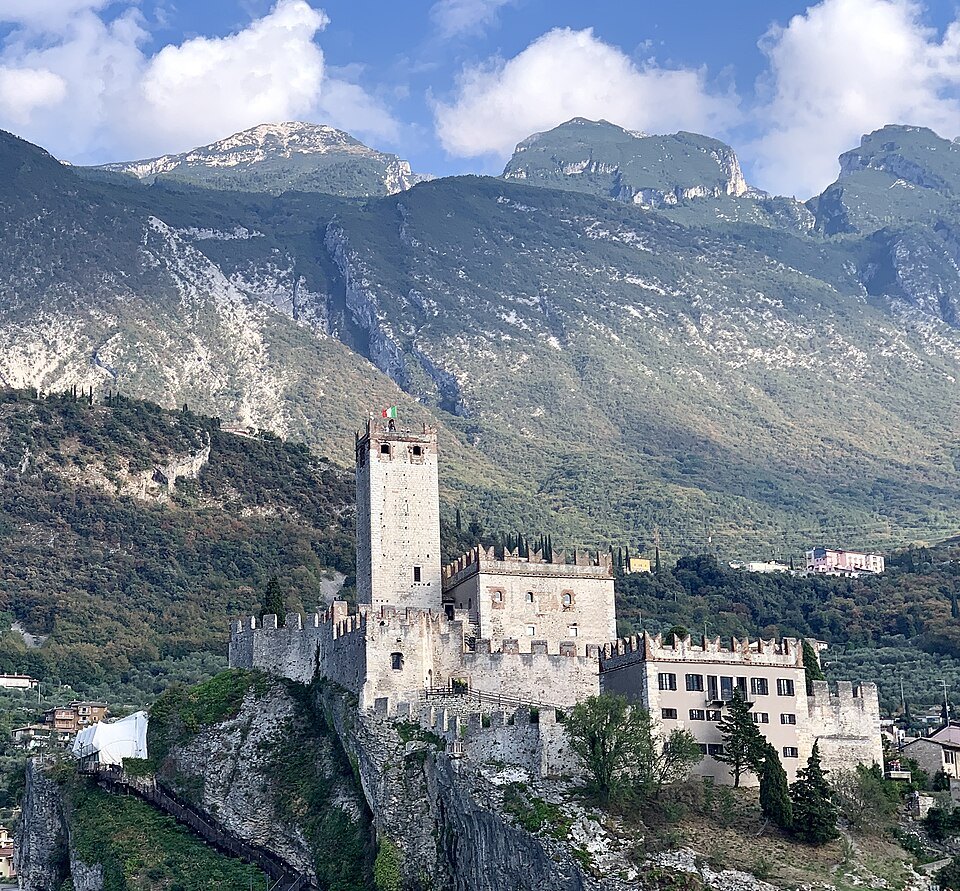
Farther north, Malcesine has a castle named for the della Scala family, who held it from 1277 to 1387, with swallowtail battlements and an older tower of white stone. In 1786 the German writer Goethe was questioned there on suspicion of spying after sketching the castle, an episode he told in his Italian Journey.
From Malcesine a two-stage cable car, the second with rotating cabins, rises to about 1,750 meters on Monte Baldo. Malcesine has no railway; from Verona it is reached by bus with a change at Garda, and boats, including fast hydrofoils, link the towns along the lake. Bardolino, on the way, gives its name to the red wine.
Valpolicella
The hills north of the Adige, north-west of the city, form Valpolicella, a landscape of small farms, marble quarries, vineyards and country villas that wealthy Veronese have long favored for rural retreats. Seven municipalities make up the historic area, among them San Pietro in Cariano, Negrar, Fumane and Sant'Ambrogio.
The valley's reds are made mainly from Corvina grapes. Amarone and the sweet Recioto are made from grapes dried after the harvest, and Ripasso from Valpolicella refermented on Amarone skins. The original production zone, the Classico, lies in the foothills of the Lessini mountains, where the best-placed vineyards climb the slopes.
By car, San Pietro in Cariano is about a quarter of an hour from Verona. Several local bus lines run from the city into the valley, taking roughly three quarters of an hour, but visiting wineries by bus means planning around the bus timetables. Visiting arrangements differ from estate to estate, so check with each one before setting out.
Vicenza and Padua
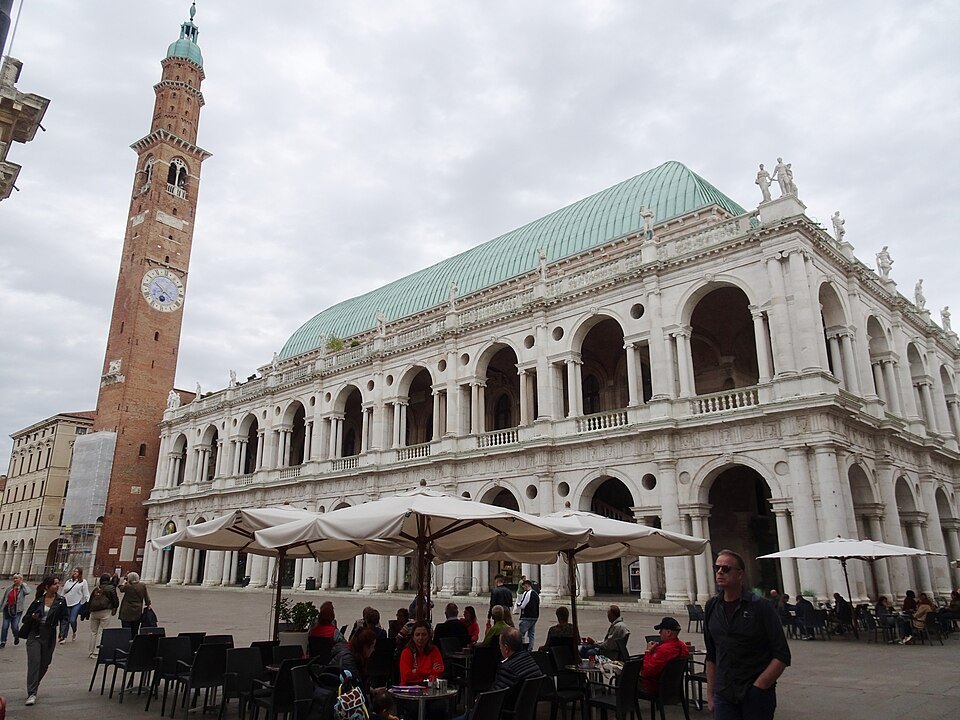
Vicenza is the city of Andrea Palladio, the sixteenth-century architect who left some two dozen buildings in the city and many villas in the countryside around it. UNESCO listed the city in 1994 and extended the site in 1996 to include the Palladian villas of the Veneto. The Basilica Palladiana dominates Piazza dei Signori, and the Teatro Olimpico, begun in 1580, keeps its wooden stage scenery by Vincenzo Scamozzi.
Padua is best known for the Scrovegni Chapel, whose walls and ceiling Giotto and his workshop covered with frescoes between about 1303 and 1305: the lives of the Virgin and of Christ, and a Last Judgment over the entrance. Since 2021 it has been part of a UNESCO site of fourteenth-century fresco cycles across the city.
Note The Scrovegni Chapel cannot be visited on impulse. Booking in advance is compulsory, and each group of up to 25 people first waits fifteen minutes in a climate-controlled room so that humidity and dust are filtered out, then spends fifteen minutes inside the chapel. Arrive well before the slot: latecomers are not let in. By fast train, Vicenza is under half an hour from Verona and Padua about three quarters of an hour.
Venice and Mantua
Venice is the obvious long day out. Fast trains cover the route in about an hour, calling at Venezia Mestre on the mainland before ending at Venezia Santa Lucia in the historic city. Regional trains cover the same line more slowly. The line runs about 119 kilometers across the Veneto plain, past Vicenza and Padua.
Mantua, in Lombardy to the south, was ruled by the Gonzaga family from 1328 to 1708 and became one of the leading courts of Renaissance Europe. Claudio Monteverdi's L'Orfeo, one of the first operas, was first performed there in 1607. The city is ringed on three sides by lakes formed from the river Mincio, created as defenses in the twelfth century.
Mantua's historic center was listed by UNESCO in 2008, together with nearby Sabbioneta. Regional trains from Verona Porta Nuova reach Mantua in about three quarters of an hour, and there is no need to change trains.