Home · Getting Here
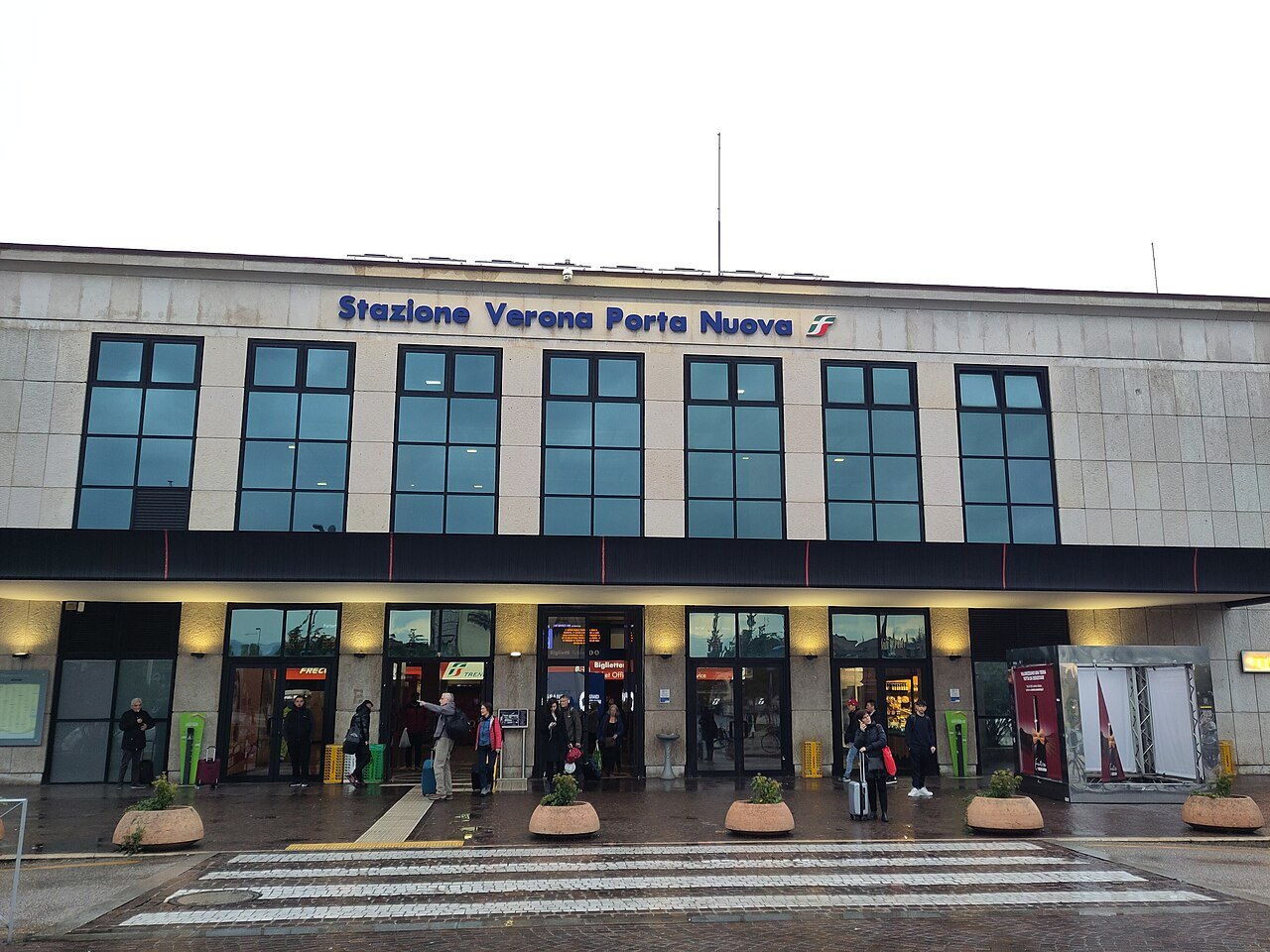
Nearly every arrival ends at Verona Porta Nuova, the main station south of the old town, whether the journey began at an airport, a train or a coach.
- airBy airVerona's airport is at Villafranca, not in the city, so the last stretch is a fifteen-minute shuttle bus to Porta Nuova station.Verona Villafranca airportabout fifteen minutes by shuttle busVenice Marco Polo airportabout twenty minutes by bus to Mestre, then about an hour by trainMilan Bergamo airportabout an hour and a half by direct coachBologna airporta short monorail ride, then under an hour on the fastest trainsThe airport shuttle stops at the bus station in front of Verona Porta Nuova.
- railBy trainFast and regional trains share the same routes, so journey times vary widely; check the train type before buying.Veniceabout an hourMilana little over an hourBolognaunder an hour to nearly two hoursInnsbruckabout three and a half hoursMunichabout five hoursTrains arrive at Verona Porta Nuova, about twenty minutes' walk south of the Arena.
- coachBy coachCoaches stop near Porta Nuova station rather than inside it, and the stop can move in summer, so follow the address on the ticket.Long-distance coaches use stops beside or near Verona Porta Nuova station.
- carBy carCamera gates record every number plate entering the limited traffic zone, and an unauthorized entry brings a fine.Park in a garage outside the zone, such as the multi-storey in Via Campo Marzo, and walk in.
All roads lead to Porta Nuova
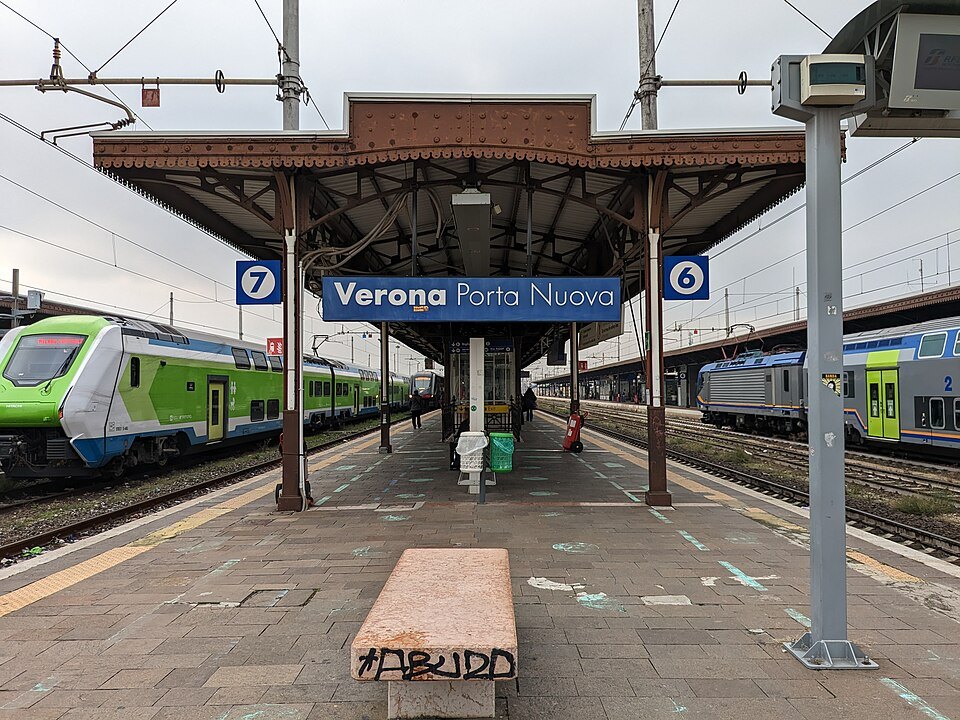
Verona sits where the main railway from Milan to Venice crosses the line that comes down from the Brenner Pass, and that junction shapes how most visitors arrive. The airport bus, the fast trains and the long-distance coaches all finish at or beside Verona Porta Nuova station, on Piazzale XXV Aprile, south of the historic center.
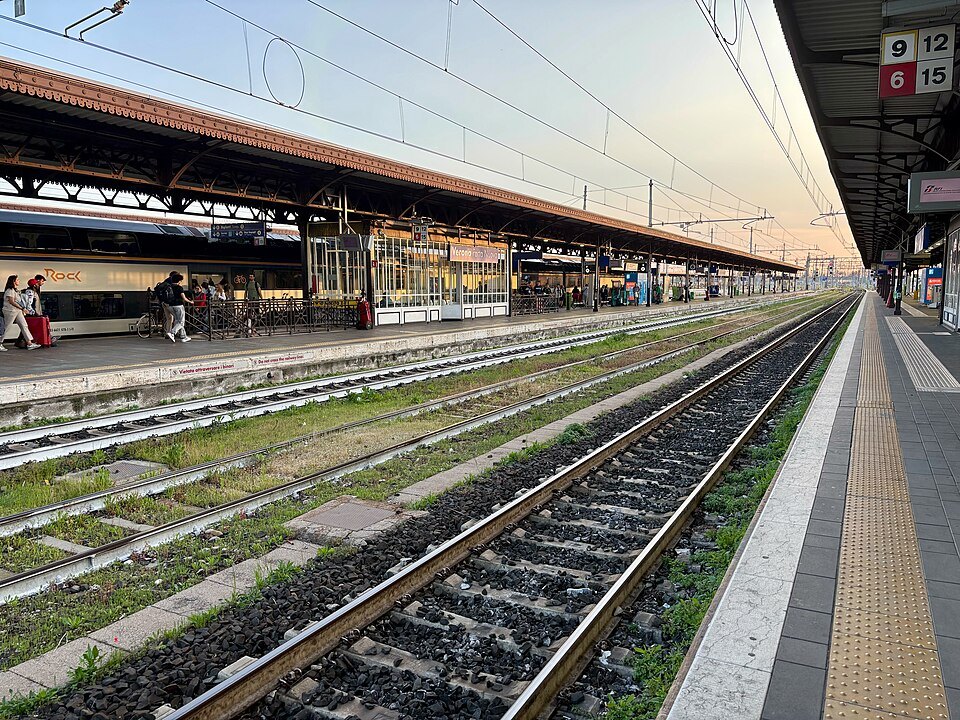
From the station, Wikipedia puts the Arena about a twenty-minute walk away, or roughly ten minutes by city bus; the bus terminal sits directly in front of the station building. What happens after that, from bus tickets to the funicular, is covered on getting around.
Some links on this page are affiliate links. If you book through one we may earn a commission, at no extra cost to you. It does not affect what is recommended here, and no sight page on this site carries one.
A pre-booked airport transfer, somewhere to leave bags between check-out and a train, and mobile data from arrival.
Flying into Verona
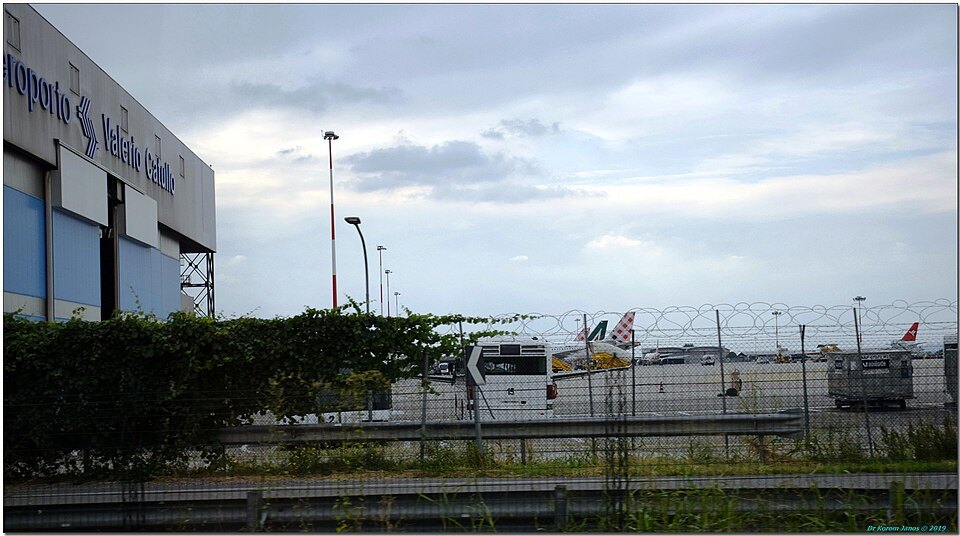
Verona's own airport is Verona Villafranca, also called Valerio Catullo, roughly ten kilometers southwest of the city. Arrivals and departures use separate, adjacent terminals, a layout that dates from an expansion in 2006, so arriving passengers come out of the arrivals building rather than the one they would leave from.
The link into town is a non-stop shuttle bus, line 199, known as the Verona Airlink or Aerobus and run by the city bus company ATV. It leaves from outside the arrivals exit and reaches the bus station in front of Porta Nuova in about fifteen minutes, running every twenty minutes at busy times and less often at others.
Tickets are sold online and through authorized sellers, and on line 199 a contactless bank card or phone wallet can be tapped on the reader on board. Trenitalia also sells combined train and bus tickets that include the Airlink leg. A taxi rank serves the airport as well.
Other airports visitors use
Many travelers fly into a larger airport and finish the trip by land. From Venice Marco Polo, buses run to Venezia Mestre station in about twenty minutes, and fast trains from Mestre reach Verona Porta Nuova in about an hour. Venice's airport is about seven and a half kilometers from the city, and a rail link to the airport is under construction, so check the airport's site for new options.
From Milan Bergamo, known locally as Orio al Serio, a direct coach called the Orio al Serio Airlink runs to Verona Porta Nuova, stopping in Brescia on the way; the trip takes about an hour and a half, and the service runs many times a day, including at night.
From Bologna, a monorail shuttle takes about seven minutes from the airport to Bologna Centrale station, where fast trains to Verona depart. The fastest trains need under an hour to Verona; slower services take noticeably longer, so compare journey times when booking.
By train from Italian cities
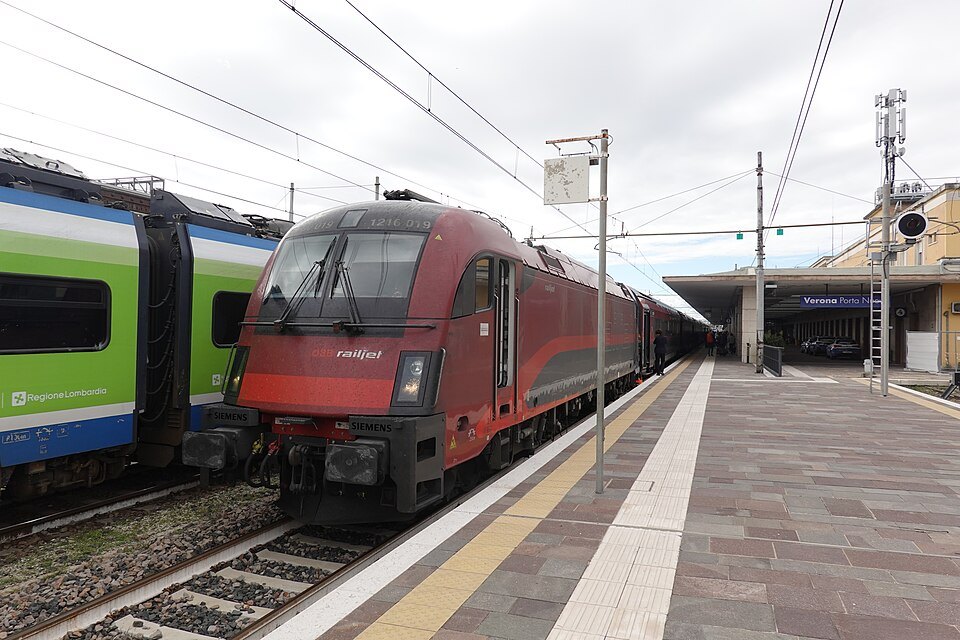
Porta Nuova opened in 1851 under the Austrian Empire and handles around twenty-five million passengers a year, which Wikipedia says makes it the ninth busiest station in Italy. Four lines meet here: Milan to Venice, the Brenner line toward Bologna, the Bologna line and the line to Mantua and Modena.
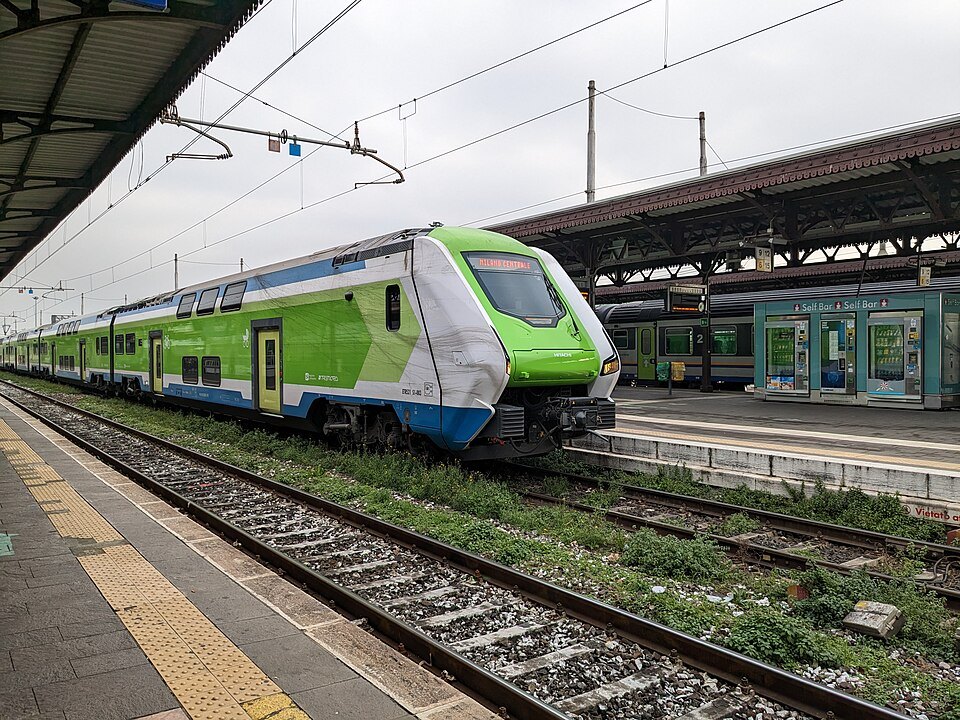
Direct trains are frequent. From Venice, the fastest trains take just under an hour and many take around an hour and a quarter; Italo's high-speed service from Venezia Santa Lucia calls at Mestre, Padua and Vicenza on the way. From Milan Centrale, the fastest trains take a little over an hour, with an average closer to an hour and a half.
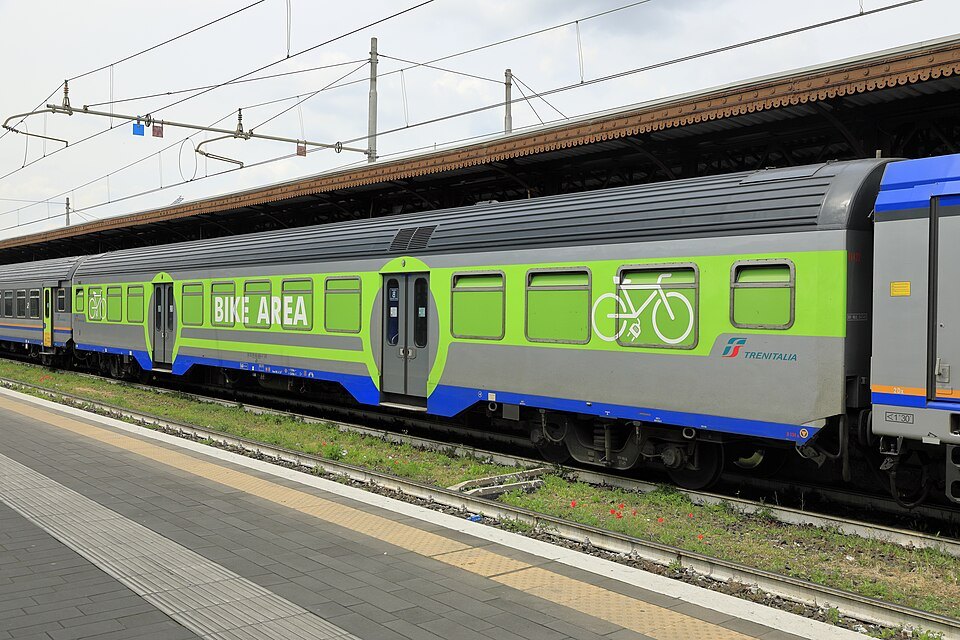
From Bologna Centrale, the fastest trains need under an hour, though the average journey is nearer an hour and forty minutes. High-speed Frecciarossa and Italo trains share these routes with slower regional trains, which cost less and take longer. Inside the station there are ticket offices for Trenitalia, Italo and the German and Austrian railways, and a staffed left-luggage office near the western entrance.
Over the Brenner Pass
The railway south from Austria over the Brenner meets the Milan to Venice line at Verona. EuroCity trains run jointly by the Austrian and German railways, ÖBB and DB, link Munich, Innsbruck and Verona every two hours through the day, crossing the Brenner Pass on the way, and a few continue to Venice or Bologna.
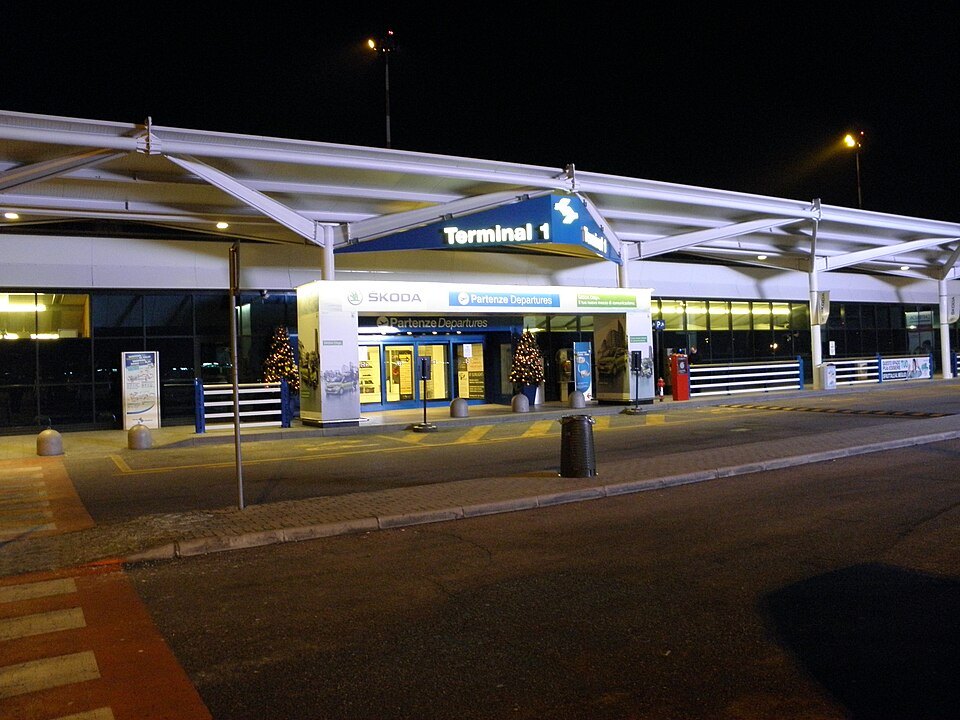
Munich to Verona takes about five hours, and the direct trains from Innsbruck take about three and a half. The trains have a restaurant car, and seat reservations cost extra but are worth having at busy periods; the railways sell tickets on dynamic fares, so booking early usually helps. These trains use the separate DB and ÖBB ticket office at Porta Nuova.
Long-distance coaches
The large European coach networks serve Verona with a stop near Porta Nuova station. The exact spot has changed: one operator's page lists a stop beside the station and notes a temporary alternative stop in Viale Andrea Palladio during some summer months. Always read the address printed on the ticket rather than assuming the coach will pull into the station forecourt.
Coaches are often the cheaper choice, and on some routes they are the most direct. From Milan Bergamo airport the Orio al Serio Airlink is the obvious link, and direct coaches also run from Venice's airport, though the bus and train via Mestre is usually quicker.
Driving and the ZTL
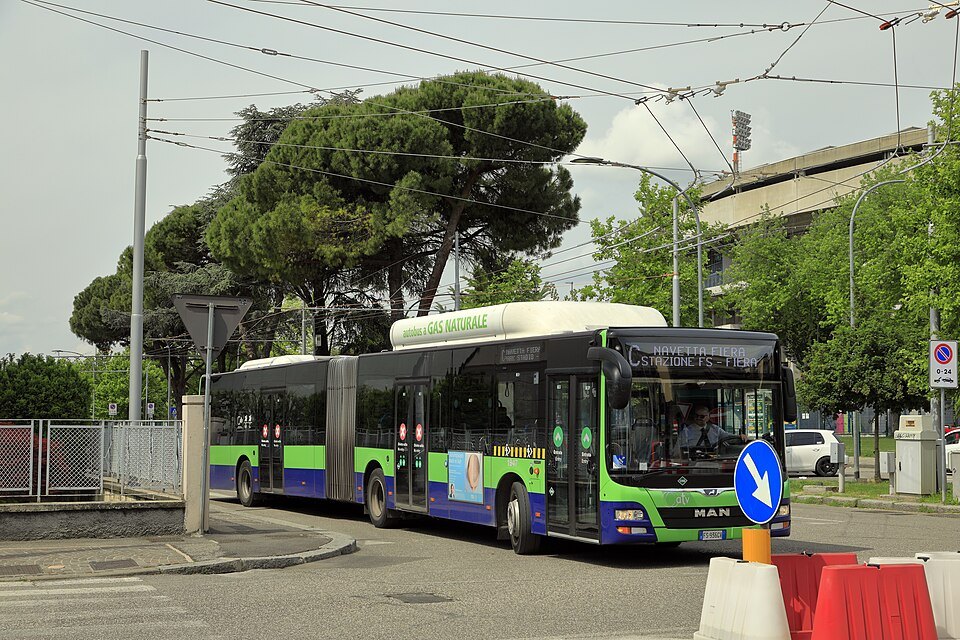
Note The historic center is a limited traffic zone, the ZTL. Access has been restricted since 1997, and since 2005 eleven electronic gates have watched the roads in: cameras photograph number plates and send them straight to the municipal police control center, which checks them against the list of permits. Driving in without authorization during restricted hours brings a fine; only the permitted categories below are let through.
According to the city, guests of hotels inside the zone can be allowed through if they give their number plate to the hotel, which registers it; families with children under fourteen, disabled drivers with a pass, motorcycles and scooters also have access rules of their own. Ask the accommodation before arriving, and check the city's ZTL map for the hours.
Everyone else should park outside the zone. The city's parking company runs multi-storey garages, including Parcheggio Centro in Via Campo Marzo, which it places about ten minutes' walk from the Arena, and two garages beside Porta Nuova station on Via Città di Nimes. Parking in the garage and walking or catching a bus is simpler than threading a car through the loop of the Adige.