Home · When to Come
Verona's year turns on opera in the Arena, trade fairs that crowd the hotels, a Christmas star over Piazza Bra, and a climate of hot summers and damp winters.
- JanThe coldest month, with highs around 7°C and lows near freezing; fog can linger into the late morning and days are short.
- FebStill cold and often gray; Carnival's Venerdì Gnocolar parade crosses the center on the last Friday before Lent, in February or early March.
- MarHighs rise to about 15°C with few rainy days; a quieter month before Easter, whose school break moves between March and April.
- AprHighs near 19°C and more showers; Vinitaly fills Veronafiere and city hotels for four days, so check the fair dates first.
- MayWarm, around 24°C, and one of the wetter months; comfortable for long walks before the summer opera crowds arrive.
- JunHighs near 28°C; the Arena opera festival usually opens during the month and Veneto schools break up for summer.
- JulThe hottest and sunniest month, around 30°C; opera evenings fill Piazza Bra and thunderstorms can delay performances.
- AugAs hot as July; the opera festival continues, so sightsee early in the day and keep the evenings for the squares.
- SepHighs ease to about 25°C and rain increases; the festival closes, schools reopen and Marmomac fills Veronafiere late in the month.
- OctMild, around 19°C, and rainy; opera moves indoors to the Teatro Filarmonico once the outdoor festival is over.
- NovThe wettest month, highs around 13°C; Fieracavalli, the country's largest horse fair, fills Veronafiere early in the month.
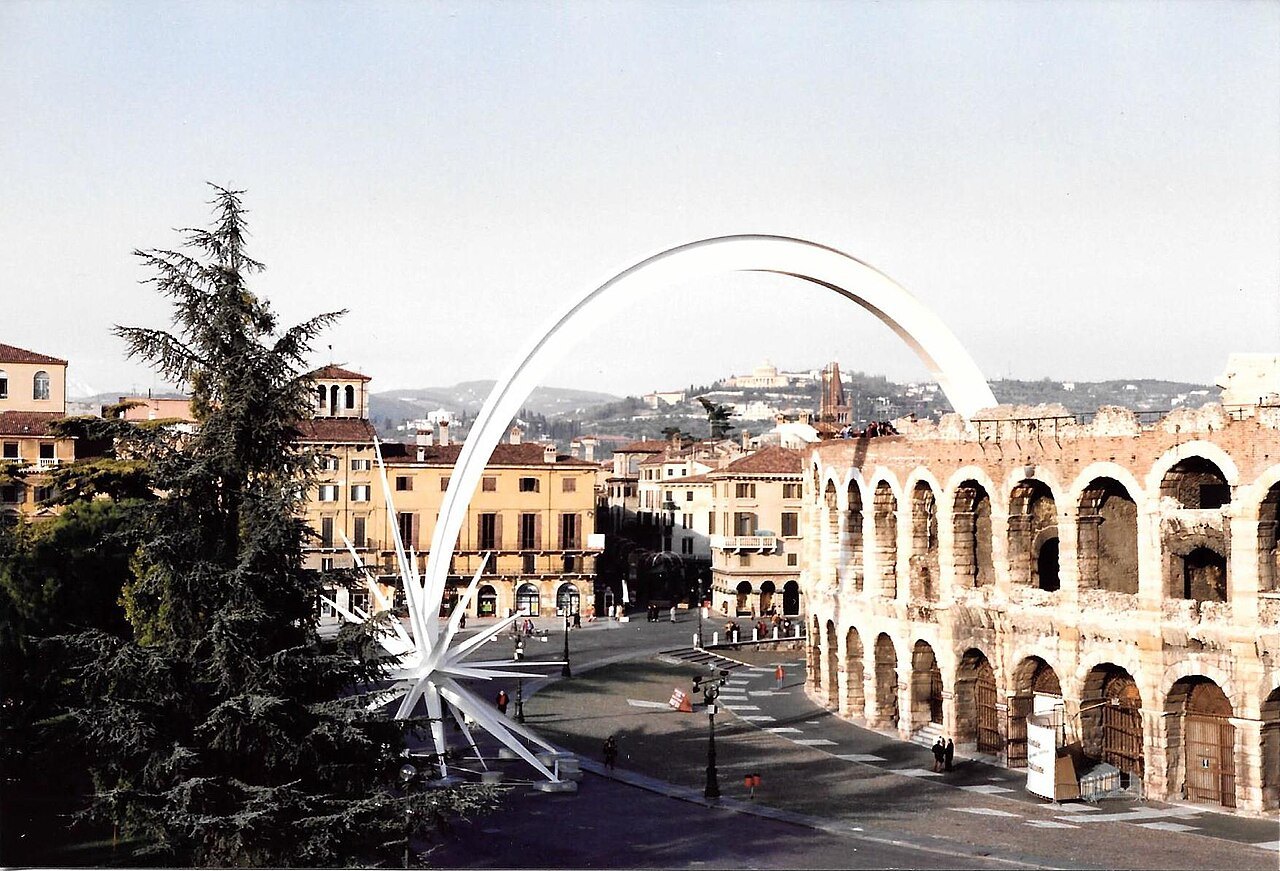
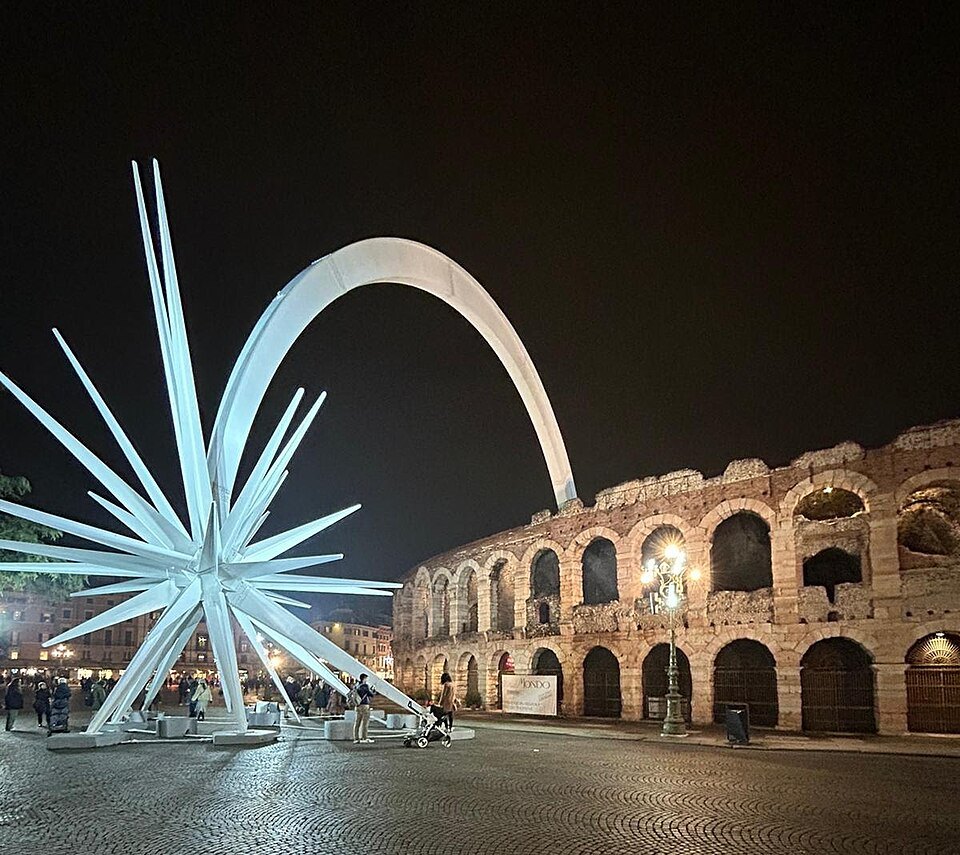
- DecCold, near 8°C; Santa Lucia stalls fill Piazza Bra before 13 December and the comet star marks Christmas at the Arena.
Brick: the months of the summer opera festival, as sources give them.
A city that runs on its calendar
Verona sits where the Adige leaves the Alpine valleys for the plain, and its weather is that of northern Italy's inland lowlands: hot summers, cool and humid winters, and rain spread through the year rather than saved for one season. Humidity stays high, and in winter it brings fog, usually from dusk into the late morning, though it has become less frequent in recent years.
The weather is only half of the choice. The other half is the calendar. Summer belongs to the opera festival in the Arena, spring and autumn to large trade fairs at the Veronafiere exhibition grounds, and December to the Santa Lucia stalls and the Christmas star in Piazza Bra. Each of these fills the city and its hotels in a way the season alone would not.
So before fixing dates, check two things: the festival program if opera is part of the plan, and the Veronafiere calendar if it is not. A quiet week and a sold-out week can sit side by side.
Summer: opera and heat
The summer opera festival usually runs from June into late August or early September, with exact dates set each season. On performance evenings thousands of people converge on Piazza Bra, and the amphitheater's daytime visiting hours can change to make way for the evening. For how an evening works, see the opera season.
Note July and August are the hottest months, with average highs around 30°C (about 86°F) and nights that stay near 19°C. July is also the sunniest and has the fewest rainy days, but summer thunderstorms do happen, and the festival's rules allow a performance to be delayed by more than two hours while a storm passes.
Summer is also holiday time for local families. In the Veneto the school year ends in early June and starts again around the middle of September, and Christmas, Carnival and Easter bring shorter breaks. Plan sightseeing for the cooler early morning, rest through the hottest hours, and save the squares for the evening.
Spring and the wine fair
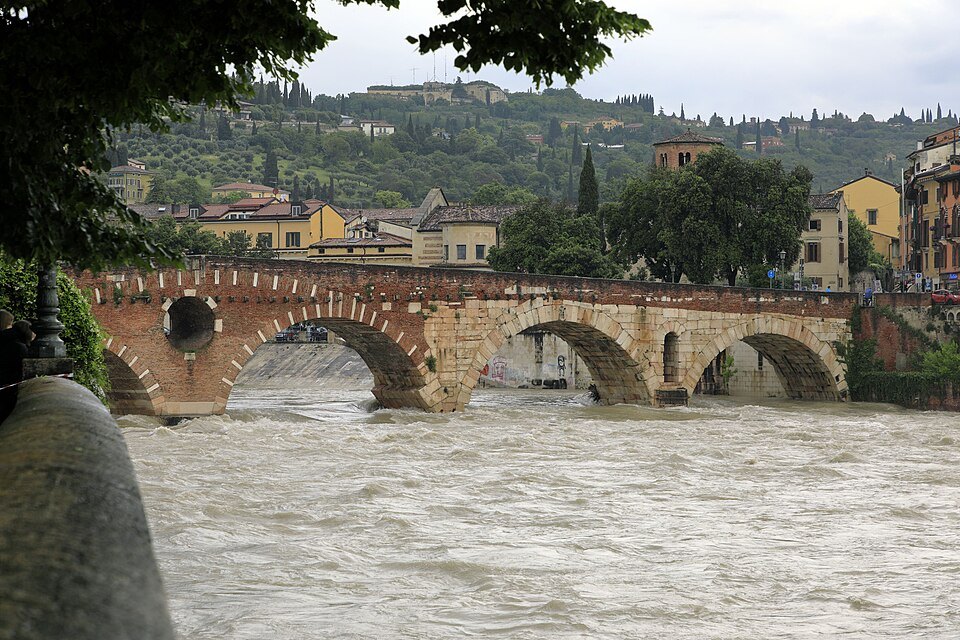
Spring warms quickly. Average highs climb from about 15°C in March to about 19°C in April and 24°C in May (roughly 75°F). April and May bring more rainy days than the winter months, with May among the wetter months of the year, but they are comfortable for long days on foot.
Note April brings Vinitaly, the international wine exhibition held at Veronafiere every year since 1967. It is a four-day trade event aimed at the wine business, often described as the largest wine show in the world, and its program spills into the historic center through a public offshoot called Vinitaly and the City.
For a visitor with no interest in wine, the fair works as a crowd mechanism: a trade show on that scale competes for the same hotel rooms as everyone else. The dates are published well in advance on the fair's site, so look them up before choosing an April or Easter trip.
Autumn: mild days and big fairs
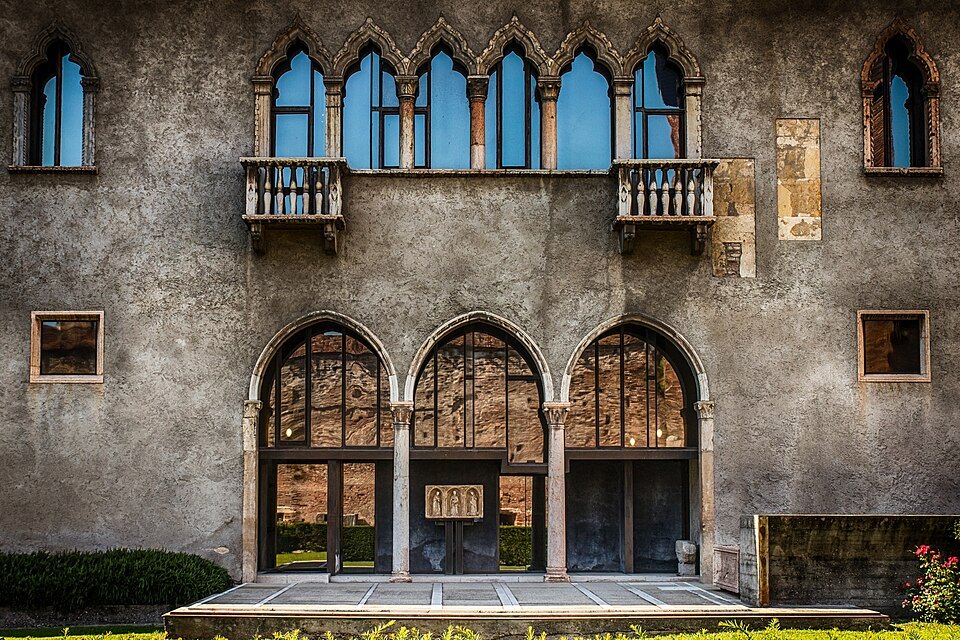
September keeps summer warmth, with highs around 25°C, and October cools to around 19°C. These are among the rainiest months by volume: September, October and November together are the wettest stretch of the year, with November the wettest of all.
Autumn has its own fairs. The Marmomac trade fair is held at Veronafiere in late September. Fieracavalli, a horse and equestrian fair held in Verona since 1898 and considered the largest in Italy, takes place in early November; since 2001 it has hosted the only Italian leg of the show-jumping World Cup. Both add thousands of visitors to the city for their days.
As the outdoor festival ends, the opera season moves indoors to the Teatro Filarmonico, whose program runs roughly from October to May. For the food that goes with the colder months, see eating and drinking.
Winter: fog, Santa Lucia and the star
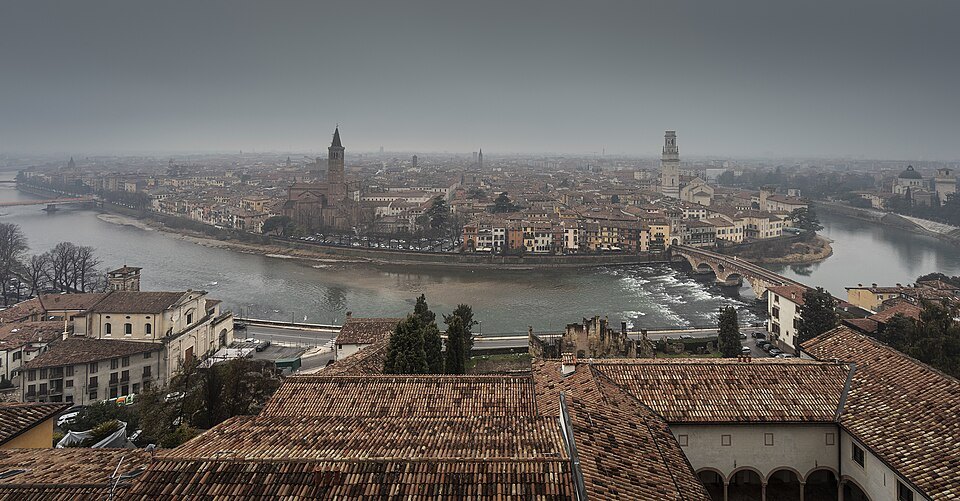
January is the coldest month, with average highs near 7°C (about 45°F) and lows around freezing. Days are short and often gray: January gets less than a third of the sunshine hours of July, and fog can hang over the river and the squares until late morning.
In the days before 13 December, stalls fill Piazza Bra for the feast of Santa Lucia, selling sweets, toys, crafts and local foods. The custom goes back to a thirteenth-century eye disease that struck the city's children, when families walked them to the church of Sant'Agnese and promised gifts from the saint. By Veronese tradition, Santa Lucia still brings sweets and presents to children on the night of 12 December, with coal for the badly behaved.
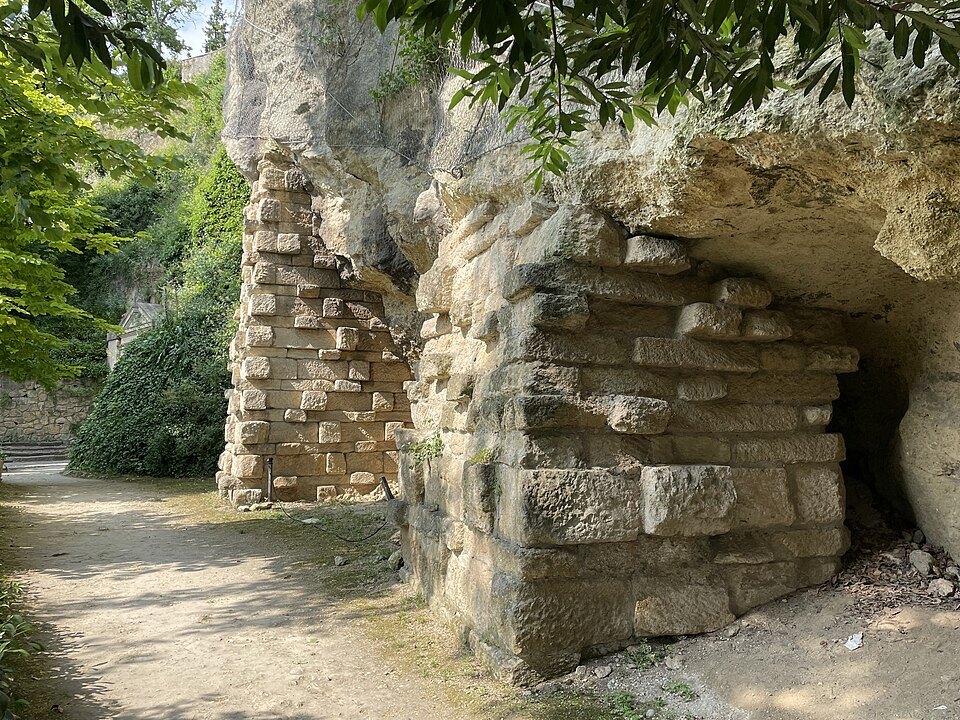
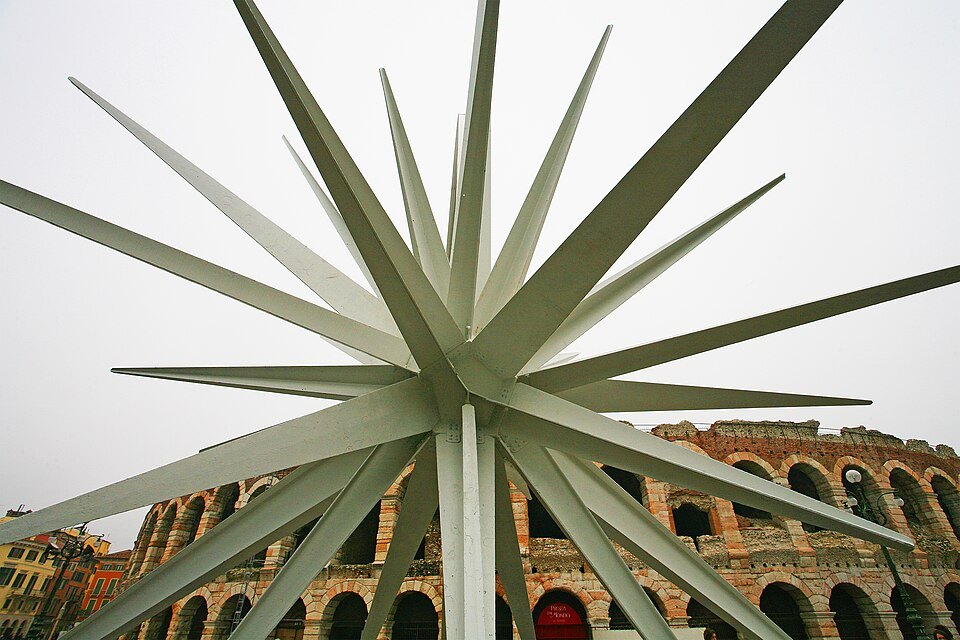
Since 1984 a giant steel comet star, designed by the architect Rinaldo Olivieri, has arched from the Arena into the square at Christmas. About 70 meters tall and 82 meters long, it was meant to stand only once, for an exhibition of nativity scenes, and became a tradition and a Guinness record holder. After part of the structure fell during dismantling in January 2023 and damaged the Arena's steps, the star returned for Christmas 2024 with beams of light in place of its steel tail. Pandoro, the star-shaped sweet bread linked to Verona, is the cake of the season.
Carnival and the river
Verona's Carnival, the Bacanal del Gnoco, peaks on the last Friday before Lent, the Venerdì Gnocolar, when a long parade crosses the center. Because Lent moves with Easter, the day falls in February or early March. The parade brings the old town to a standstill, with groups arriving from elsewhere in Europe and from South America, so plan walking routes around it.
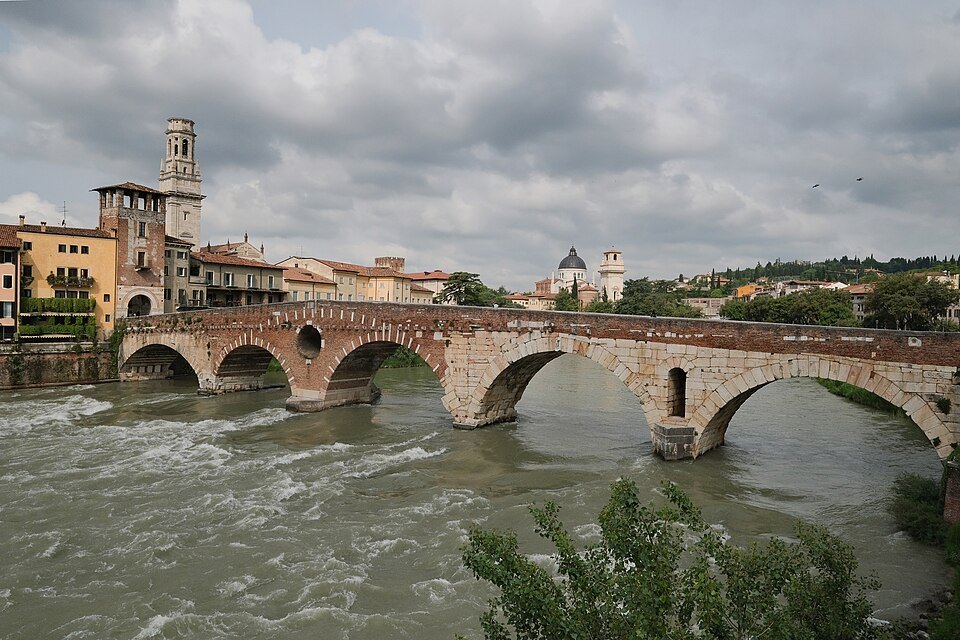
The Adige shapes every season. Its floods have marked the city's history, from the disaster of 589 to the great flood of 1882, after which high embankment walls were built along the river through Verona. In the twentieth century a tunnel was dug to divert floodwater into Lake Garda, completed in 1959 and used only rarely since.