Home · The Opera Season
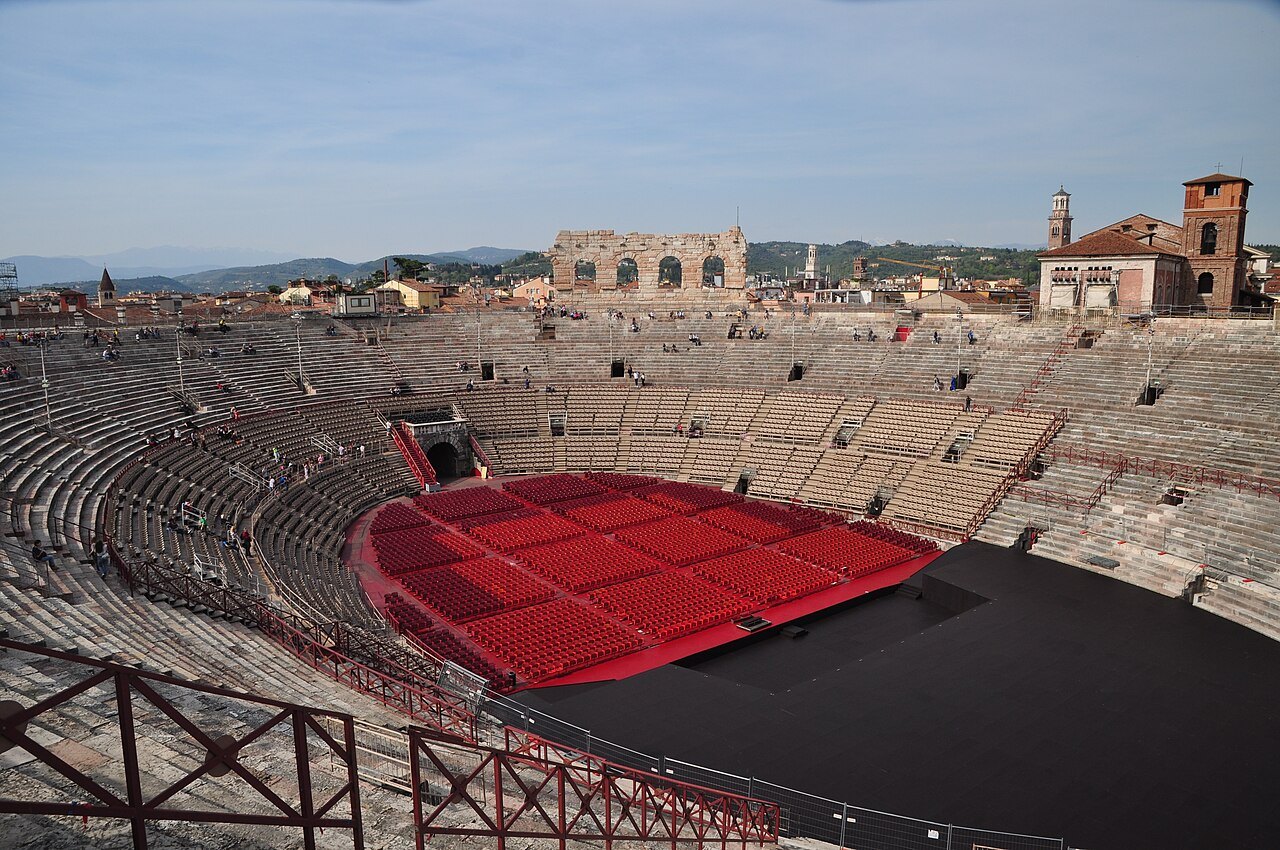
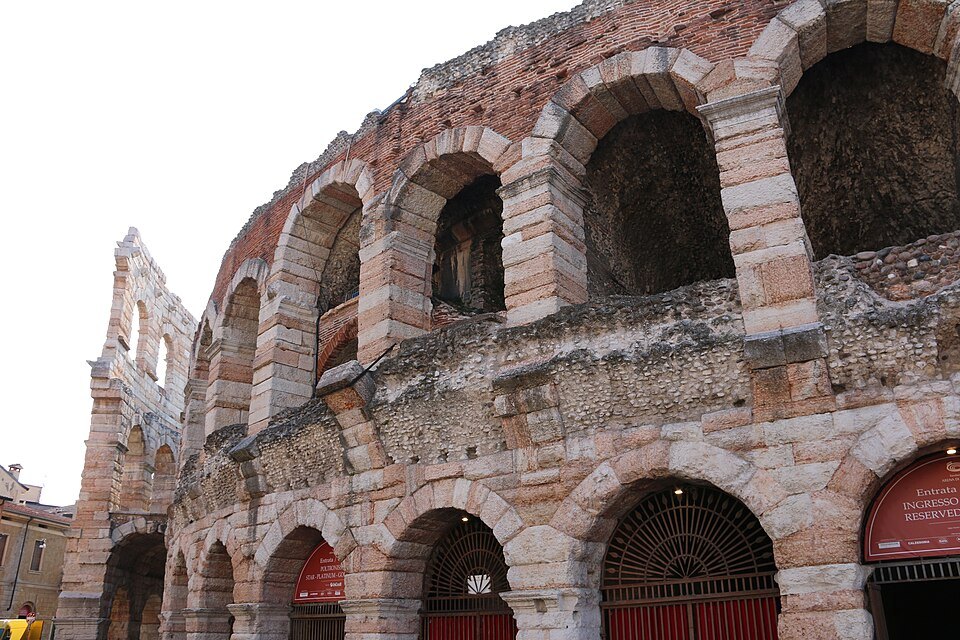
Every summer since 1913, the Roman amphitheater in Piazza Bra becomes an open-air opera house, with a stage built across one end of its ancient tiers.
- Choose a datePick a performance from the festival calendar, which rotates several operas through the summer; tickets are for one dated performance and name a numbered seat.
- Match the clothes to the sectorStalls seats expect smart dress, with long trousers and a shirt or polo for men; the stone steps are relaxed, but bring a cushion.
- Arrive earlyThe gates open two hours before the show and the festival asks spectators to be there at least an hour ahead, with only a small bag and no food or drink.
- Find the seat and settle inOnce the music starts no one is let back to their seat until the first interval, so take care of water, cushions and bathroom before the first act.
- Watch for the candlesAs darkness falls on some evenings, small candles handed out at the entrance are lit across the stone tiers, a ritual the festival traces back through its history.
- If the sky turnsIn bad weather the start can be delayed by up to 150 minutes before any cancellation; what ticket holders are offered depends on whether the first act was completed.
- After the last actLong operas end very late, and the whole audience leaves at once into the streets around Piazza Bra, so know the way back before the evening begins.
An Aida for a centenary
The festival began with a single production. In 1913, the hundredth anniversary of Giuseppe Verdi's birth, the tenor Giovanni Zenatello and the theater impresario Ottone Rovato staged Aida inside the Arena. The idea of grand opera in a Roman amphitheater worked, and Zenatello returned the following year. Apart from interruptions caused by war, summer opera has been staged there ever since.
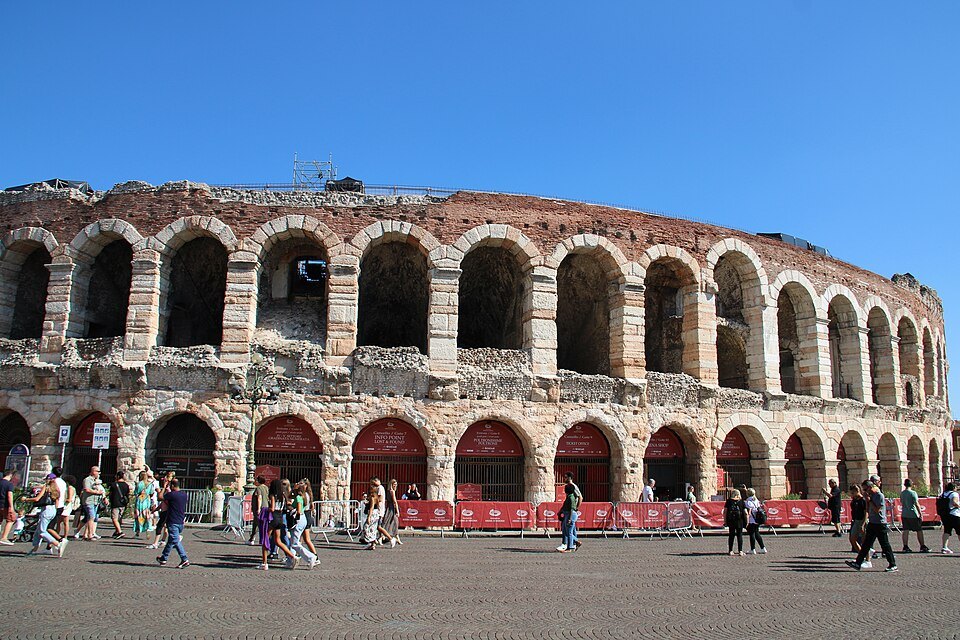
For its first two decades the season passed from one organizer to another: a touring company, a Milan music publisher, a local impresario and finally the city itself. In 1936 a permanent body was created to run it. Laws passed in the 1990s turned that body into a private foundation, the Fondazione Arena di Verona, which programs the summer festival and a winter season indoors.
Singers built reputations here. Beniamino Gigli sang Flotow's Martha in 1929, and Maria Callas became a regular between 1947 and 1954 after a sensational debut in Ponchielli's La Gioconda. Directors added spectacle: in 1953 the film director Georg Wilhelm Pabst gave Aida a pool of water standing in for the Nile, and brought animals on stage, a habit later productions kept.
A stage inside the cavea
The amphitheater was built in the first century AD and in Roman times probably held around 30,000 people. For opera the numbers change. Recent estimates put the summer capacity at about 22,000, because the stage and its sets take up roughly a third of the stone tiers at one end of the ellipse, and the upper gallery that once crowned the building has long been gone.
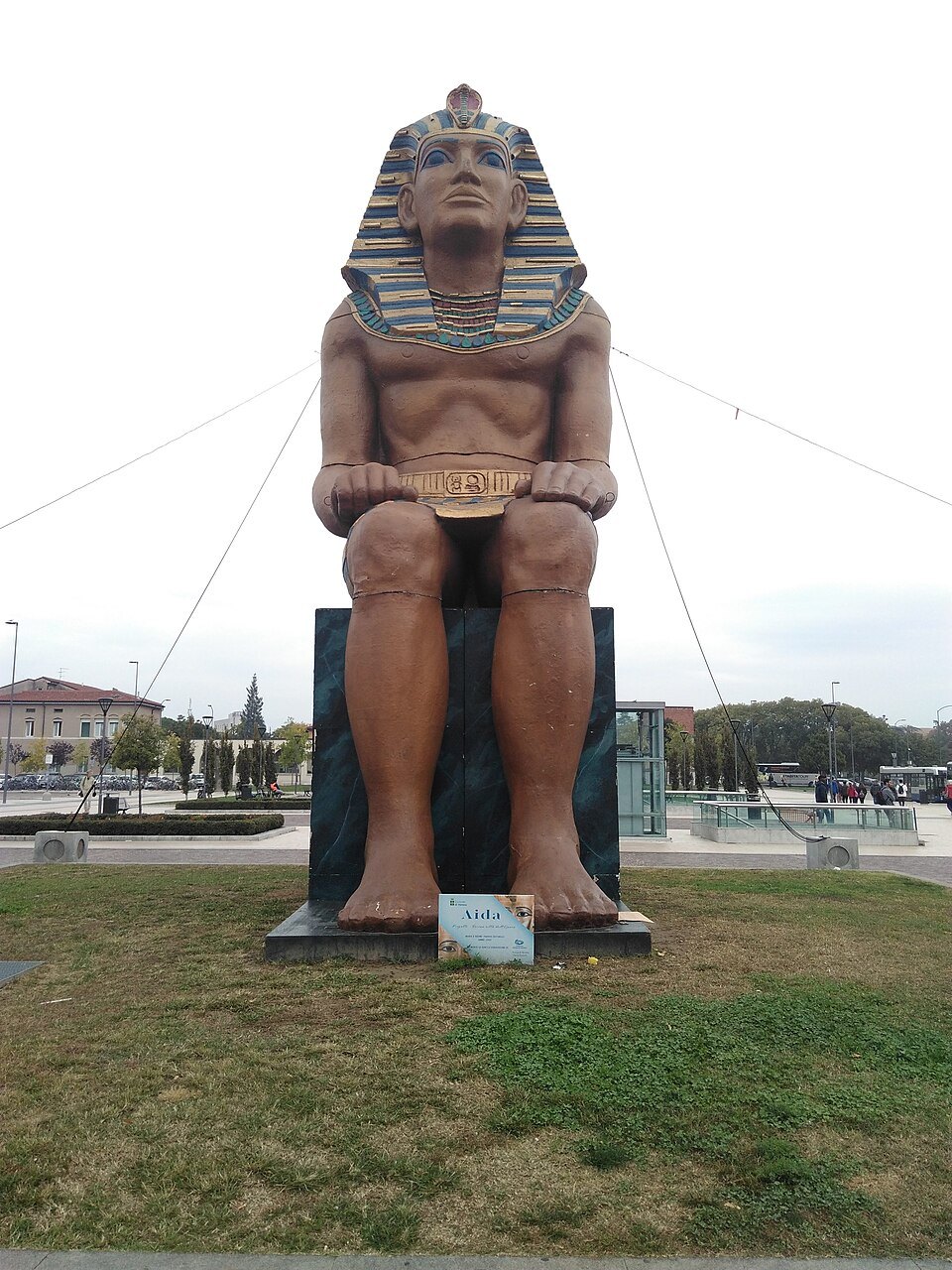
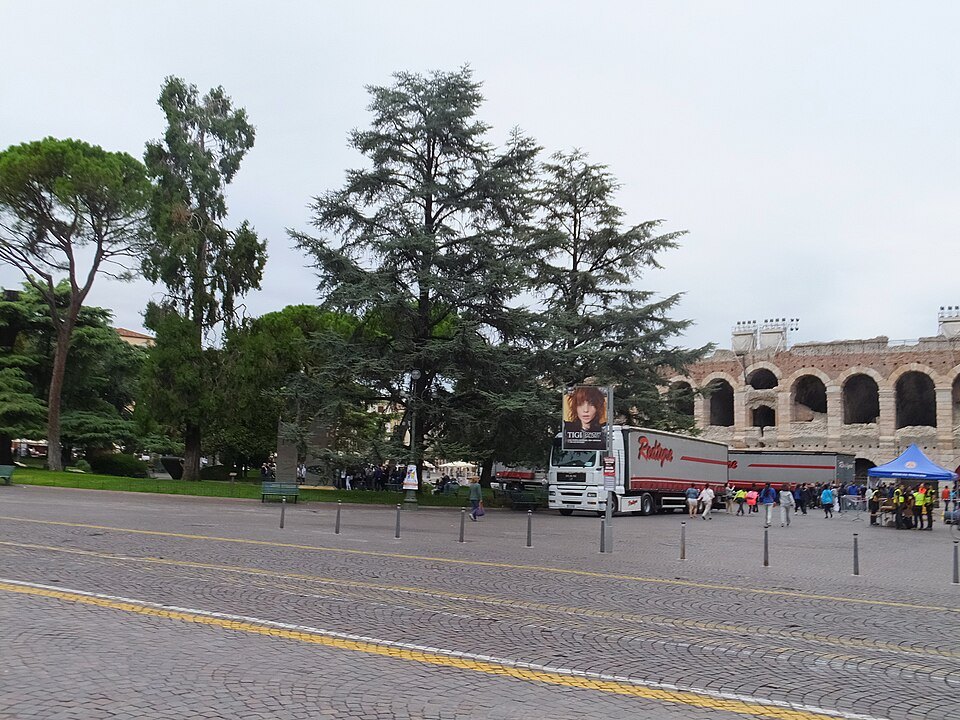
Sets for several operas rotate through the season, so the scenery is changed from one production to the next, often in less than a day. The largest pieces are lifted by a crane behind the amphitheater that folds away before the performance. Between shows, unused sets wait in marked areas of Piazza Bra, and giant columns, statues and walls stacked beside the Roman arches are part of the summer look of the square.
The seating falls into two worlds. On the flat floor of the arena, in front of the stage, rows of upholstered numbered chairs form the stalls. Behind and above them rise the tiers of the cavea itself, where some sectors have unupholstered seats with backrests and the highest sectors are places on the bare stone steps.
Numbered chairs and bare stone
For most of the festival's history the stone steps, the gradinata, were sold unnumbered: whoever came through the gates first claimed the best stretch of stone. That is why many older guides tell visitors to queue early for the steps. The festival's published rules now state that every seat it allocates is numbered and shown on the ticket, and its seating plan lists numbered places on the stone steps, without chairs.
Check what your own ticket says rather than relying on older advice. A numbered seat changes the evening: there is no need to race for a spot, but there is also no flexibility once the music starts. Anyone who arrives late or leaves a seat during an act is asked to wait for the first interval before returning to it.
Note A place on the stone means hours on limestone with no back support. The festival suggests bringing a cushion from home or buying one from staff inside the Arena. Longer operas run for several hours with intervals, so comfort matters more than it seems when booking.
Candles at dusk
Performances traditionally begin as daylight fades, so the first act opens under an evening sky rather than stage lights alone. The festival's best-known ritual belongs to that moment. Spectators on the stone tiers light small candles, the moccoletto, as darkness falls, and small flames spread across the tiers of the amphitheater.
The candles are a tradition rather than a guarantee. The festival's rules say that on some performances small candles may be handed to the audience on entry, to be lit on both numbered and unnumbered step seats as part of what they call the historical rite of the Arena. Whether it happens on a given night depends on the production, so treat it as a welcome surprise.
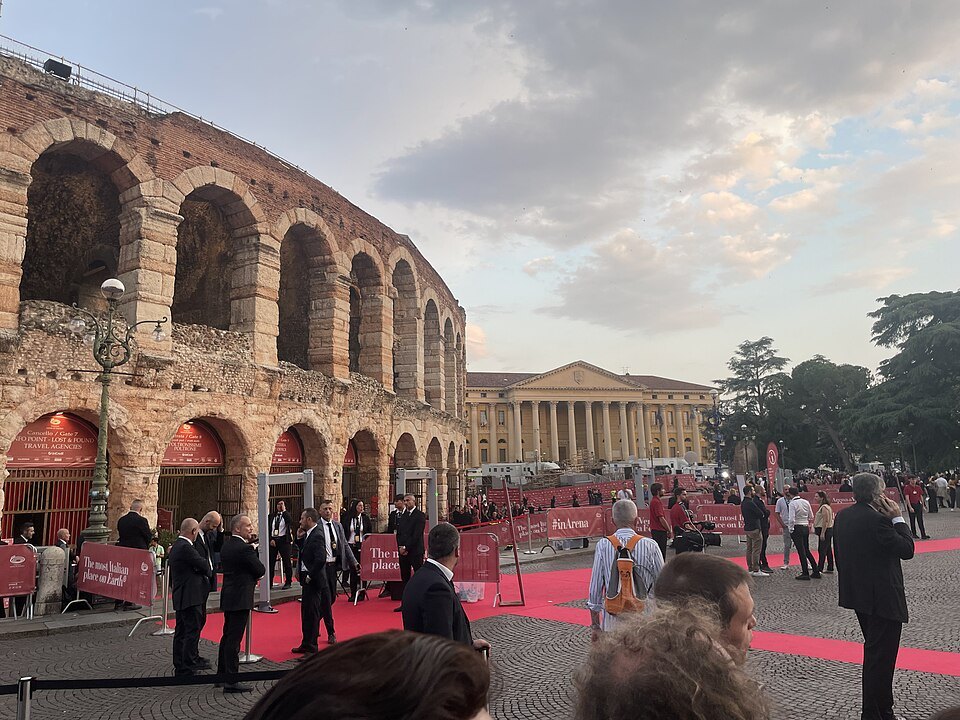
The long summer evenings mean late endings. Operas with several acts and intervals can finish very late at night, and the audience leaves together into the squares and streets around the Arena. Plan the route back to a hotel before the evening, especially if it lies beyond the old center.
What to bring and wear
There is no compulsory dress code, but the rules ask for clothes suited to the decorum of a theater. In the stalls smart dress is preferred, and the minimum for men is long trousers with a shirt or polo shirt. People wearing tank tops, shorts or beach sandals are refused entry to the stalls, with no refund. On the stone steps dress is relaxed.
Security rules are strict. A small backpack is allowed, but bags over seventeen liters, suitcases and trolleys are not. Food and drink cannot be brought in, nor glass, cans or plastic bottles larger than half a liter. Folding umbrellas are fine if they have no sharp points. Cameras, tripods and professional binoculars are banned, and photographing or recording the performance, even with a phone, is forbidden.
The gates open two hours before the show, and the festival asks spectators to arrive at least an hour ahead. Children under fourteen must be with an adult, and the youngest children are admitted only to a dedicated family sector. The festival publishes these rules on its own site, and they change from season to season, so read them when booking.
When the weather turns
An open-air theater depends on the sky, and the rules treat bad weather as a risk the audience accepts. A performance is never cancelled before its scheduled start. If rain, wind or hail make it impossible to begin, the festival can postpone the start by up to 150 minutes while it waits for the weather to clear, and only then announce whether the evening is cancelled.
What happens next depends on how far the opera got. If it is stopped before the end of the first act, ticket holders are offered a replacement ticket for another performance of the same festival, chosen by the organizer, in the same or a lower category. If it is stopped later, they are offered a discount on tickets for other performances. Tickets are otherwise valid only for the date printed on them.
In 1976 the choreographer Maurice Béjart's staging of Beethoven's Ninth Symphony was interrupted by rain, and the dancers finished to a cassette tape of the music without the orchestra. If clouds build, watch the festival's announcements, and keep the ticket: any replacement or discount offered after a stopped performance is tied to it.
The winter season indoors
When the summer festival ends, opera moves to the Teatro Filarmonico, a theater owned by the Accademia Filarmonica di Verona. Work on it began in 1716, and it opened in 1732 with Antonio Vivaldi's La fida ninfa, set to a libretto by the Veronese scholar Scipione Maffei. A fire destroyed it in 1749, and it was rebuilt and reopened in 1754.
Allied bombing razed the theater in February 1945. The Accademia chose to rebuild it as it had been, a project that took decades, and it reopened in 1975 with Antonio Salieri's Falstaff. Since 1976 the Arena's organization has used it for a season running roughly from October to May, which gave the foundation a permanent orchestra, chorus and ballet company.
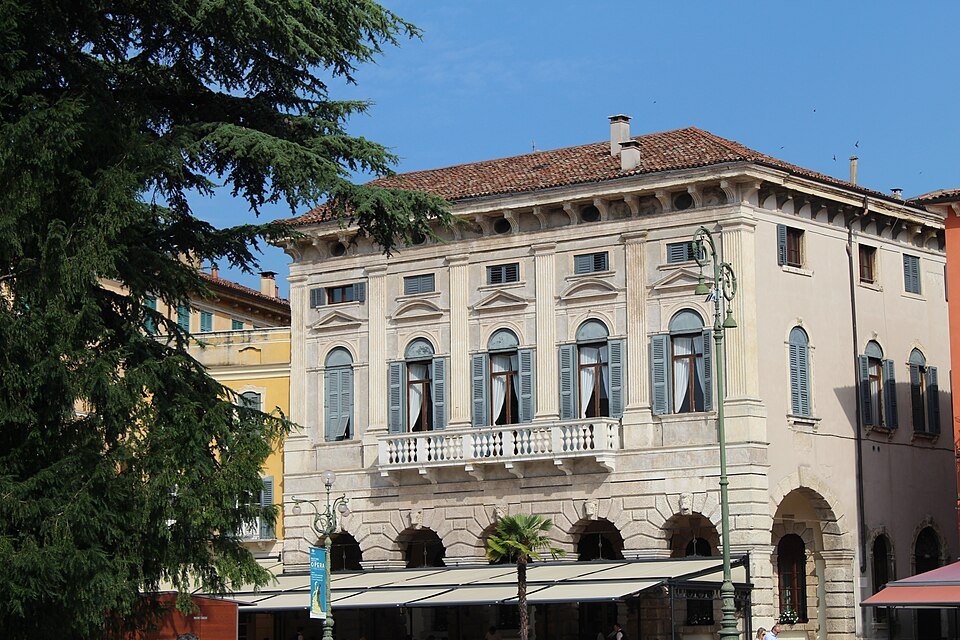
Both seasons sell tickets for dated performances, so see booking ahead for how to plan around them and when to come for how the summer crowds shape a trip. The foundation's website sells and describes both the Arena festival and the Filarmonico season.