Read the city
What Verona is
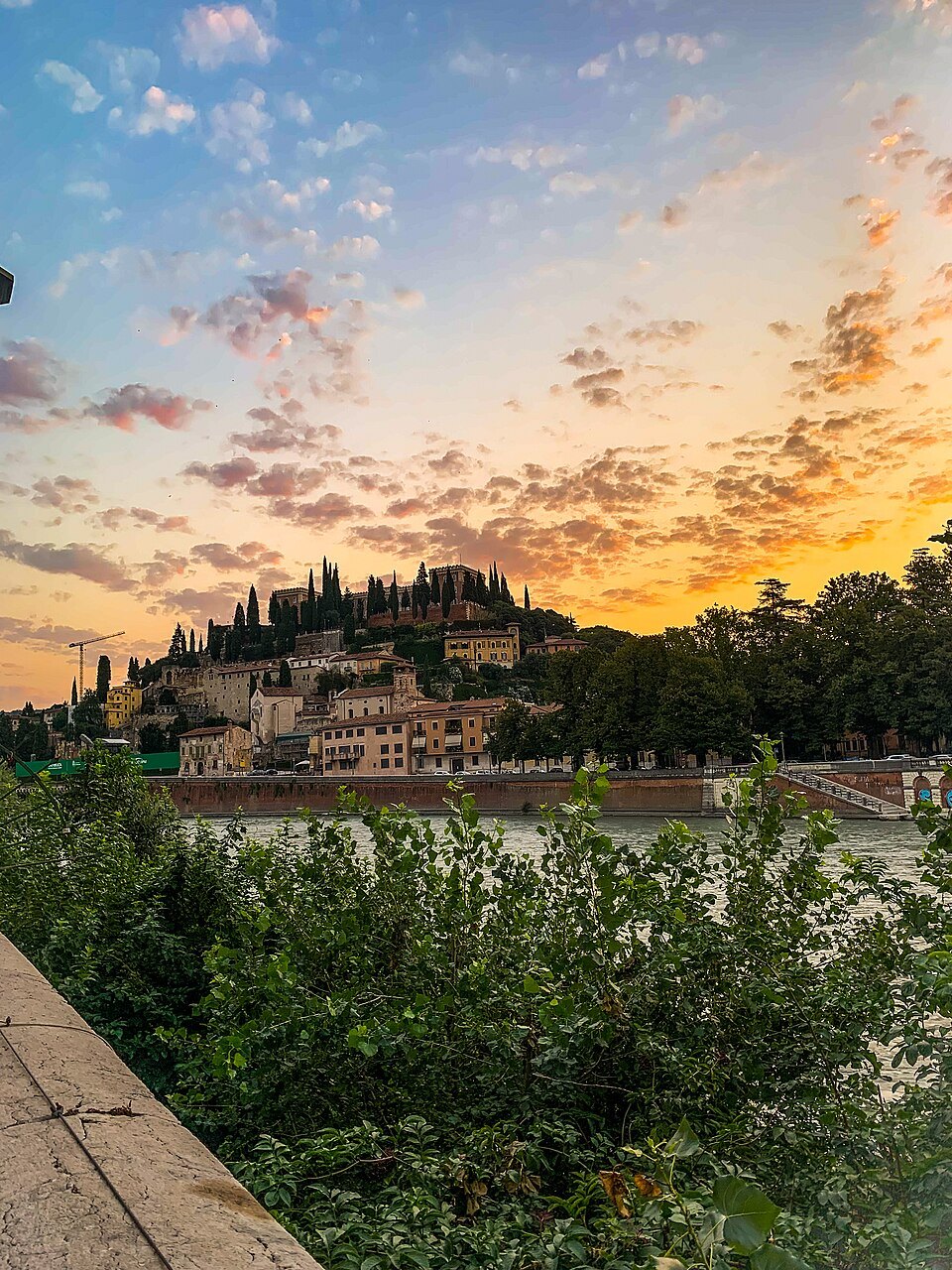
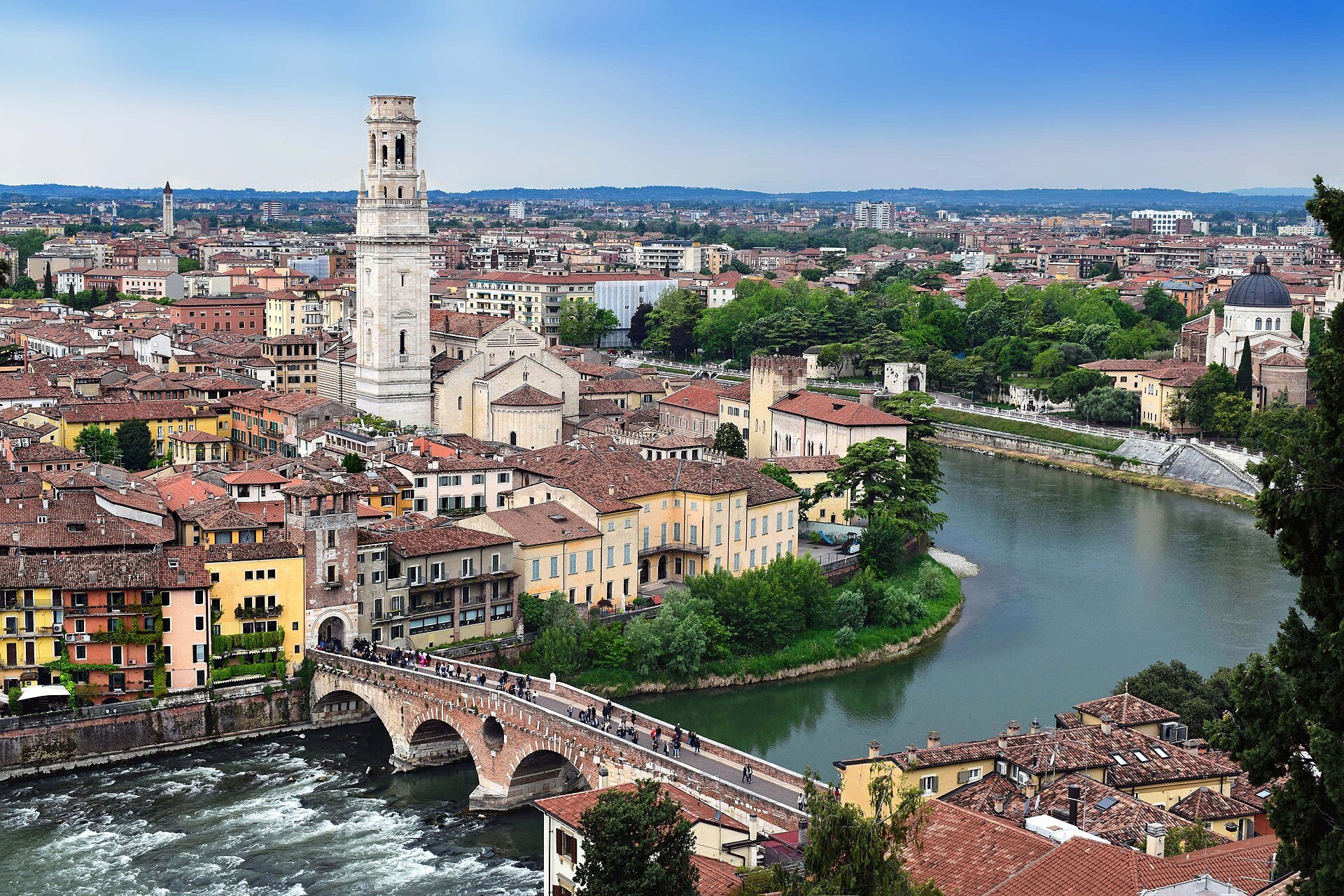
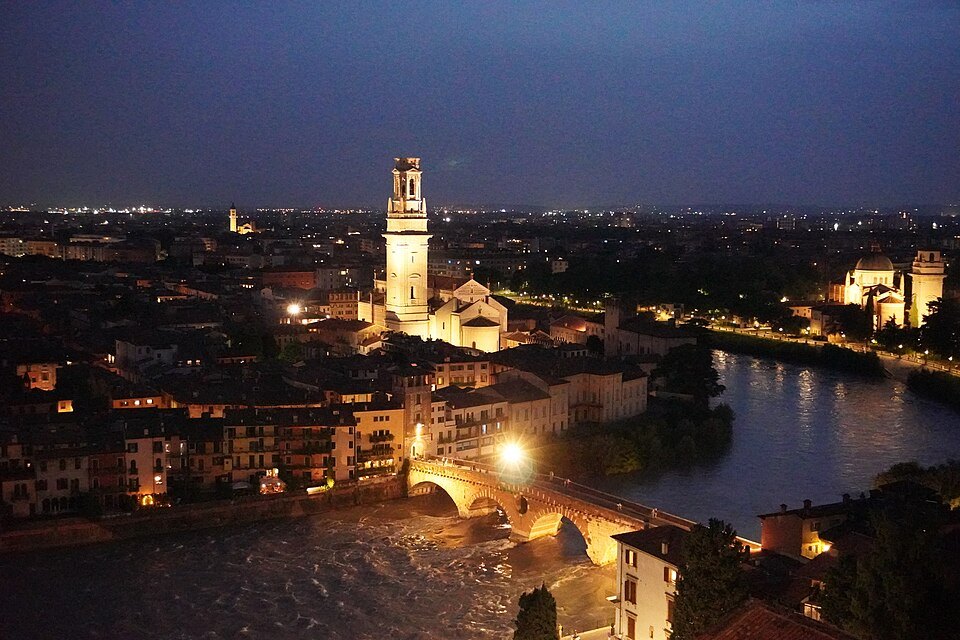
Verona is a city of about 255,000 people in the Veneto, in north-east Italy, built inside a tight loop of the river Adige. The old center fills the inside of the bend and is small enough to walk from end to end; Veronetta and the hill of Castel San Pietro face it across the water, and the choice between the two banks is most of where to stay. Trains arrive at Porta Nuova, south of the old walls, and the airport bus runs there too (getting here). The center has been a limited-traffic zone since 1997, so you get around it on foot.
What you walk past
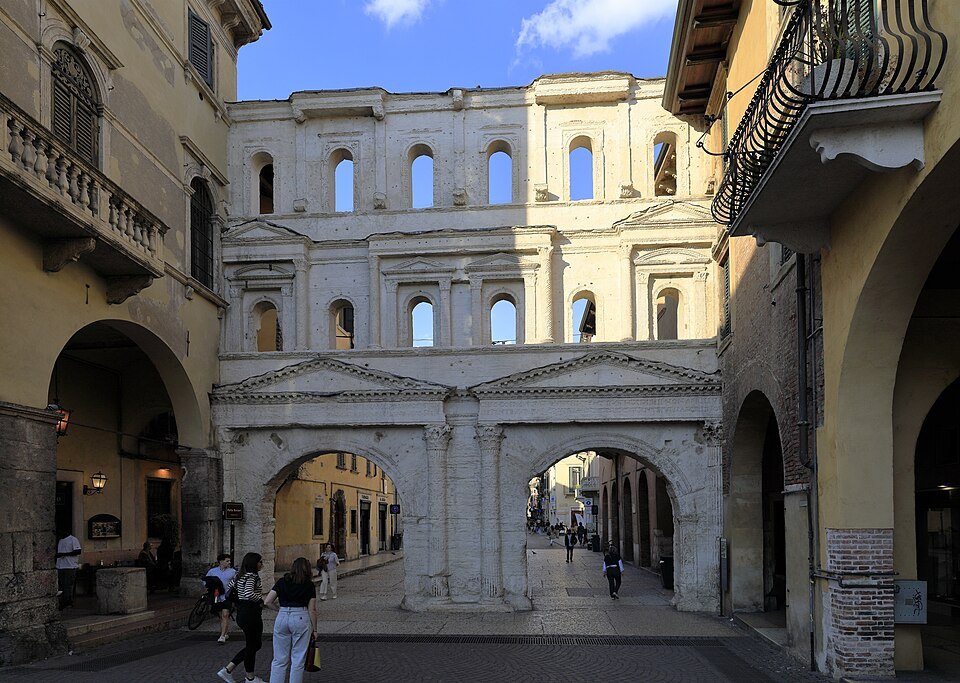
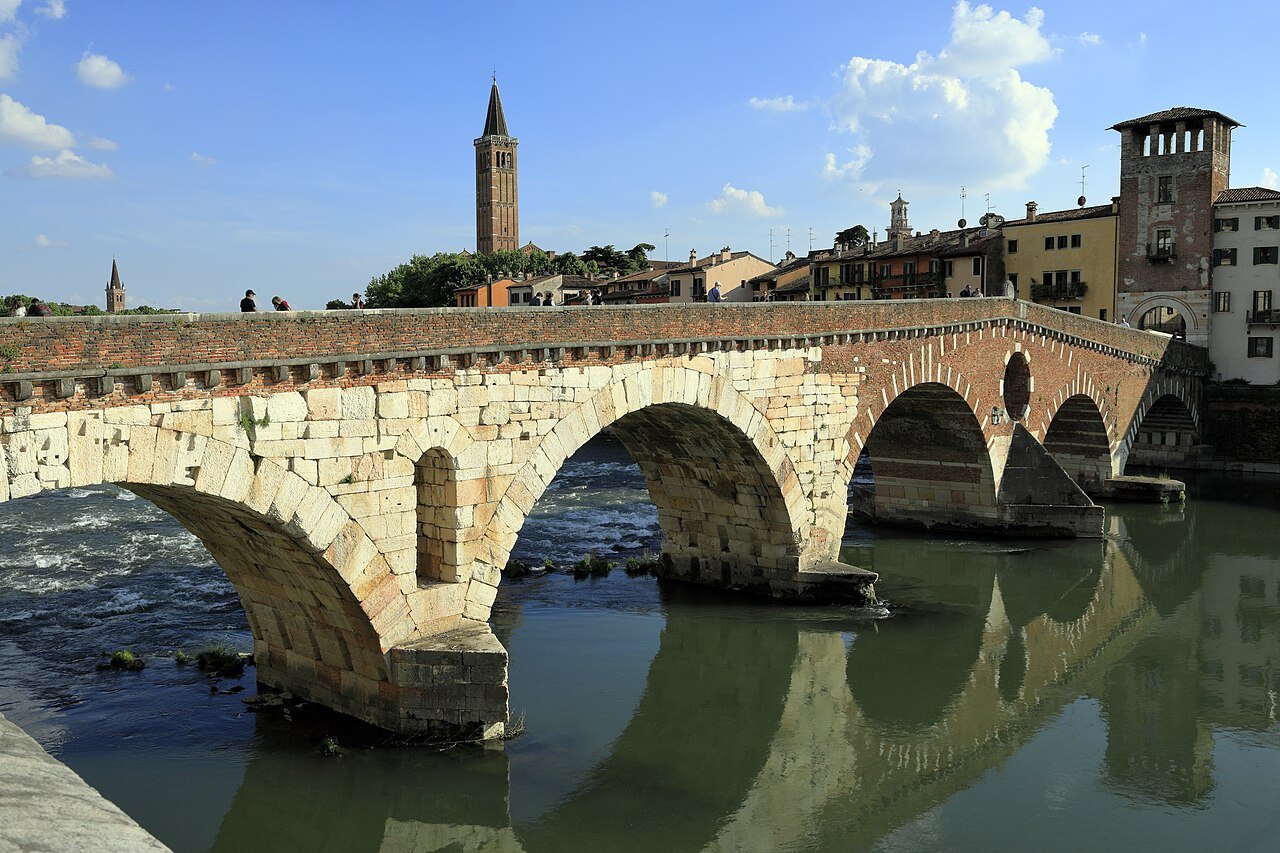
The Romans made the town a colony in 89 BC, and Roman Verona is still underfoot: the Arena, finished around AD 30; the forum, now Piazza delle Erbe; the Porta Borsari gate and the Ponte Pietra. The della Scala lords ruled in the 13th and 14th centuries — Cangrande I gave Dante shelter — and left their tombs and their castle. Venice took the city in 1405 and Austria held it until 1866. In April 1945 retreating German troops blew up the Ponte Pietra and the castle bridge; both were rebuilt, the Ponte Pietra between 1957 and 1959 with stones lifted out of the river.
What it is known for
For opera in the Arena, every summer since 1913 — see the opera season and what is worth booking ahead. For Juliet's House, a medieval inn the city bought in 1905 and gave a balcony in the 1930s. For pandoro and risotto with Amarone (eating and drinking), and for a UNESCO listing of the whole city in 2000. Begin with the sights, pick a season and an itinerary, and keep a day for the day trips to Lake Garda, Vicenza and Padua.
- The Arena
- Piazza Bra
- Piazza delle Erbe
- Piazza dei Signori
- Torre dei Lamberti
- The Scaliger Tombs
- Juliet's House
- Porta Borsari
- Palazzo Maffei
- Sant'Anastasia
- The Duomo
- Ponte Pietra
- The Roman Theatre
- Castel San Pietro
- Giardino Giusti
- Castelvecchio
- San Zeno Maggiore
A walk through the city
Follow the river: seven stops from Piazza Bra to the castle.
Piazza Bra
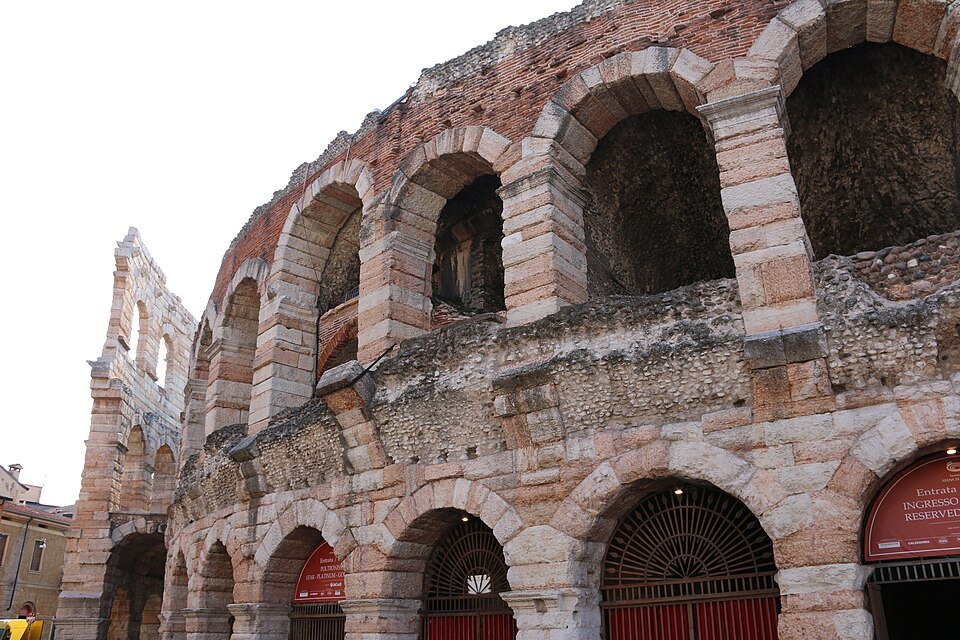
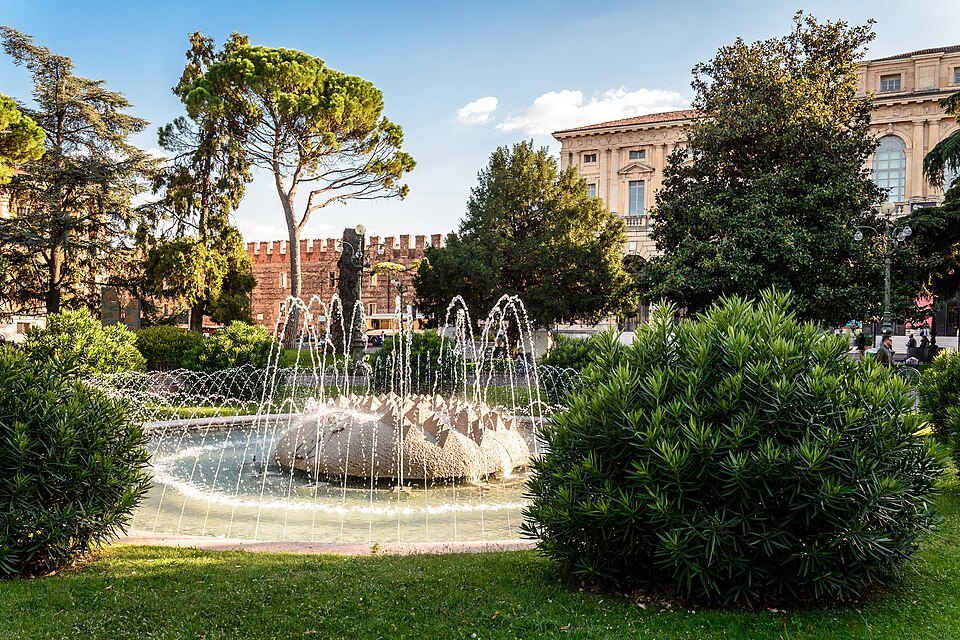
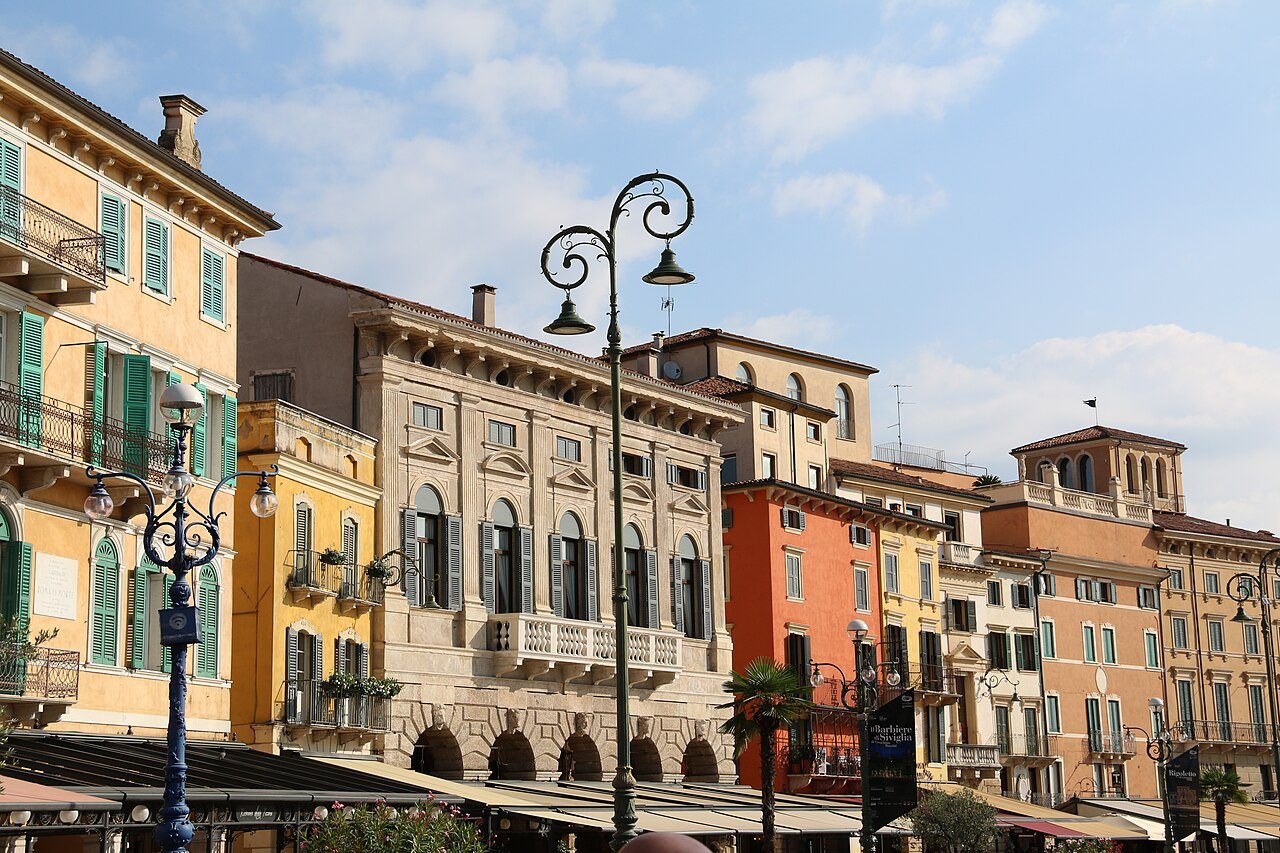
The city opens at Piazza Bra, a wide square entered through the twin arches of the Portoni della Bra. Café terraces line the long pavement of the Liston on one side; on the other stands the Arena, finished around AD 30 in red and white limestone quarried in the Valpolicella hills. Of its outer ring only one tall fragment, the Ala, is left standing above the rest.
The old forum
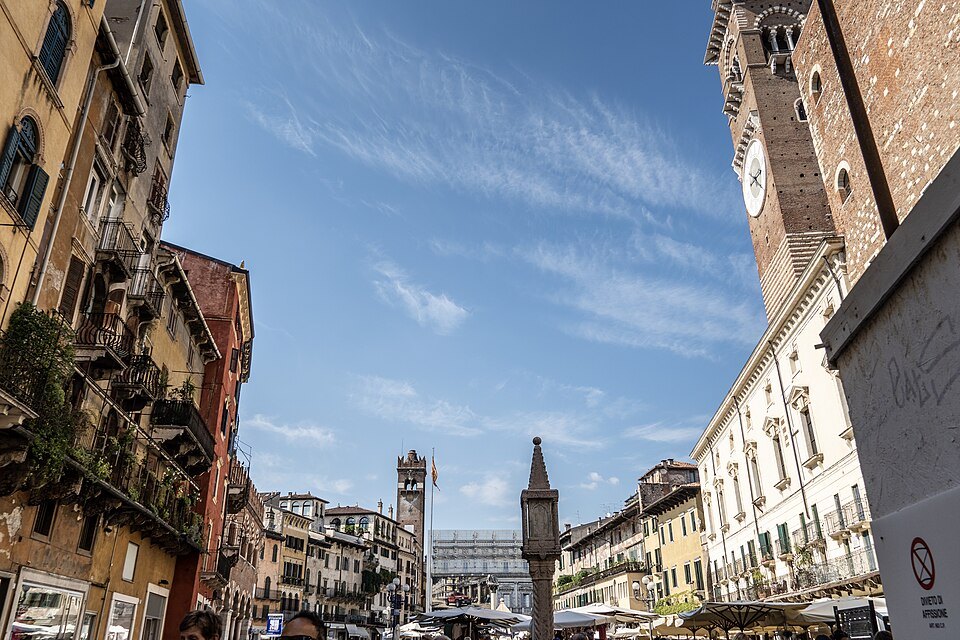
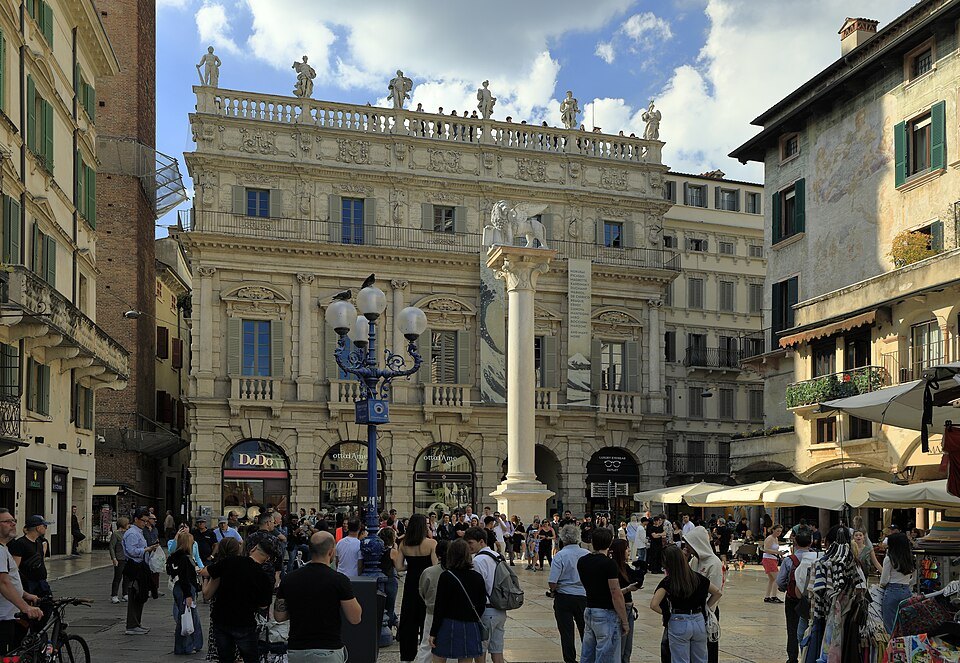
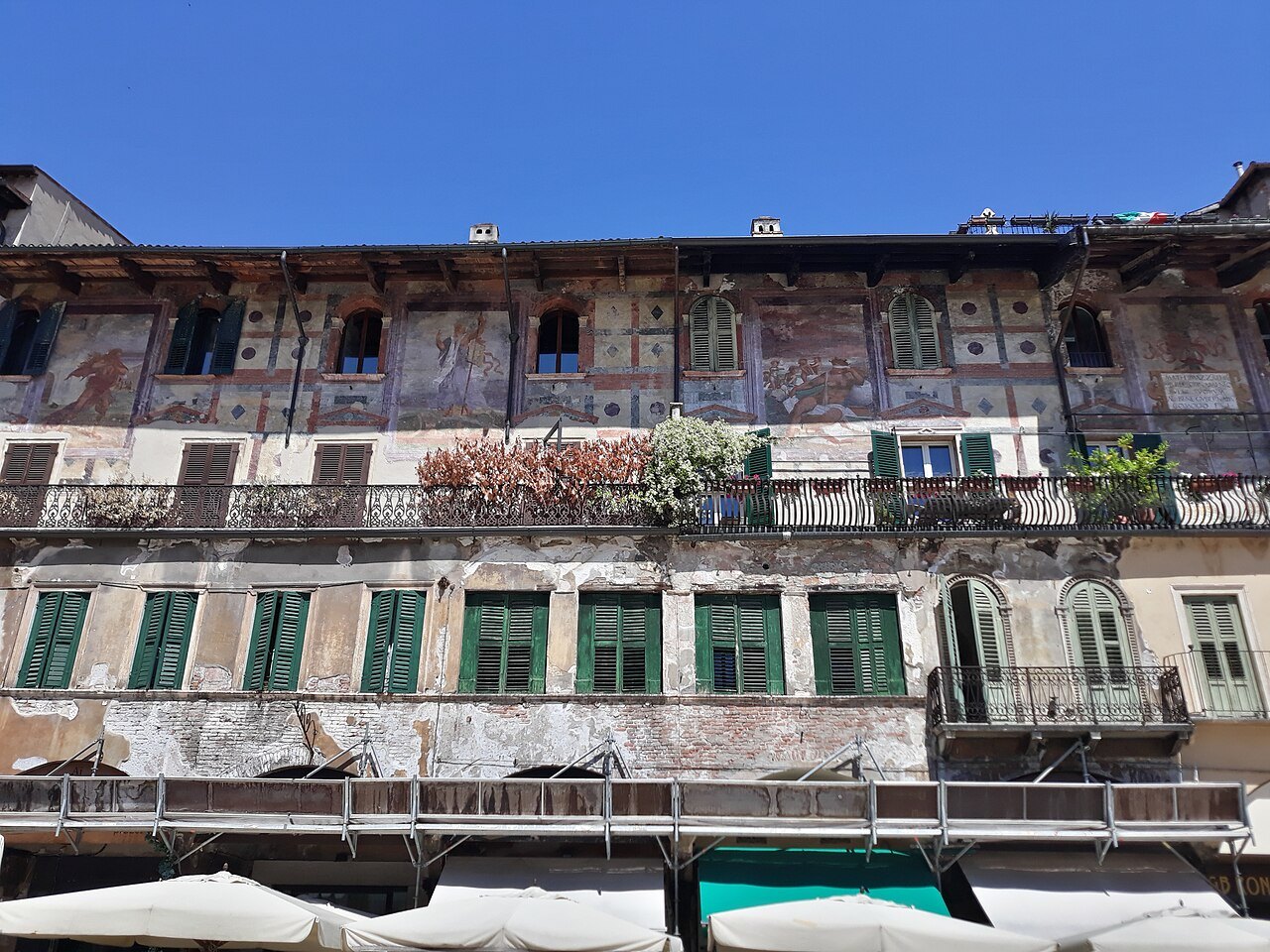
North along Via Mazzini, Piazza delle Erbe sits on the site of the Roman forum and is still a market square. Its fountain, built in 1368, is crowned by a Roman statue of about AD 380 that the city calls Madonna Verona; the column with the winged lion is the mark Venice left after 1405.
The Scaliger squares
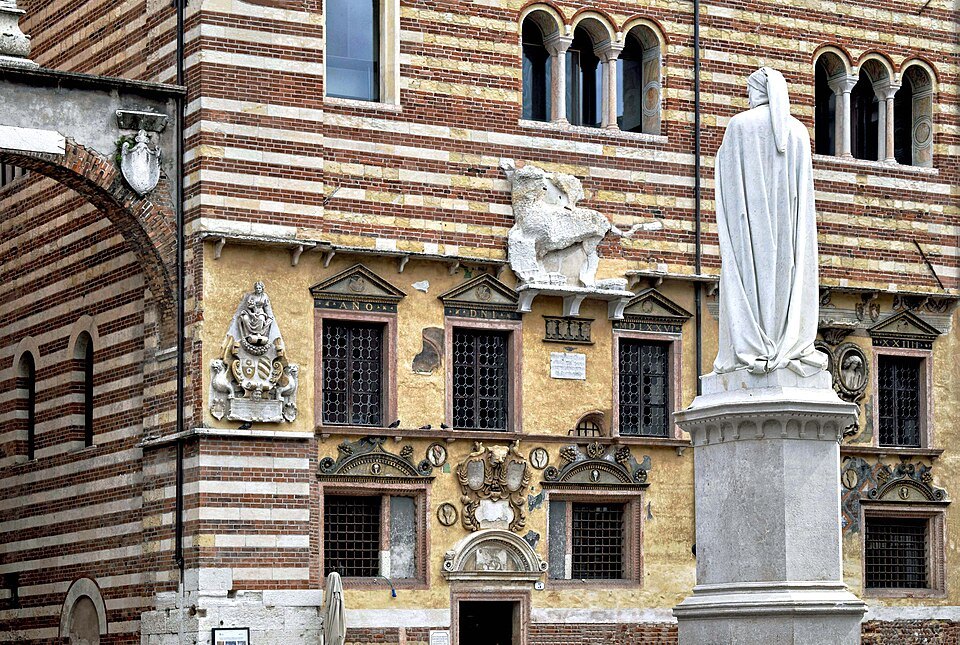
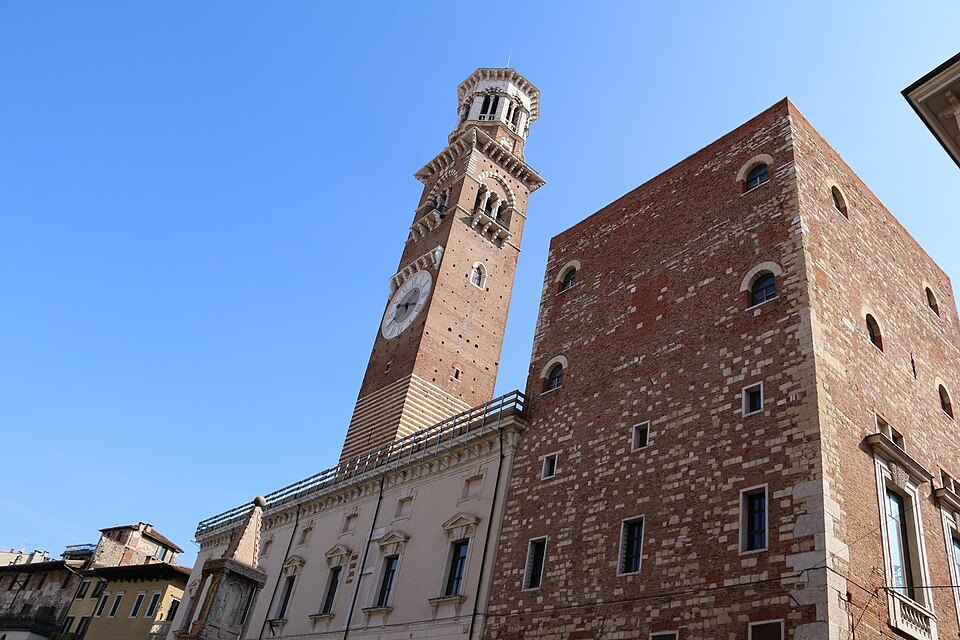
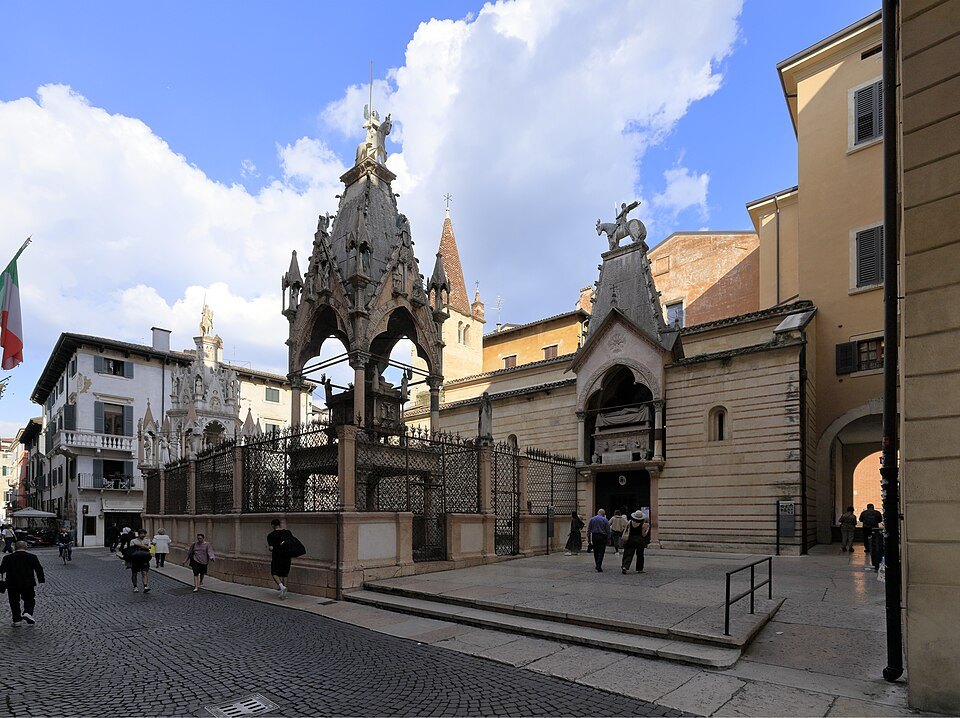
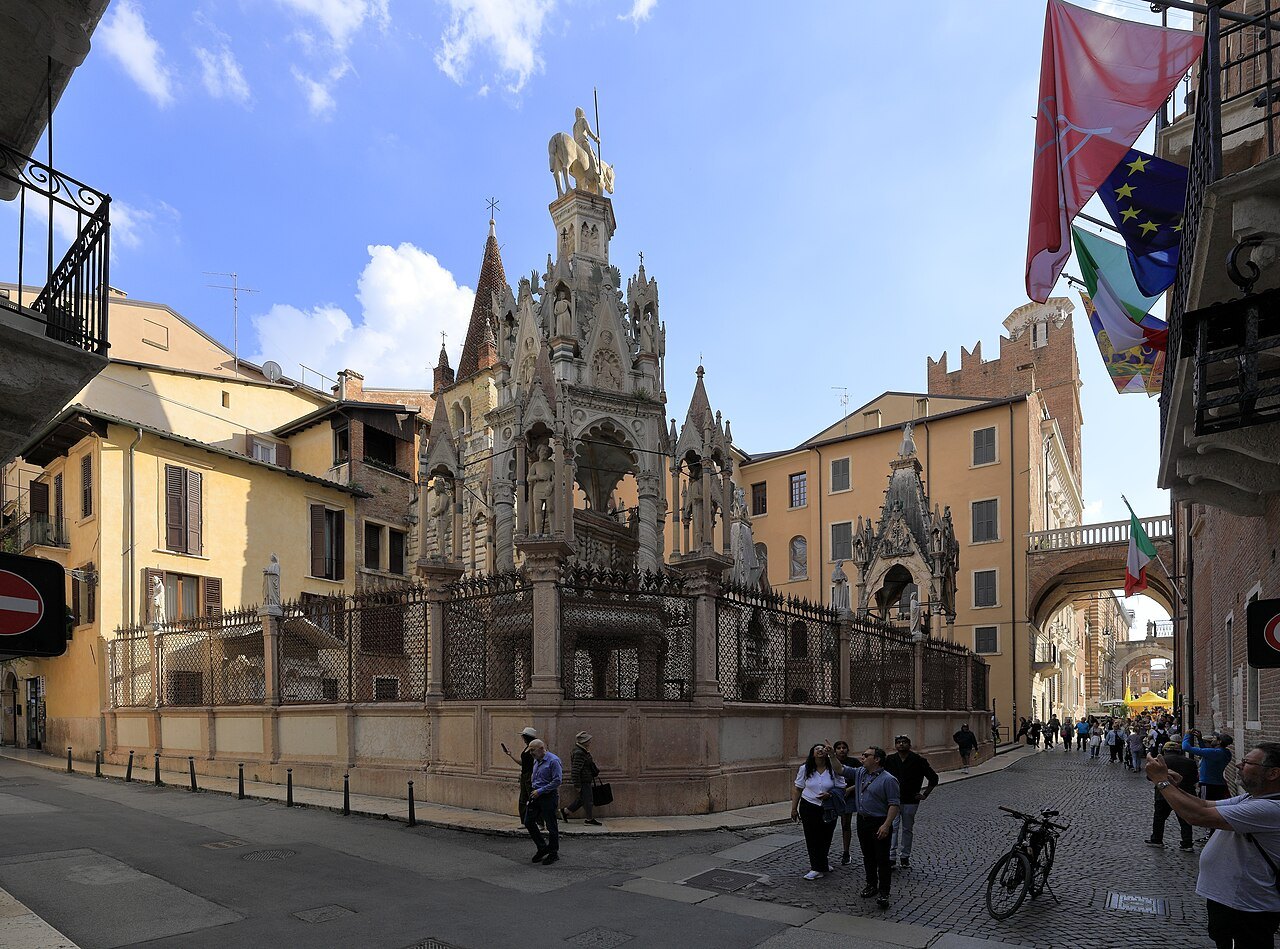
Through an arch lies Piazza dei Signori, the square of government, with Dante in marble at its center and the 84-meter Torre dei Lamberti, begun in 1172, above it. Round the corner, outside the small church of Santa Maria Antica, stand the tombs of the della Scala lords; the horseman on Cangrande's is a copy, the original moved to Castelvecchio in 1909.
Juliet's courtyard
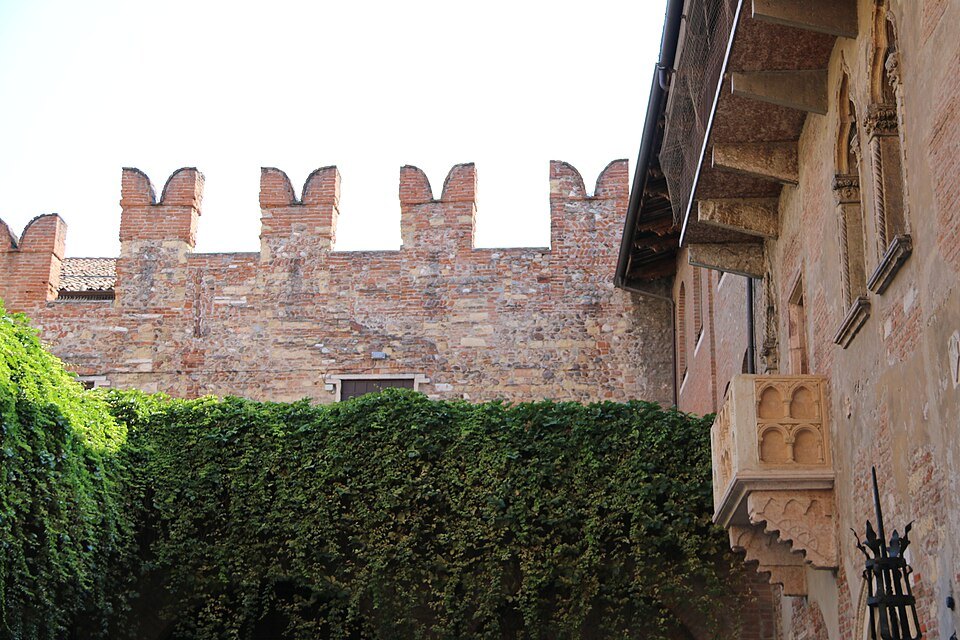
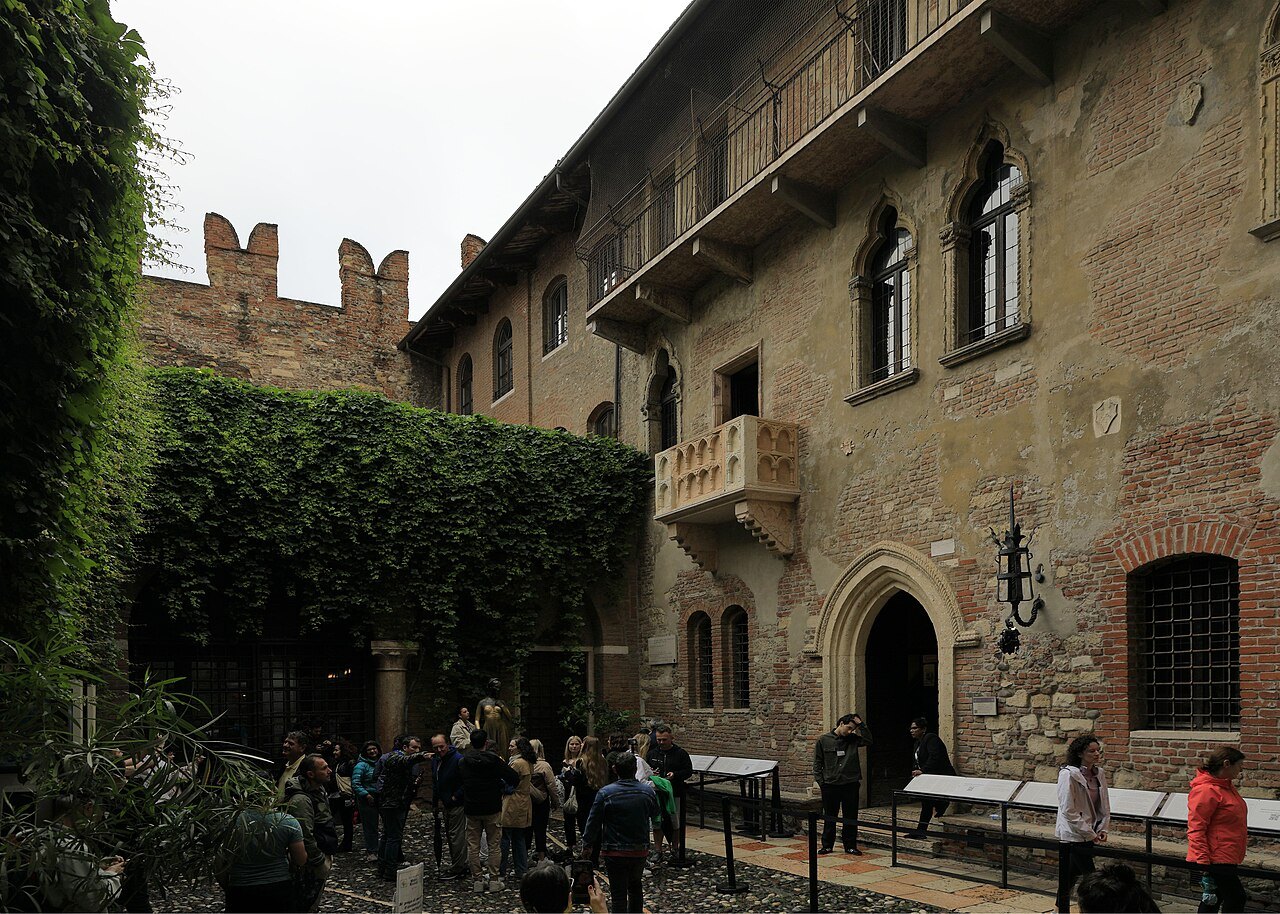
A few streets away, visitors crowd the courtyard of Juliet's House. It is a medieval tower-house first recorded in 1351 as an inn; the hat carved on its arch was later read as the badge of Shakespeare's Capulets. The city bought it in 1905 and the balcony was put together in the 1930s. The link to the play is a story Verona tells, not a record.
Across Ponte Pietra
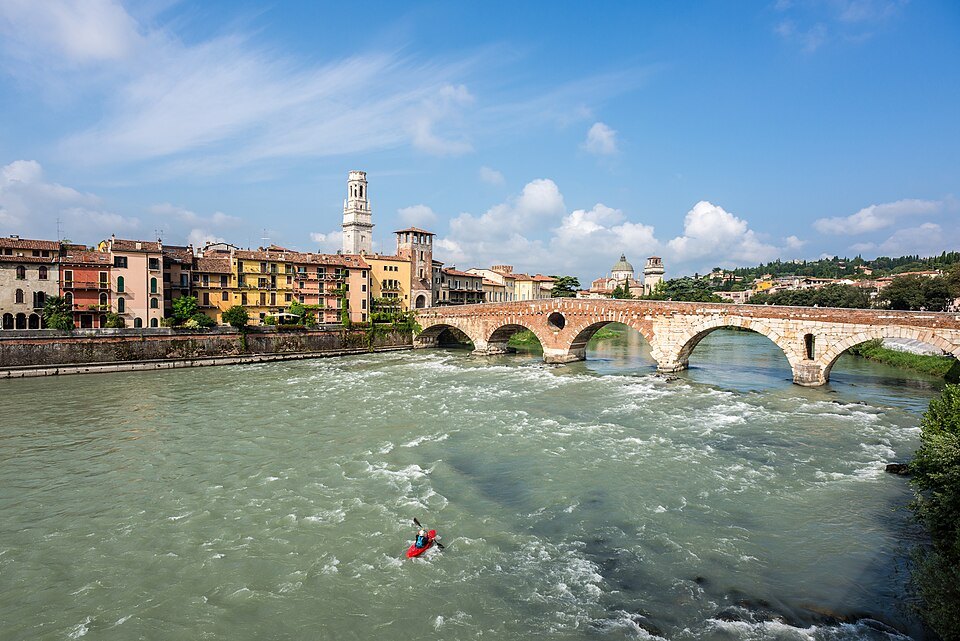
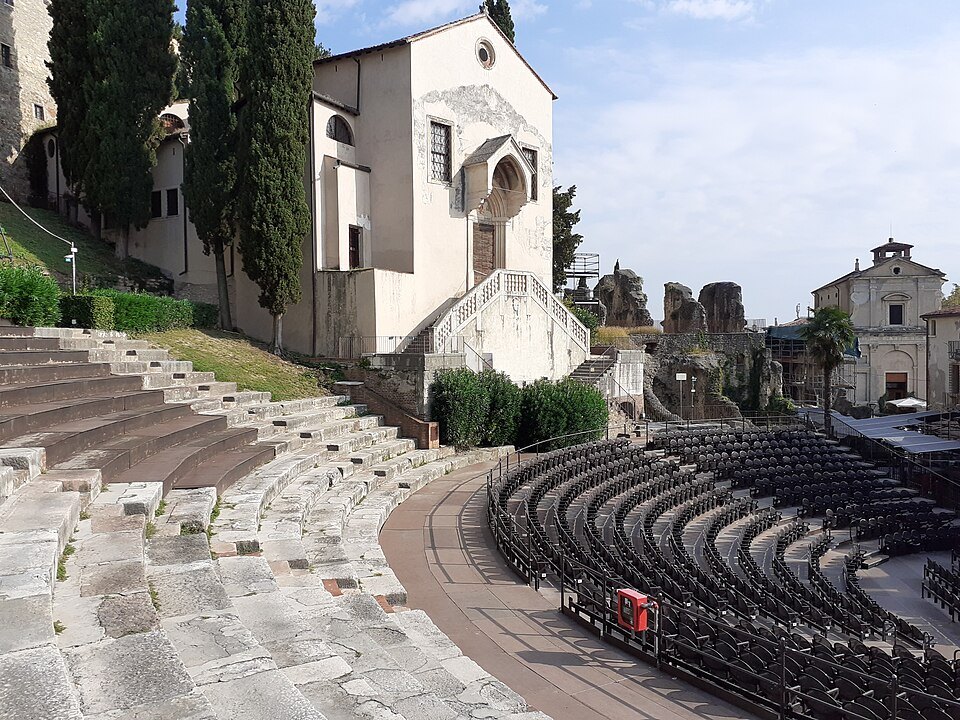
At the top of the loop the Ponte Pietra crosses to the far bank. The Romans finished it around 100 BC; its arches were blown up in April 1945 and rebuilt between 1957 and 1959 with stones recovered from the river, which is why the stone and brick look patched. On the other side the Roman theater is cut into the hillside.
The hill
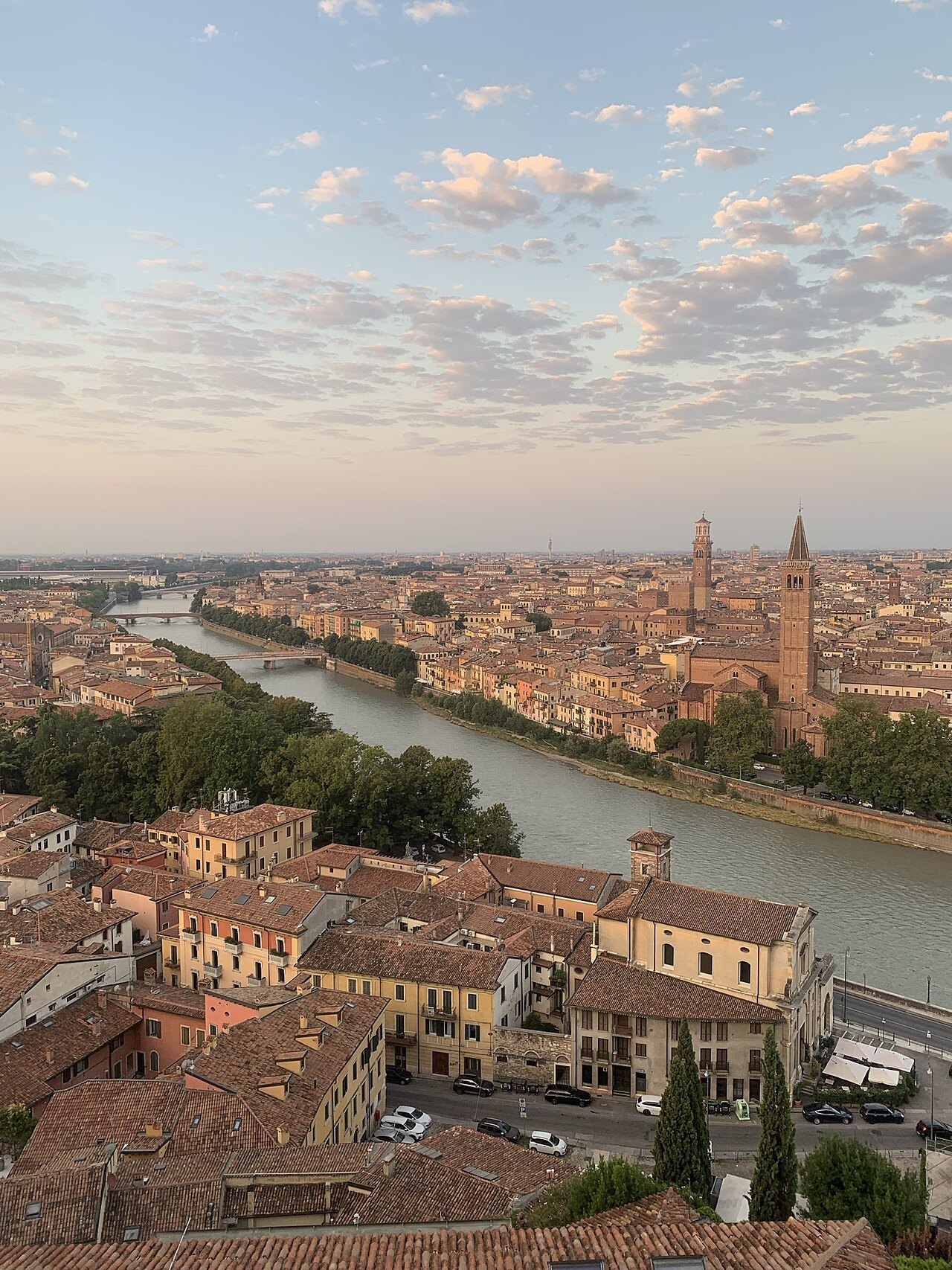
A funicular, reopened in 2017, climbs in about a minute and a half from beside the theater to Castel San Pietro. From its terrace the whole loop lies below: the river bending round the old center, the towers and domes inside it, and the hills of the Valpolicella behind.
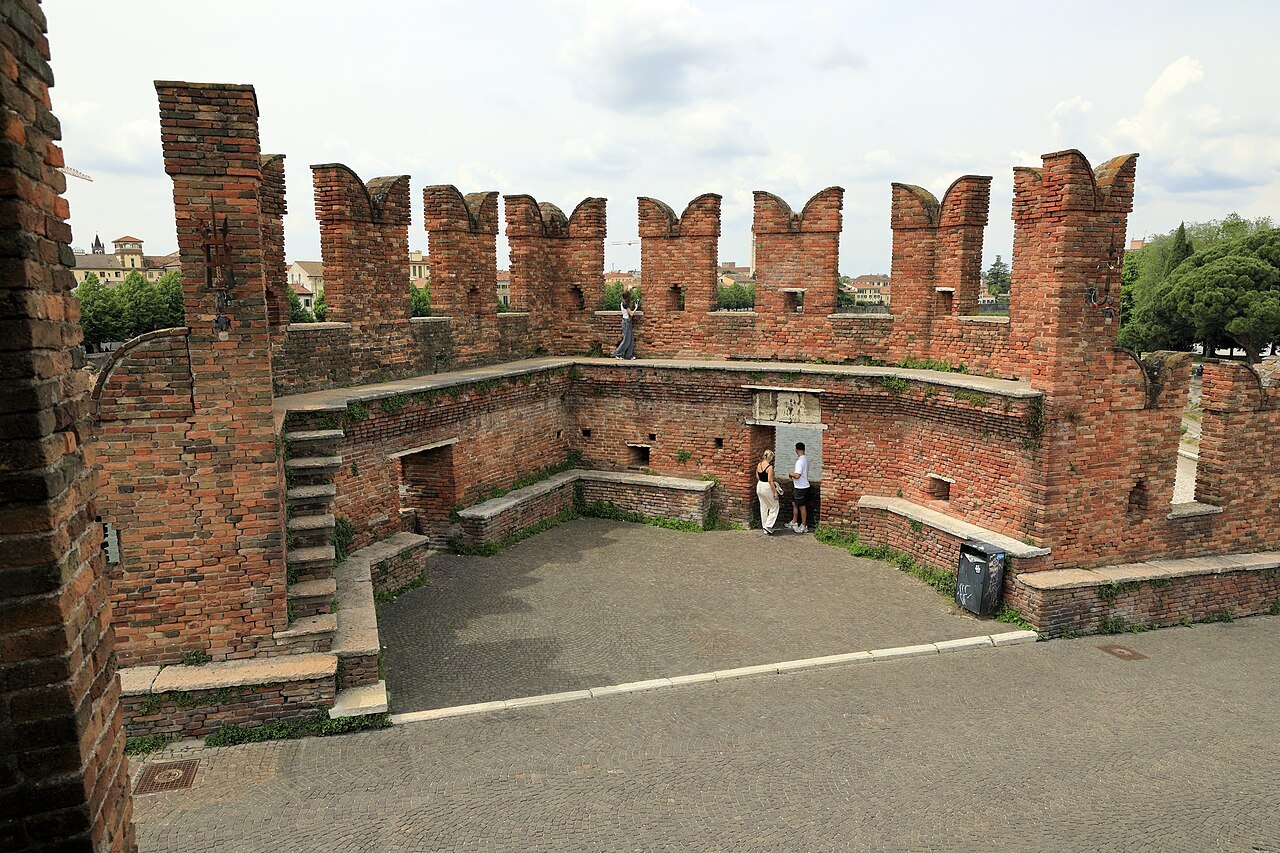
West to the castle
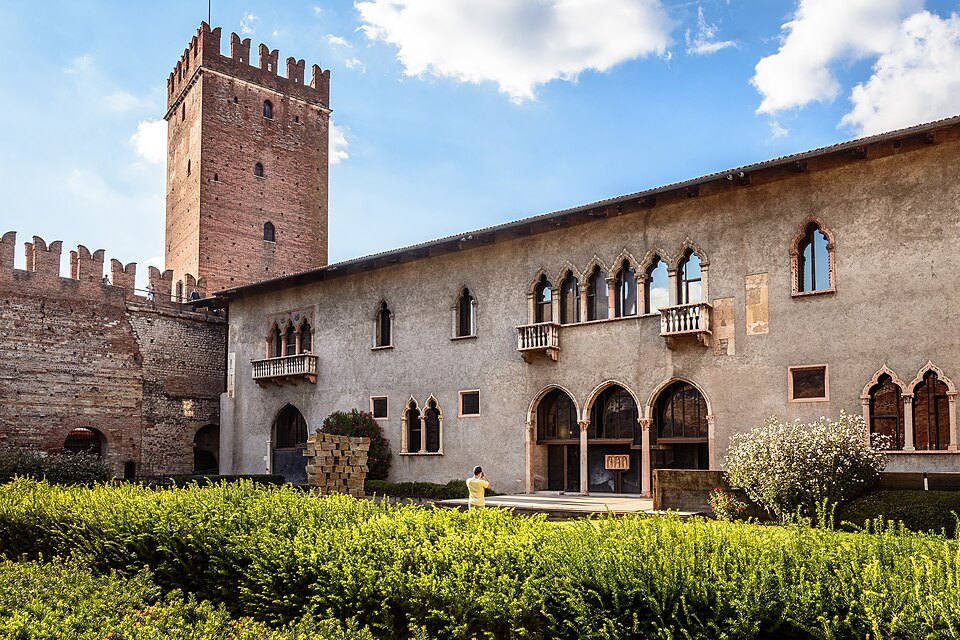
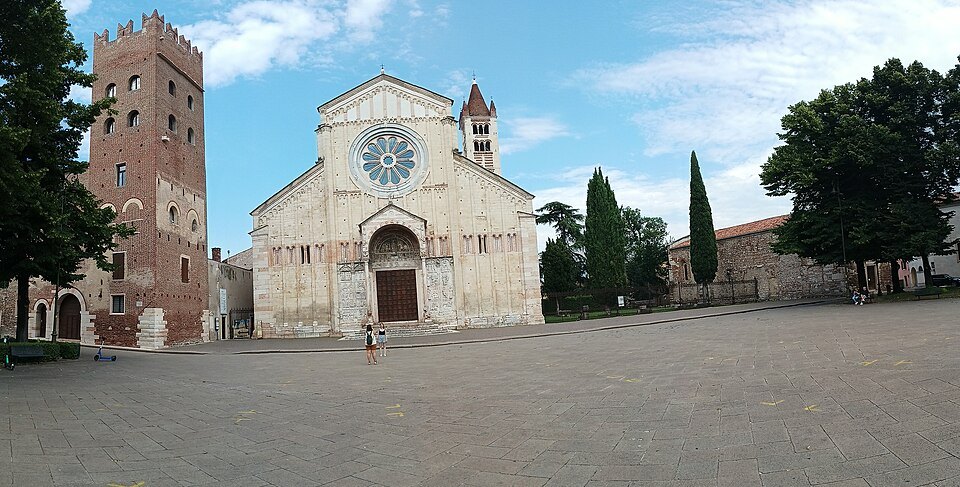
Downstream, the Scaligers' castle, Castelvecchio, guards its own bridge, built in 1354–1356 and rebuilt after the war. From 1958 the architect Carlo Scarpa turned the castle, in phases over two decades, into the city's art museum. Further west stands San Zeno Maggiore, whose rose window of 1189 is called the Wheel of Fortune.
Three things to know first
- ArrivingPorta Nuova is the door.Trains from Venice take about an hour and from Bologna about 50 minutes, and the airport bus takes about a quarter of an hour. All of them stop at Porta Nuova, south of the old walls.Getting here
- The centerInside the loop, walk.The old city has been a limited-traffic zone since 1997, watched by camera gates. It is small enough to cross on foot; drivers park outside it.Getting around
- Summer nightsThe Arena becomes a stage.Opera has filled the Roman amphitheater in summer since 1913, beginning as the light fades. Choose the evening, then the seats.The opera season
Italy · VenetoAbout 255,000 peopleItalianEuroUNESCO World Heritage since 2000
The guide, section by section
Eleven practical questions about the city, and the journal — laid as a wall.
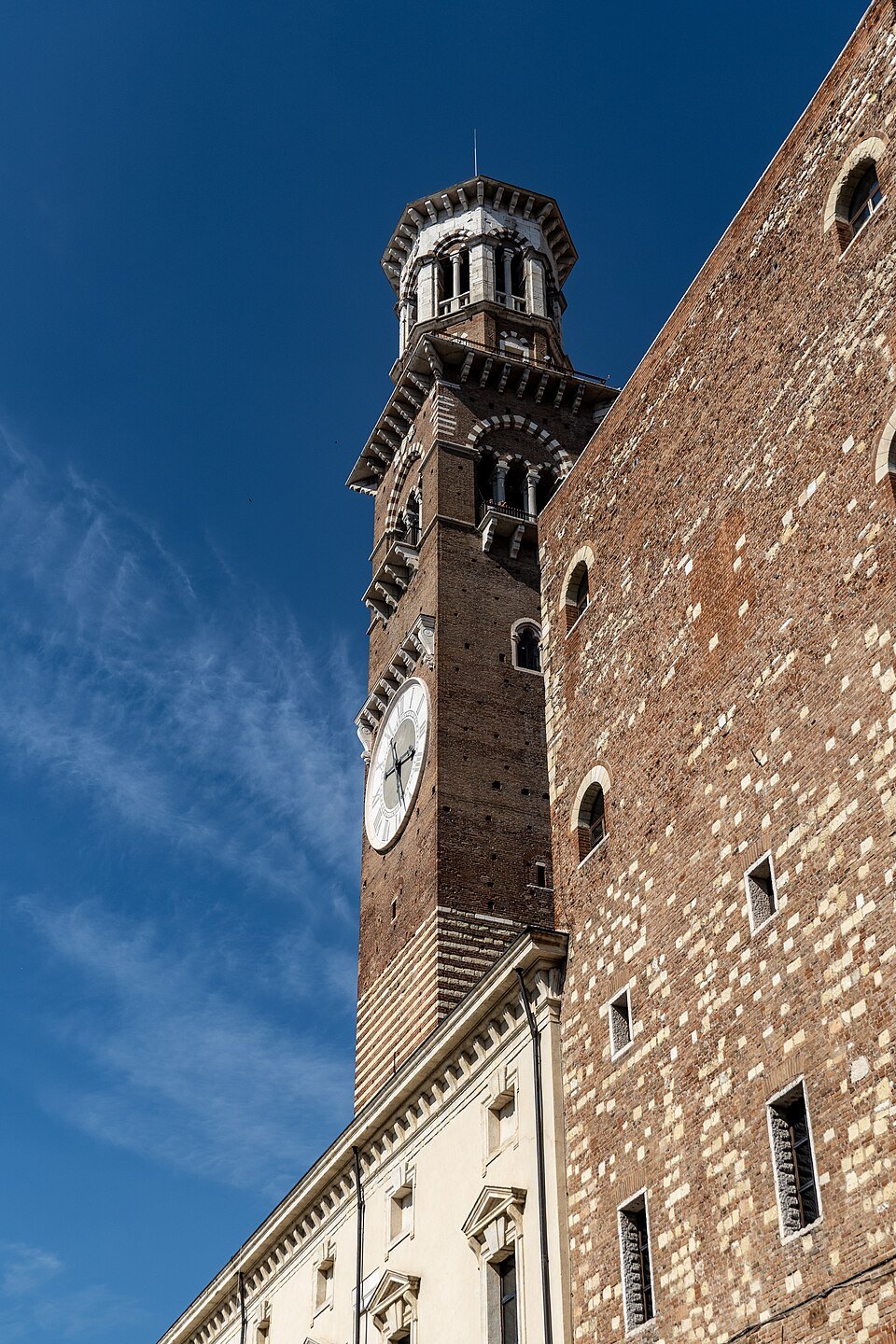 Seventeen places, one page eachThe SightsFrom the Arena to San Zeno: what each one is, what you actually see, and how long to give it.
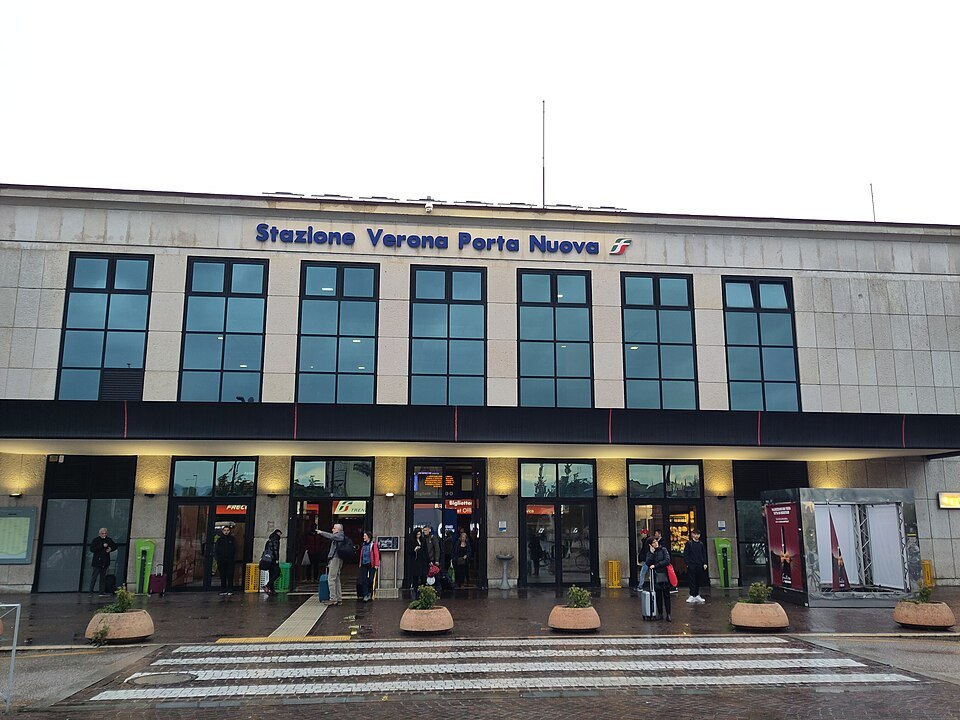 Air, rail, coach and carGetting HerePorta Nuova station, the airport bus from Villafranca, and why a car stops at the old center's edge.
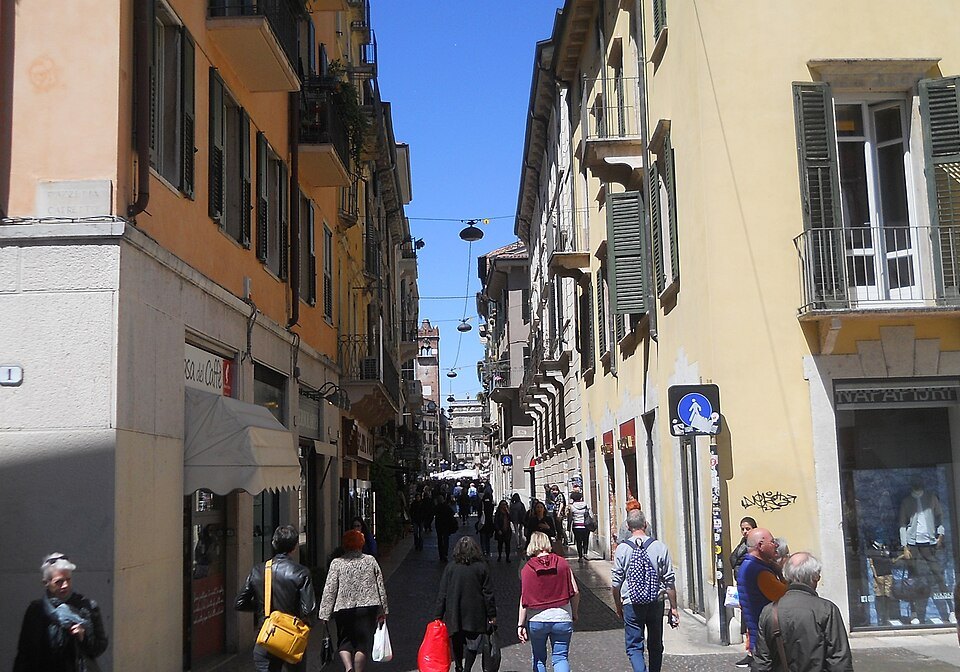 Walk the loopGetting AroundA center small enough to cross on foot, city buses for the rest, and the funicular up the hill.
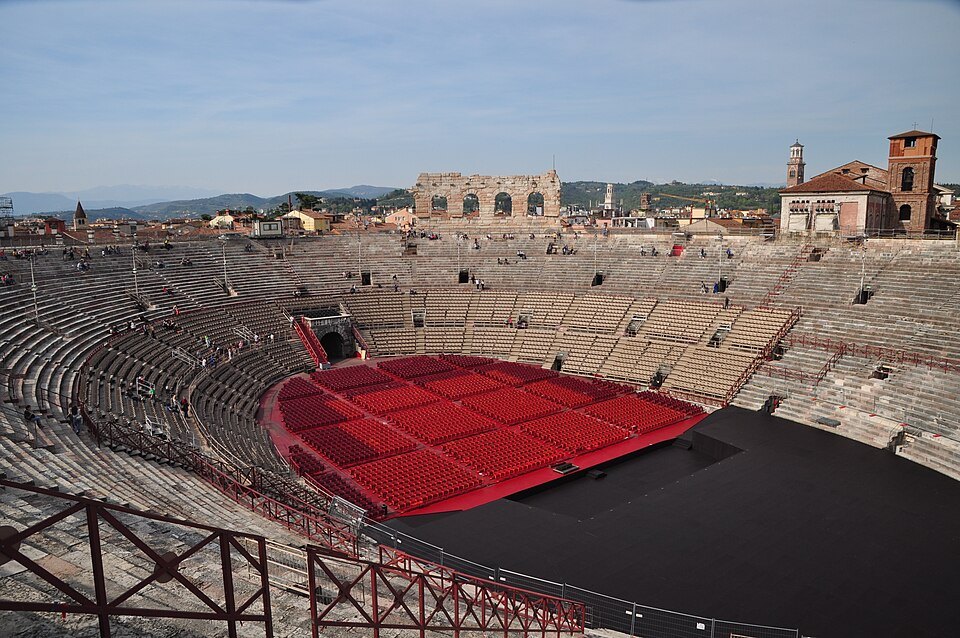 The Arena on summer nightsThe Opera SeasonHow the Roman amphitheater became an opera house in 1913, and how an evening there works.
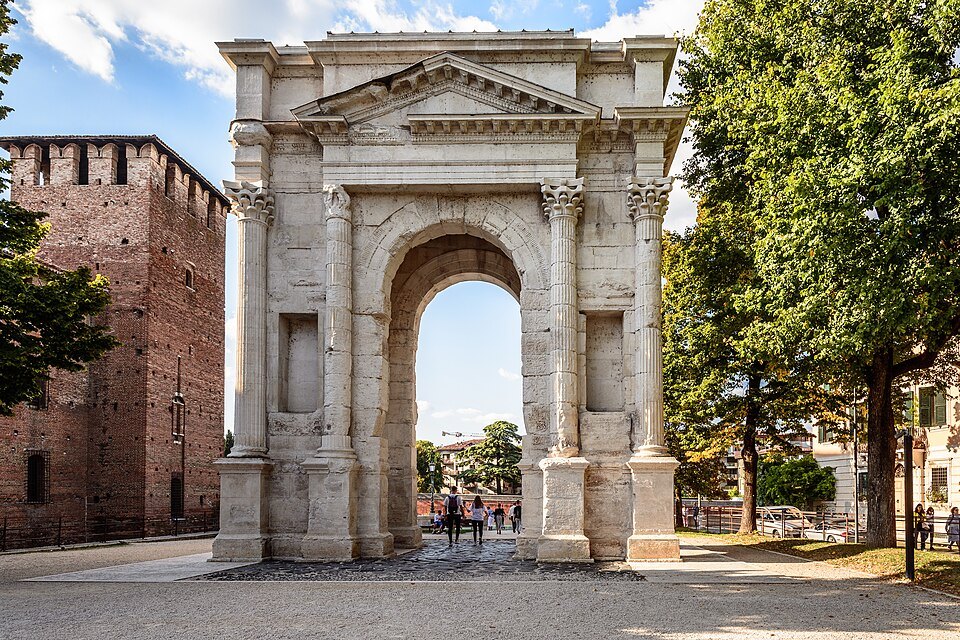 The city under the cityRoman VeronaThe Arena, the forum, the gates, the bridge and the theater — the Roman town you still walk through.
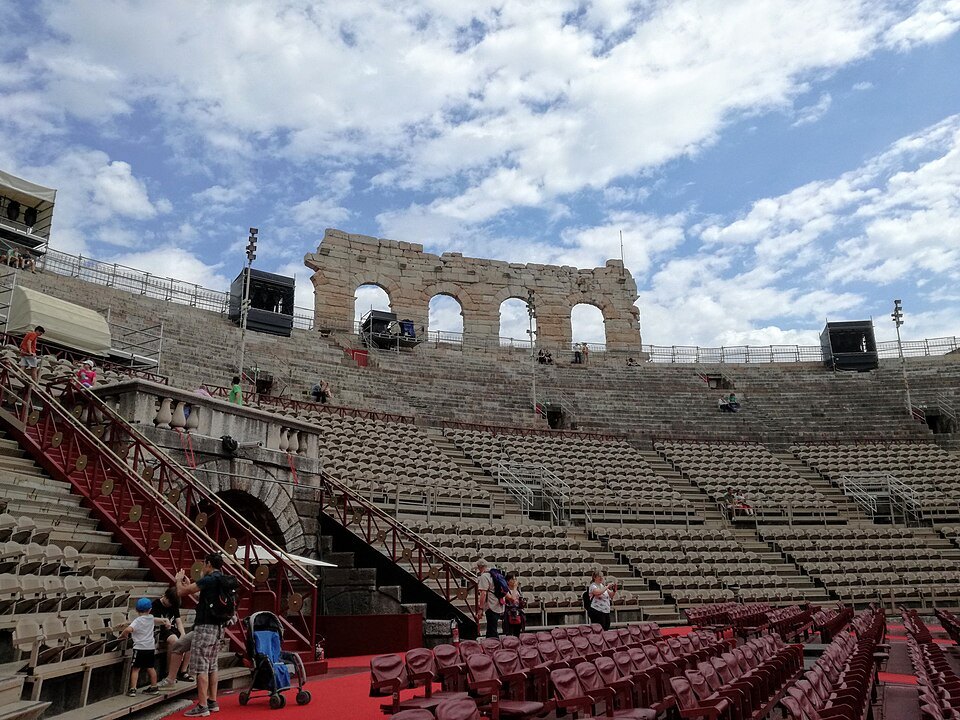 What to arrange firstBooking AheadThe few things in Verona worth fixing a date for, and the many that need nothing.
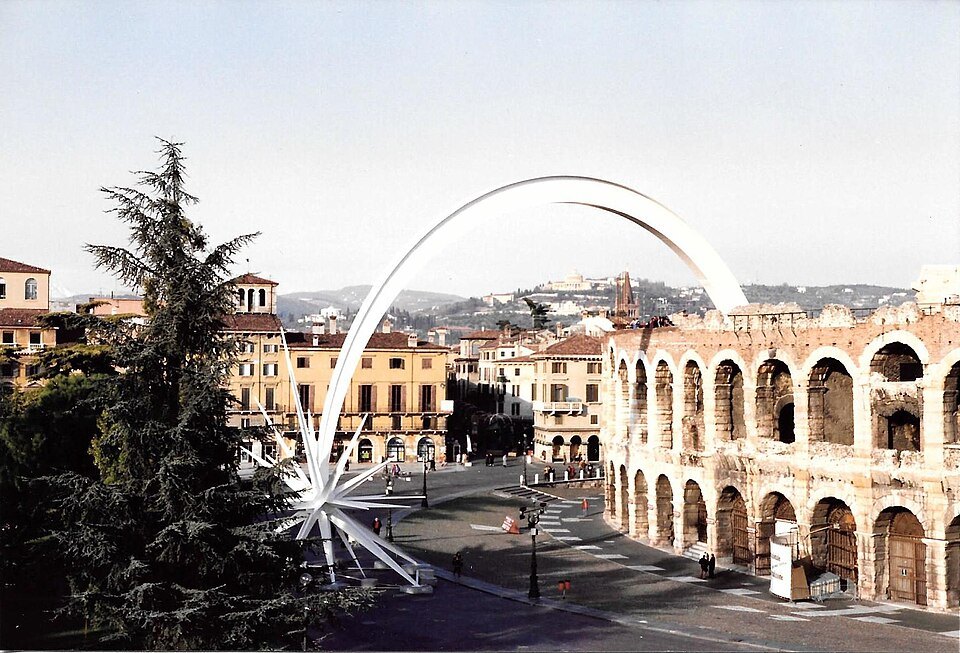 The year in VeronaWhen to ComeOpera summers, quiet winters and Christmas in Piazza Bra, month by month.
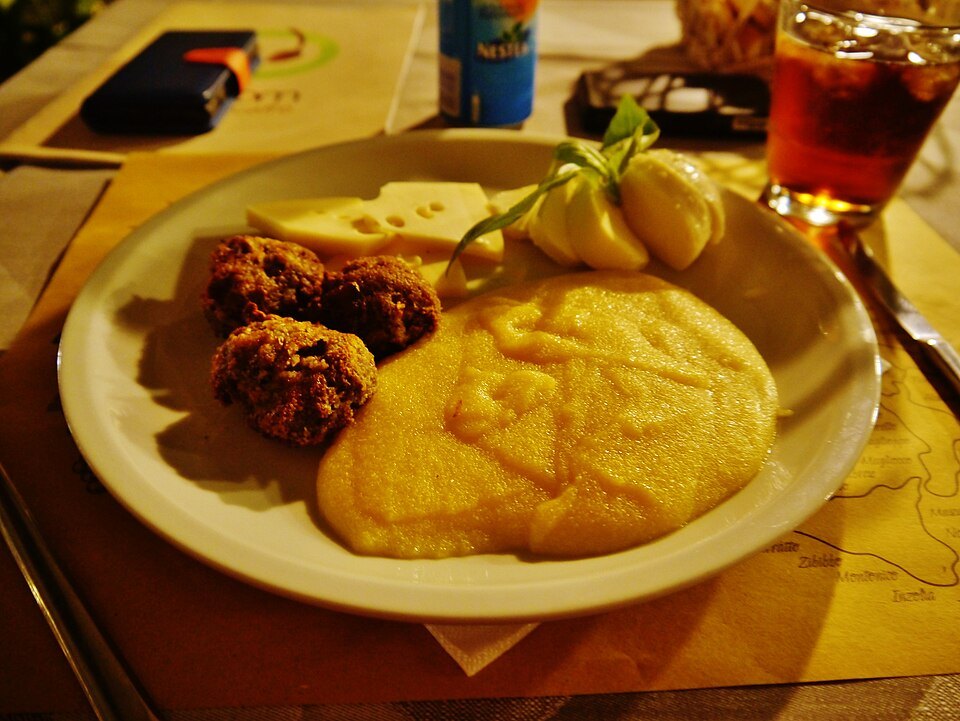 Pandoro, risotto and AmaroneEating & DrinkingThe dishes Verona calls its own and the wines from the hills around it.
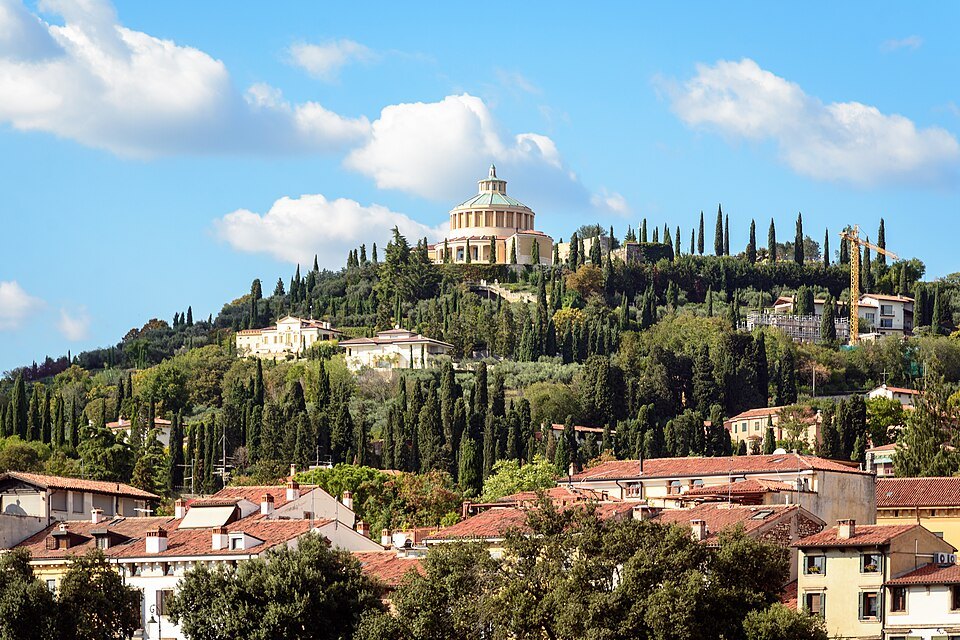 The loop, Veronetta and beyondWhere to StayEach part of the city for a night or a week, drawn on a map.
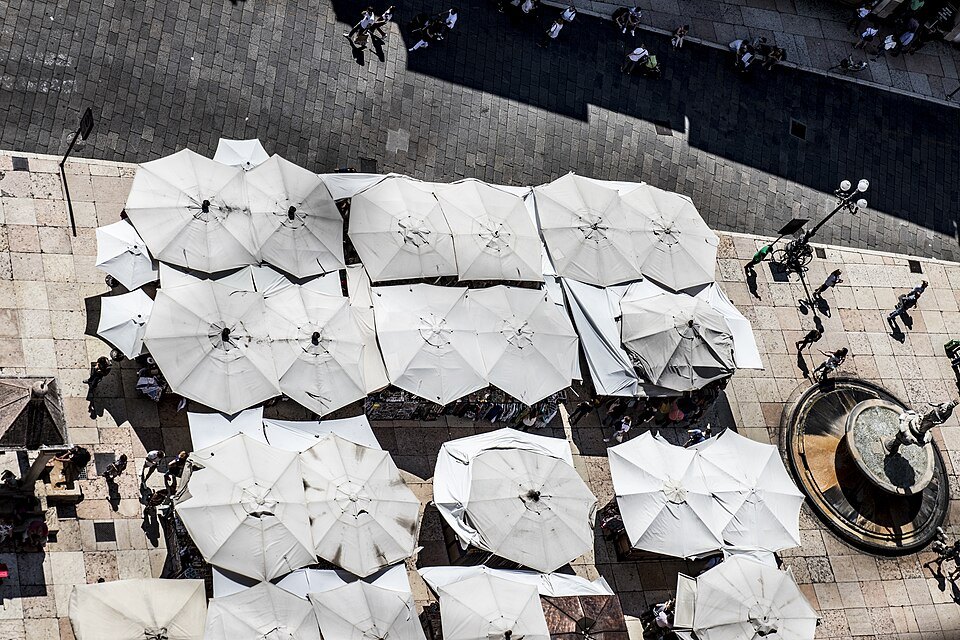 One day, two days, threeItinerariesRoutes by the length of your stay, planned around what closes when.
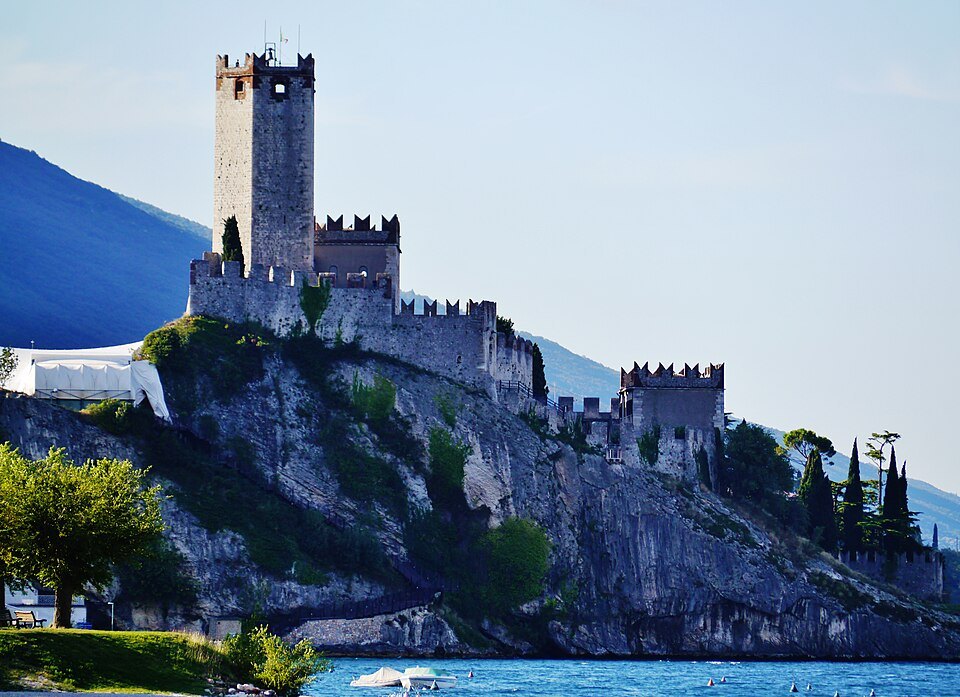 Lake Garda, Vicenza, Padua, VeniceDay TripsWhere the trains and roads out of Verona lead in a day.
All seventeen sights
Numbered as on the drawing of the loop.