Home · Sights · Juliet's House
A genuine medieval tower-house on Via Cappello, tied to Romeo and Juliet by a family name, a hat carved in stone and a 1930s museum staging.
The parts to look at
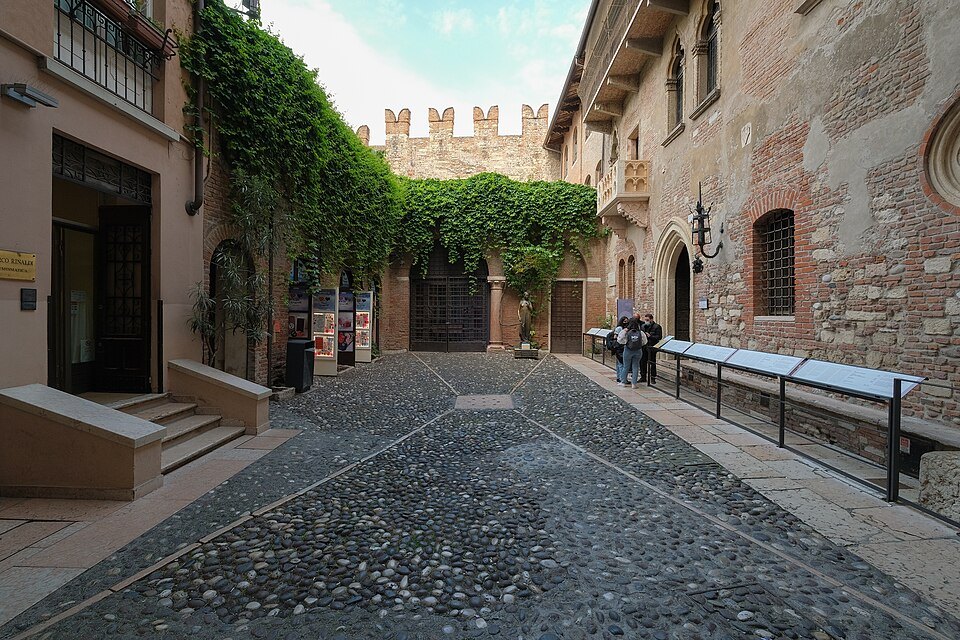
- GroundEntrance passageThe archway from Via Cappello into the courtyard, where the famous wall of messages was
- Level 1Courtyard and stemmaThe inner yard, with a carved hat on the keystone of an arch
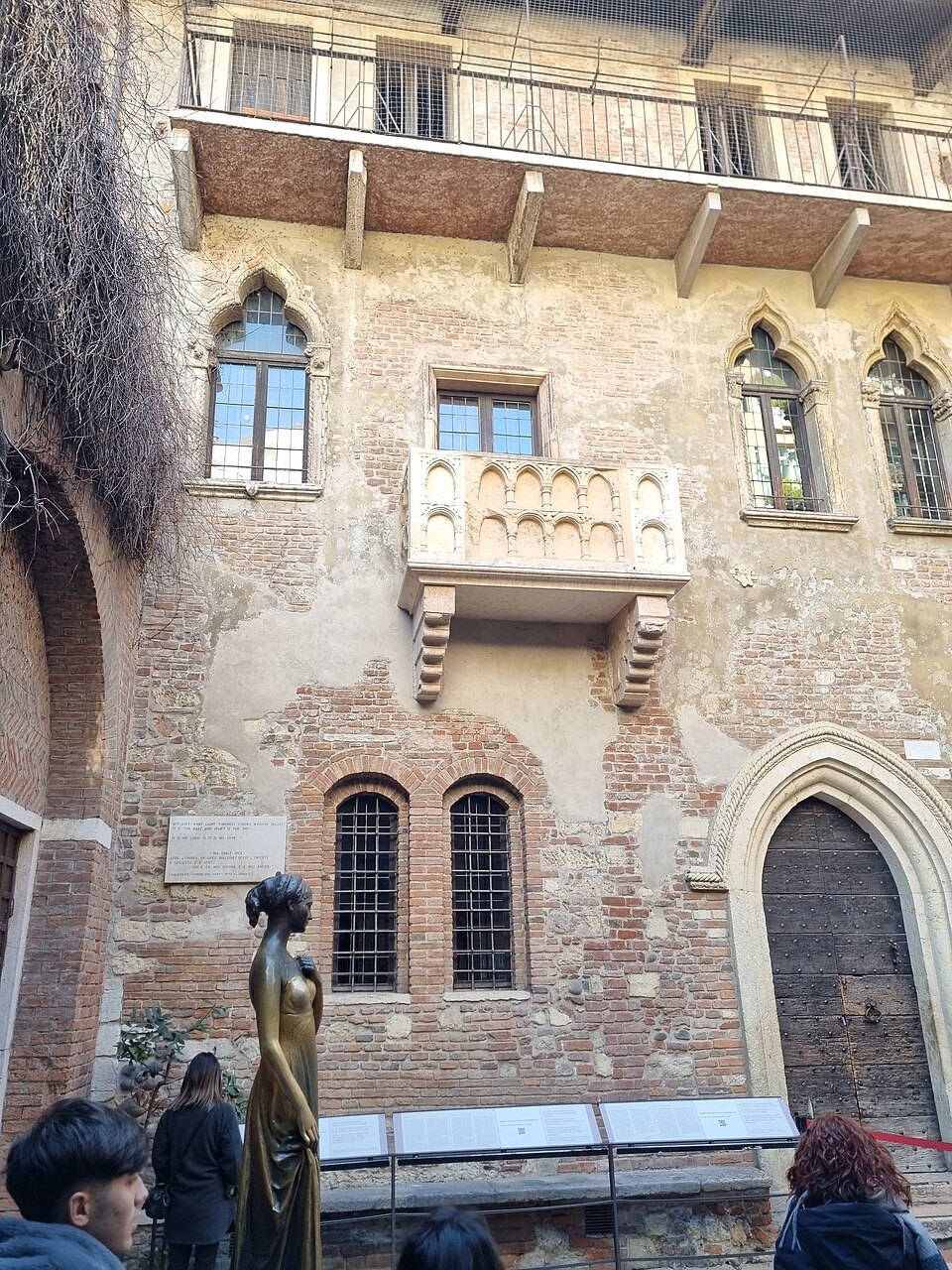
- Level 2Bronze JulietNereo Costantini's statue by the courtyard wall, a 2014 copy of the original
- Level 3The balconyAssembled in the late 1930s from a fourteenth-century marble piece in the civic collections
- Level 4Museum roomsFireplaces, frescoed walls, nineteenth-century paintings and engravings of the story, and the original statue
- Level 5BedroomSecond-floor room with the bed and costumes from Zeffirelli's 1968 film
- Level 6Letters to JulietWriting desk and letterbox inside the house, answered by volunteers of the Juliet Club
A real house, a borrowed story
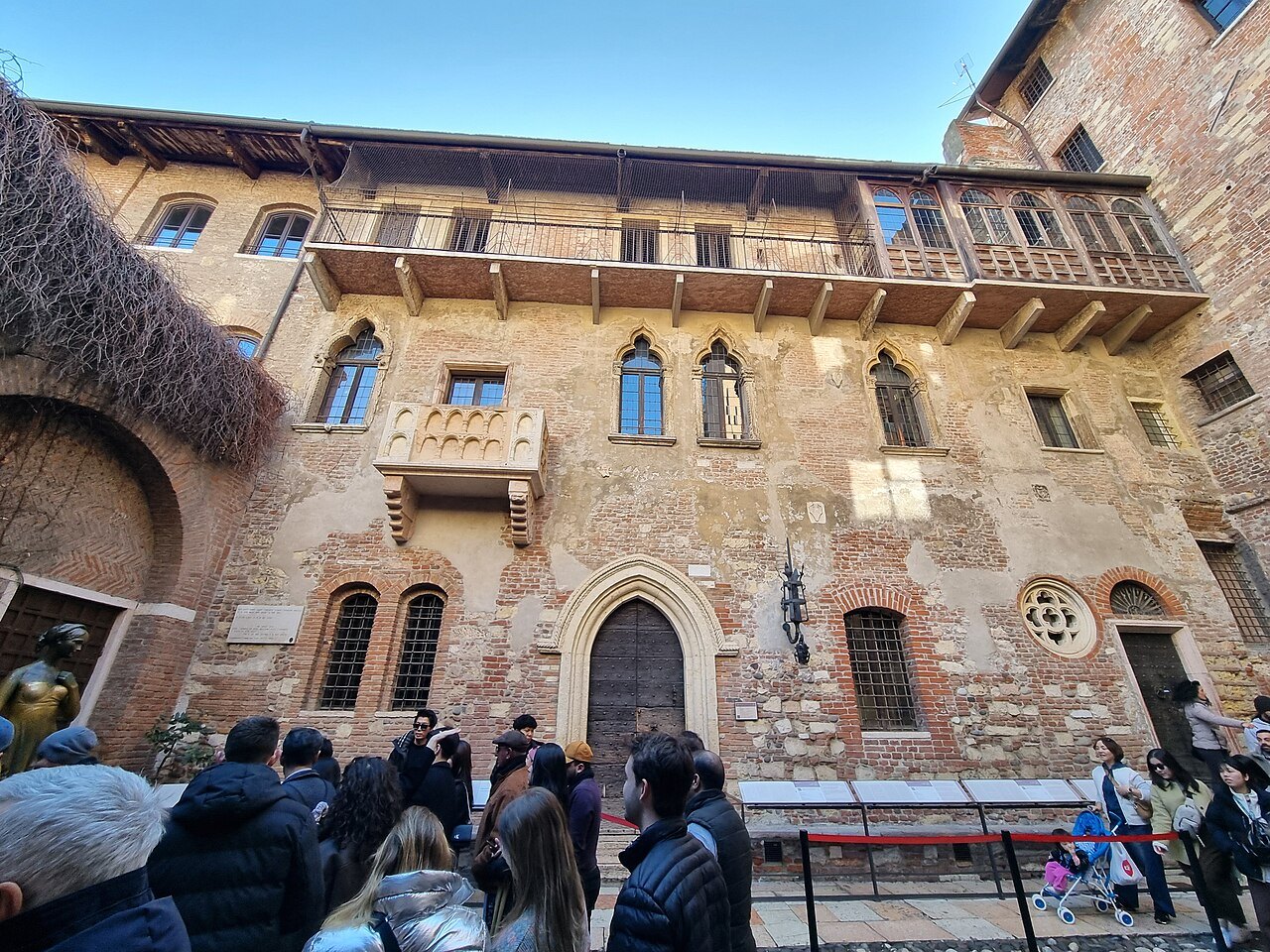
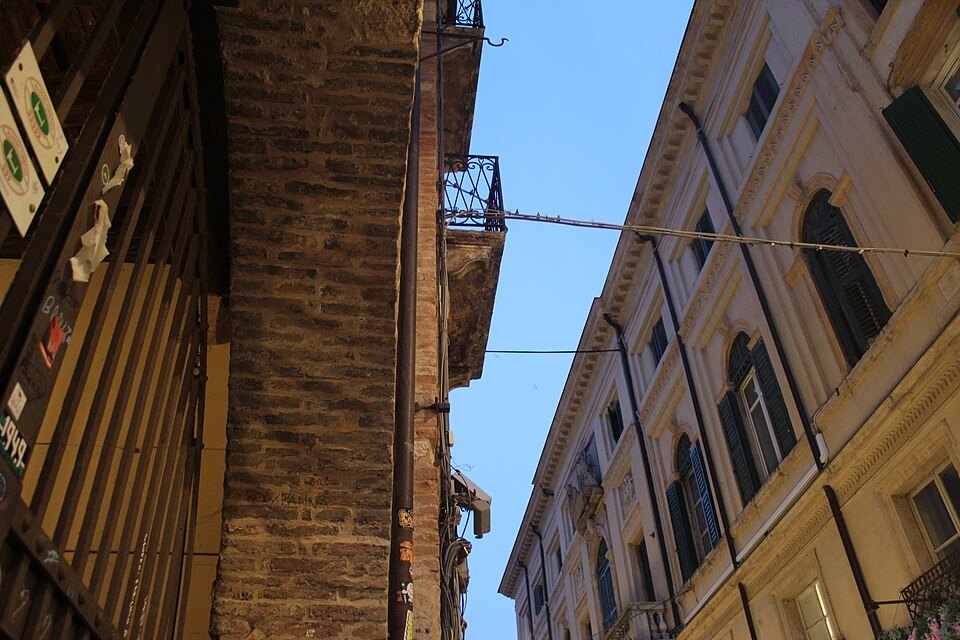
Juliet's House, the Casa di Giulietta, is a medieval tower-house in brick at Via Cappello 23, a short walk from Piazza delle Erbe. It is the most visited monument in Verona, and nearly every visitor comes for the same three things: the small courtyard, the stone balcony and the bronze statue of Juliet.
It helps to arrive knowing exactly what it is. The building is real and old, but its connection to Romeo and Juliet is literary tradition, not a record. No document places a Juliet here, because Juliet is a character in fiction. What you visit is a genuine medieval house that the city dressed, in the twentieth century, as the setting of the most famous love story set in Verona.
How a hat became the Capulets
The house is first documented in 1351. It served as an inn called del Cappello and belonged to the heirs of one Antonio Cappello; the family's emblem, a hat, is carved on the keystone of an arch in the courtyard. Cappello means hat in Italian, and the surname sounded close to Capuleti, the Italian name of Juliet's family in the story.
The story itself grew in stages. Dante's Purgatorio names the Montecchi and the Cappelletti as feuding factions. The Renaissance writer Luigi da Porto turned the feud into a tale of two lovers in a novella published around 1531, and Shakespeare's play followed in the mid-1590s.
In the eighteenth and nineteenth centuries, readers searching Verona for the play's locations matched the Cappello arms to the Capulets and began pointing to this inn as Juliet's home. The identification rests on that resemblance of names and on the pull of the story, not on any evidence.
The city's staging
The Comune di Verona bought the building in 1905. At the end of the 1930s, the director of the civic museums, Antonio Avena, turned it into a house museum. Italian Wikipedia dates completion to 1939; the tourist board gives the works as 1939 to 1940. Avena mixed neo-medieval decoration with authentic pieces from the thirteenth to fifteenth centuries: carved stonework, capitals, fireplaces and furniture.
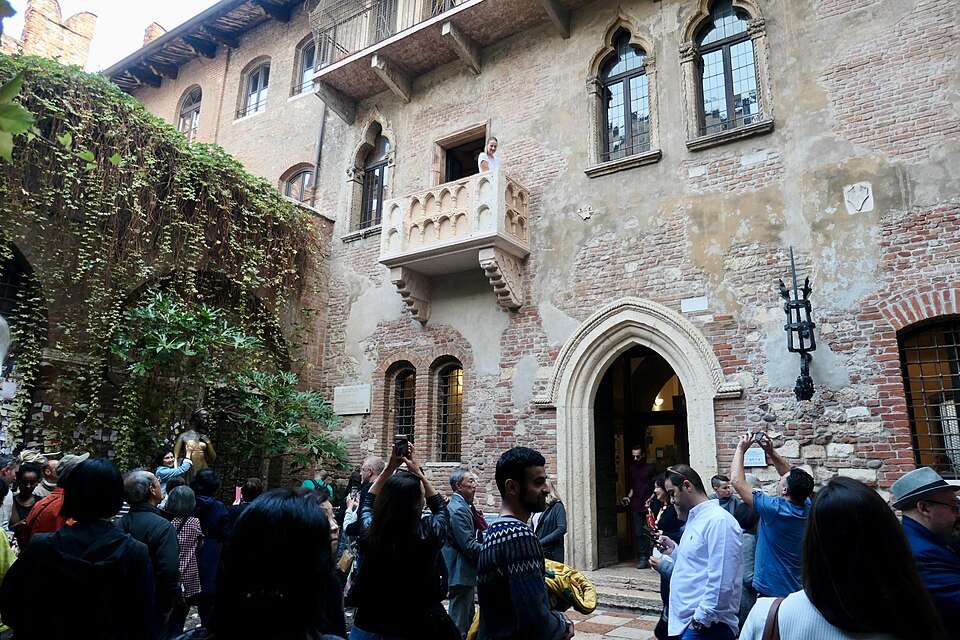
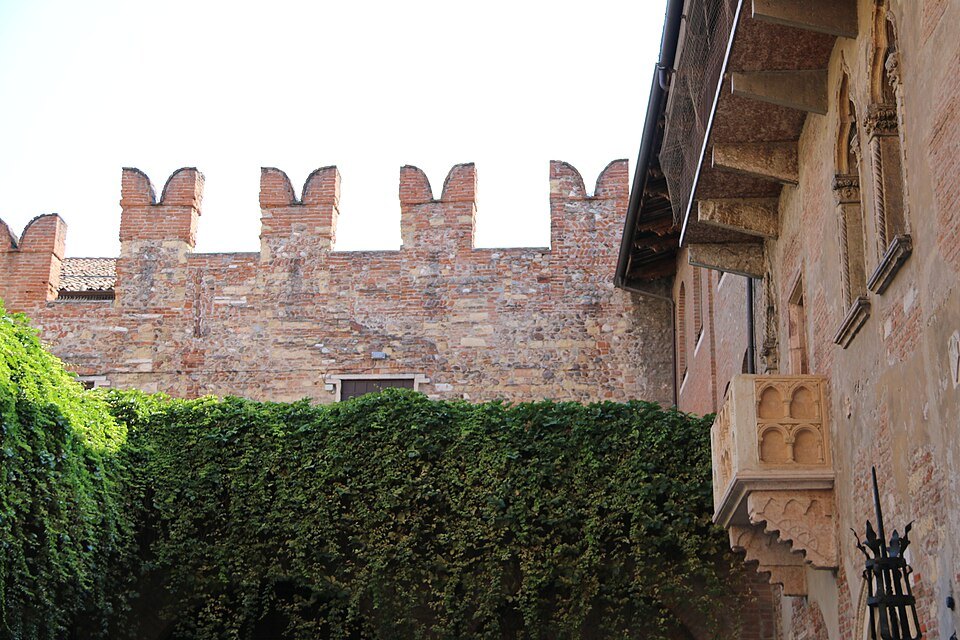
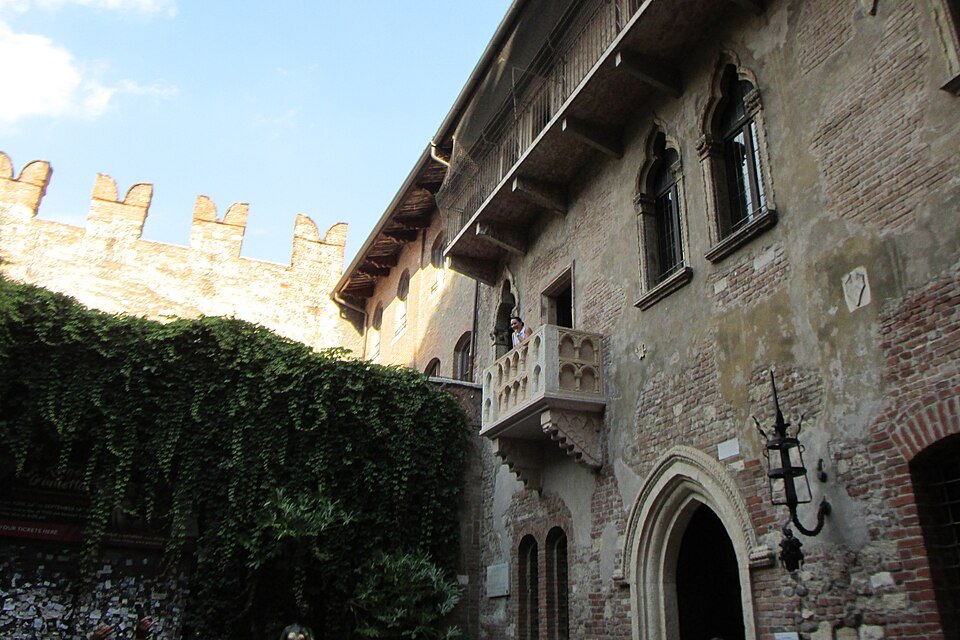
The balcony belongs to that staging. It was assembled from a fourteenth-century marble piece from the civic collections, which had been lying at the Castelvecchio museum waiting for a new use. It suits the building's age, but it was added about six centuries after the house was first recorded, and nearly three and a half centuries after Shakespeare wrote the play.
The statue, the wall and the letters
The bronze Juliet in the courtyard is by the Veronese sculptor Nereo Costantini. The city's tourism office dates the work to 1969 and its placement to 1972; Italian Wikipedia gives an installation date in 1973. Visitors took up the habit of touching its right breast for luck in love, and the wear became so severe that in June 2014 the statue was replaced with a copy cast from a mould. The original is kept inside the house.
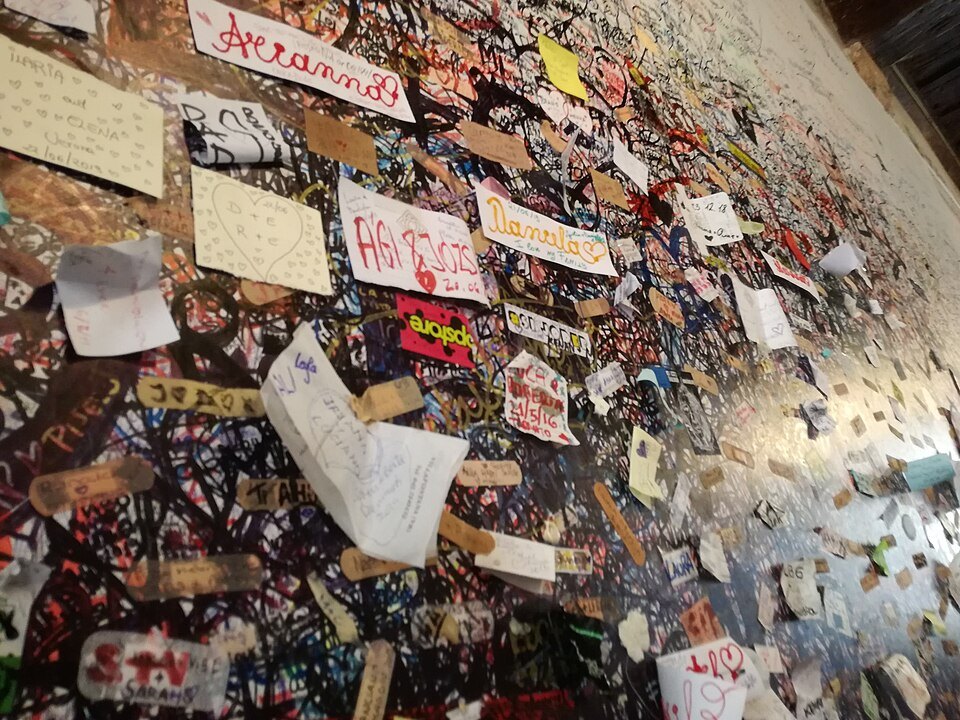
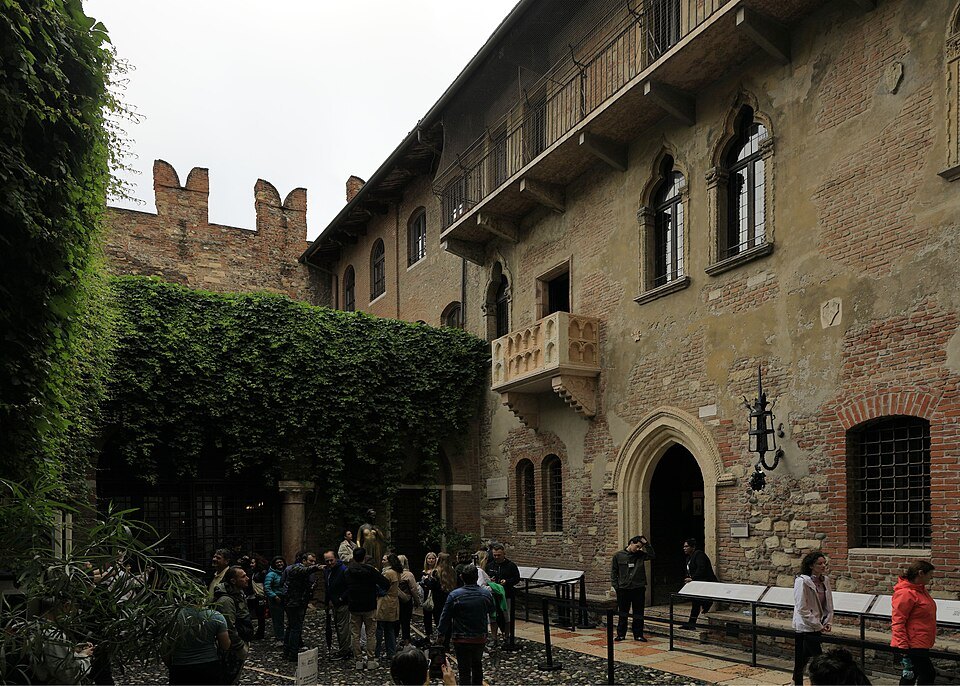
For decades visitors wrote names and promises on the walls of the entrance passage, and later stuck notes on with chewing gum. Since 2019 writing on the walls has been banned, the passage has been cleaned, and signs ask visitors to respect the monument. Write a letter instead.
Letters addressed to Juliet began arriving in 1937, when a custodian, Ettore Solimani, started answering them. The Club di Giulietta, founded in 1972, carries on with a group of volunteer women who reply by post in Juliet's name. There is a letterbox at the house, and the club awards a Cara Giulietta prize to the most striking letters each Valentine's Day.
What you see inside
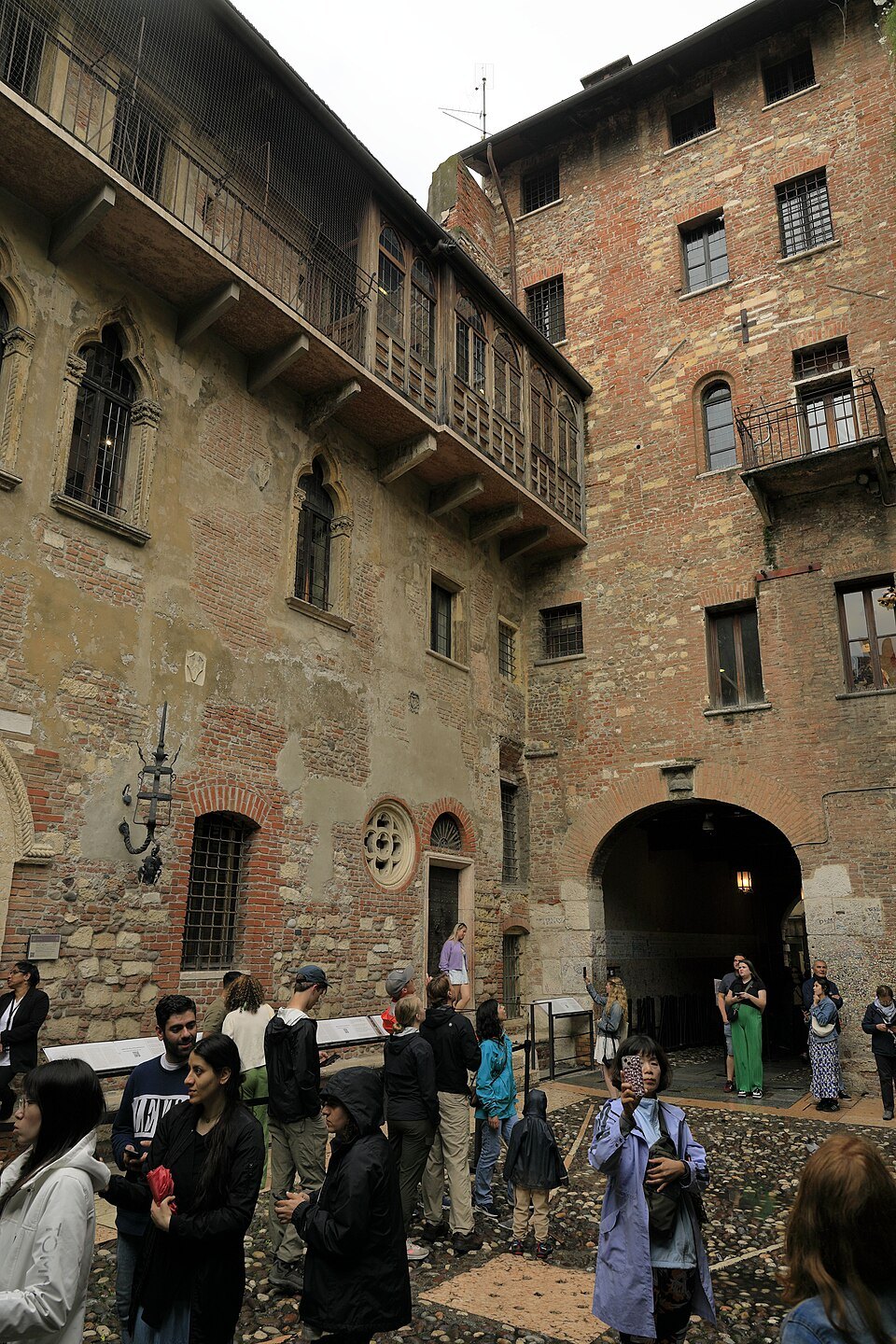
Look first at the street front and courtyard: exposed brick, a Gothic doorway and trefoil windows, with the balustrade linking parts of the building. Inside, the rooms follow Avena's arrangement, with fireplaces, period furniture and walls painted in medieval style. The collection includes nineteenth-century paintings and engravings of the story, among them Cosroe Dusi's Giulietta e Romeo of 1838.
The bedroom, on the second floor of the tower, is reached by way of a balcony over the courtyard and has walls painted with black and white faceted squares. It holds the bed designed by Renzo Mongiardino for Franco Zeffirelli's Romeo and Juliet, which had its world premiere in Verona in 1968. Two cases display costumes worn by the leads, Olivia Hussey and Leonard Whiting, beside paintings and sculpture of the fourteenth and fifteenth centuries.
How to visit
The museum takes about three-quarters of an hour; the courtyard alone, a few minutes. As the city's most visited monument, the courtyard is rarely empty, and a photo without other people in it takes patience. The quieter parts of the day and the months outside the main season make the biggest difference; see when to come. Check the museum's official site for its schedule before planning around it.
Note Access for wheelchair users is limited to the floor with the balcony, according to the tourist board. Signs at the entrance set out the ban on writing on the walls or sticking anything to them, with sanctions for breaking it, so leave messages only in the letterbox.
Juliet's House fits into a short loop of the medieval center. The Scaliger Tombs are a few minutes north, the Torre dei Lamberti is a few minutes away, and Piazza dei Signori lies just beyond it.
Nearby
- Inside the loopPiazza delle ErbeThe long market square laid over Verona's Roman forum, crowded with stalls, painted houses, a Roman statue on…Read the page
- Inside the loopThe Scaliger TombsThe Gothic tombs of the della Scala family, raised on canopies beside the little church of Santa Maria Antica…Read the page
- Inside the loopTorre dei LambertiThe medieval civic tower between Piazza delle Erbe and Piazza dei Signori, with two old bells at the top and…Read the page
- Inside the loopPiazza dei SignoriThe enclosed square where Verona was governed for centuries, ringed by linked palaces, a Renaissance council…Read the page