Home · Sights · Piazza delle Erbe
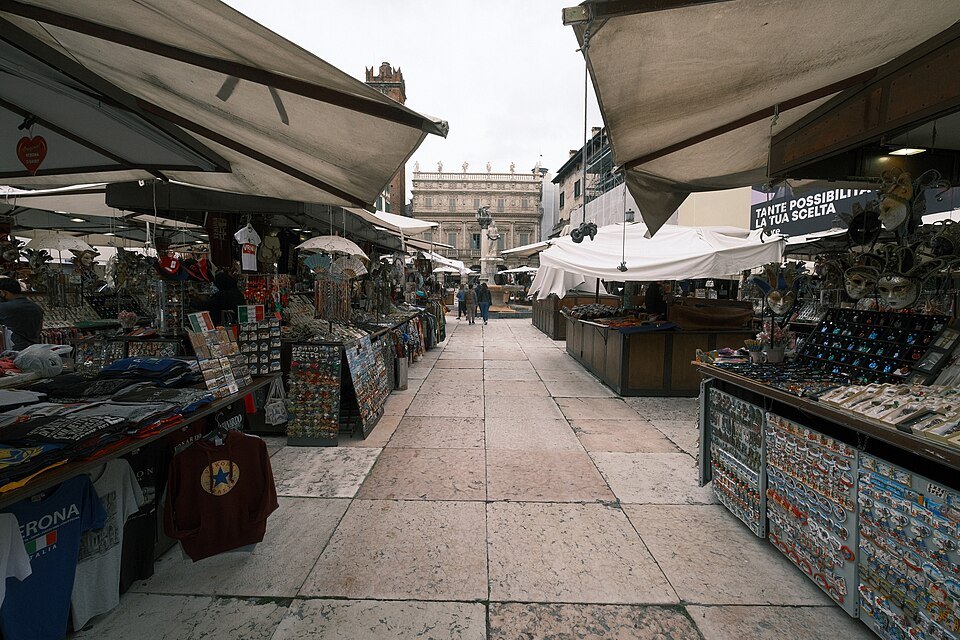
The long market square laid over Verona's Roman forum, crowded with stalls, painted houses, a Roman statue on a fountain and a bone, probably a whale's rib, hanging from an arch.
Around the square
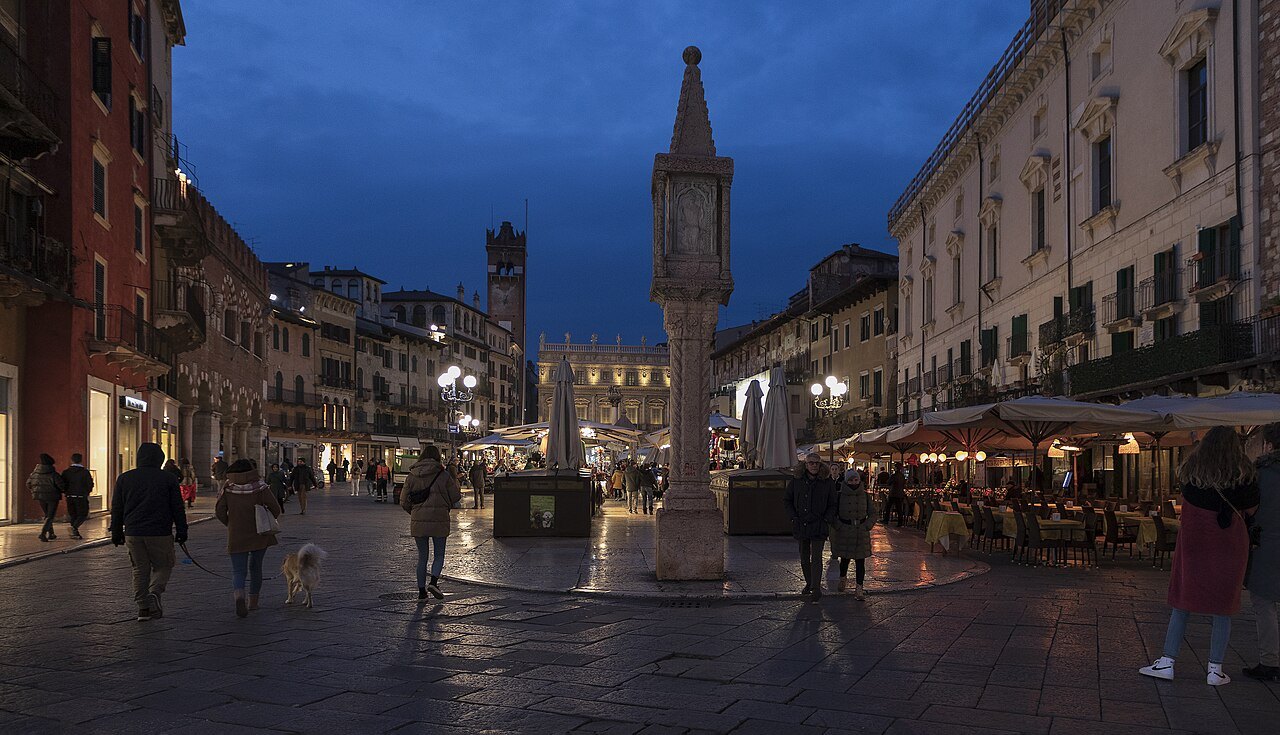
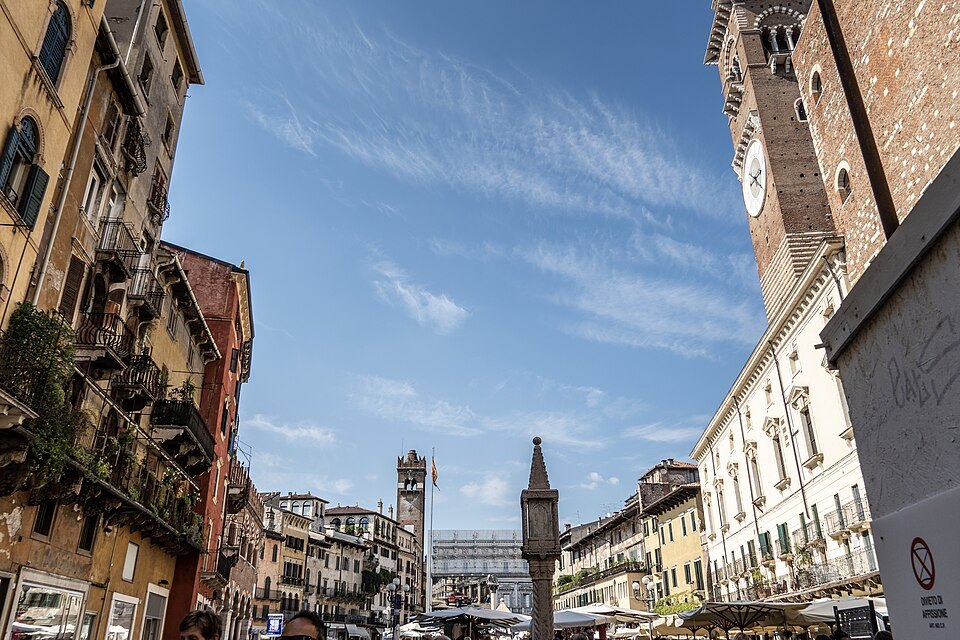
- 1Column of Saint MarkThe marble column topped by the winged lion of Venice, raised in the early 1520s
- 2Palazzo MaffeiThe Baroque palace finished in 1668, with six statues of pagan gods on its balustrade
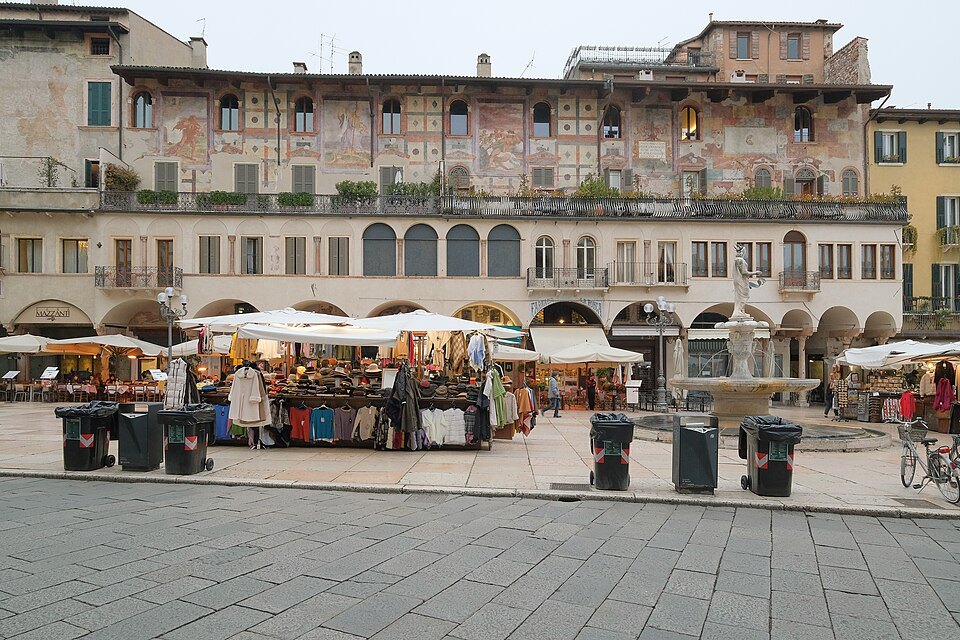
- 3Madonna Verona fountainA Roman statue set on Cansignorio della Scala's fountain of 1368, in the middle of the stalls
- 4The CapitelloThe marble canopy where rulers swore oaths and merchants checked official measures
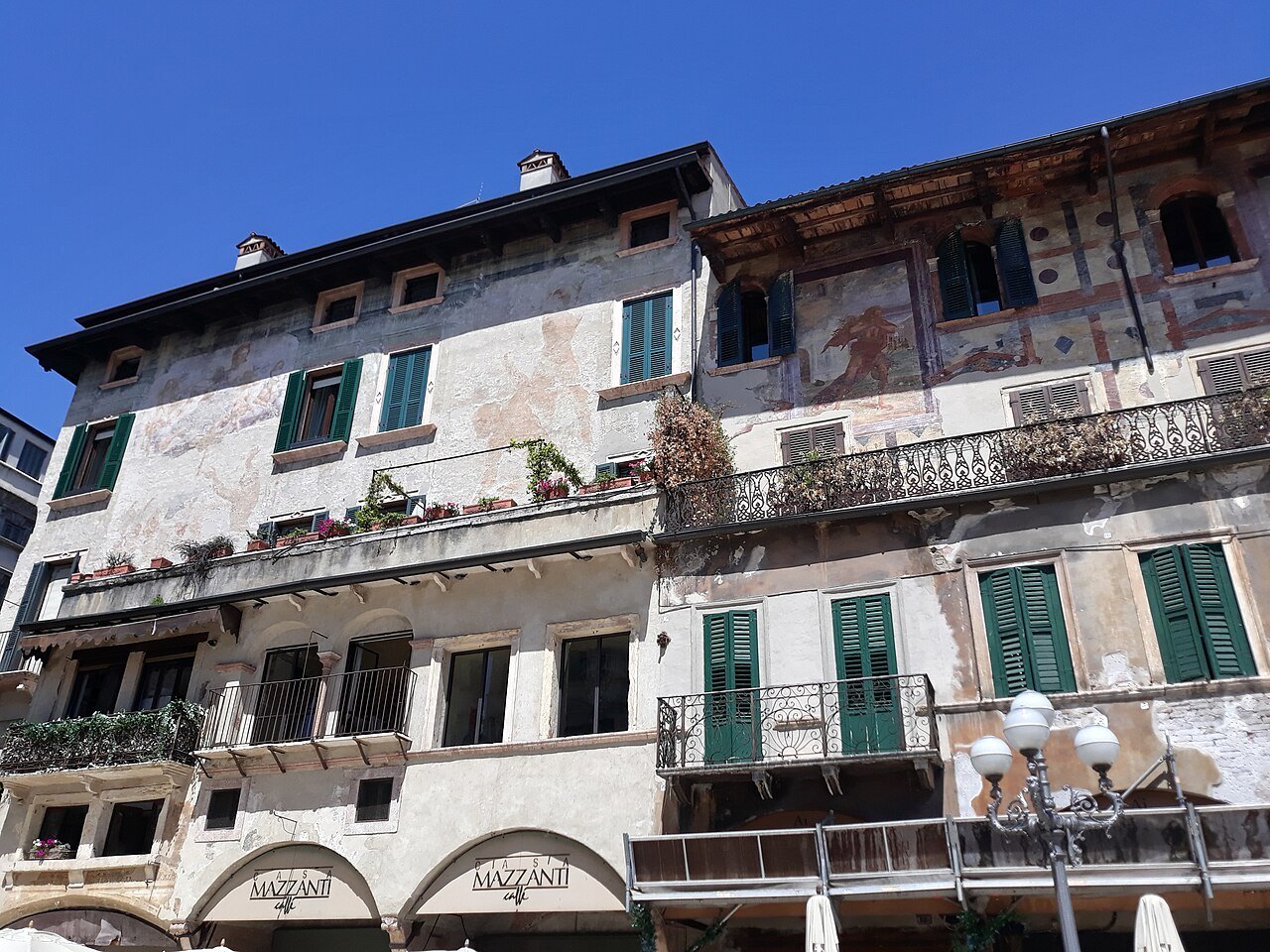
- 5Case MazzantiSixteenth-century houses joined by a portico, their facades frescoed by Alberto Cavalli
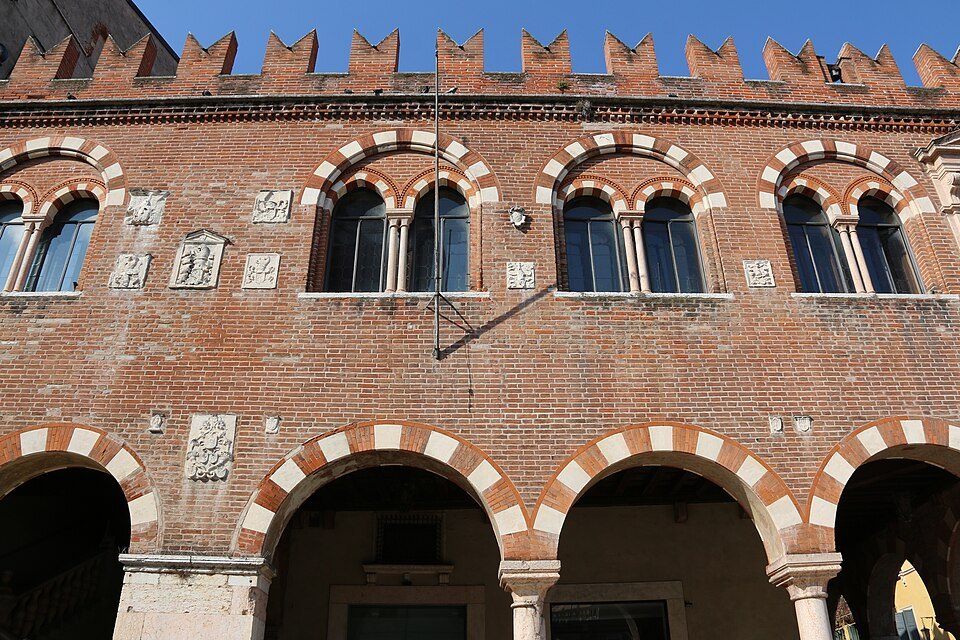
- 6Domus MercatorumThe crenellated merchants' hall rebuilt in stone in 1301, with arches on red columns
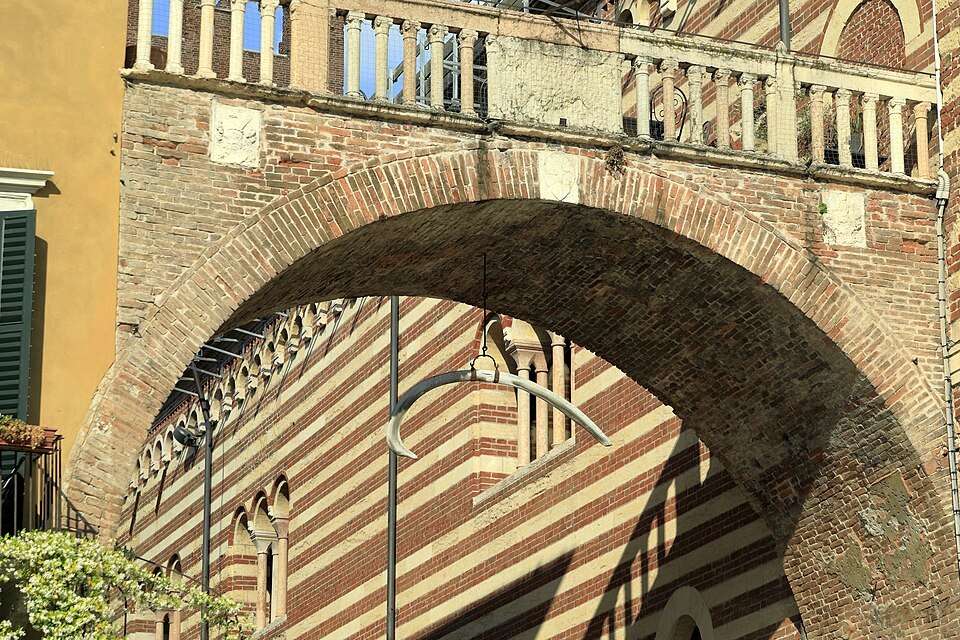
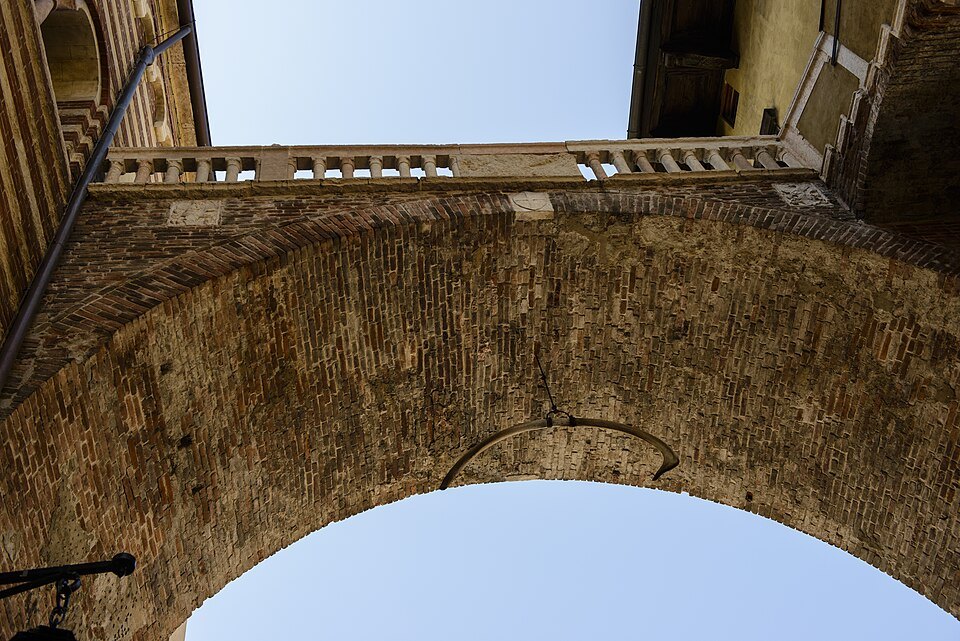
- 7Arco della CostaThe passage to Piazza dei Signori, with a large bone hanging from its vault
The oldest square in town
Piazza delle Erbe is the long market square at the heart of old Verona, and for many visitors the picture of the city. Market stalls fill its center, towers rise over the rooftops, and almost every building around the edge has a date and a story attached.
It is also the oldest square in the city. It follows the plan of the Roman forum, and it served as Verona's political and economic center for centuries. The name, the square of herbs, comes from the spices and vegetables sold here in the Middle Ages.
From forum to marketplace
When Verona became a Roman municipium in 49 BC, the forum was laid out where the main north-south and east-west streets crossed. A Capitolium temple was completed by about 20 BC, and by the end of the first century AD the forum was a rectangle of roughly 168 by 58 meters, framed by deep porticoes.
Under the Scaliger lords of the thirteenth and fourteenth centuries, the medieval square gained much of its civic furniture: Alberto I della Scala rebuilt the merchants' hall in stone in 1301, and Cansignorio della Scala added the fountain in 1368 and a bell-clock tower in 1370.
Venice, and after
Verona submitted to Venice in 1405 and, after an interruption, returned to Venetian rule in 1517. A marble column carrying the lion of Saint Mark followed in the early 1520s; sources give 1523 or 1524. French troops destroyed the lion in 1797, and the one on top is a replacement by Cesare Poli, raised in 1886.
The square's darkest day came during the First World War. On 14 November 1915 three aircraft painted black attacked, and the bombs that fell on Piazza delle Erbe left about a hundred casualties. The market came back, as it always had, though over time souvenirs and clothing have joined the fruit and vegetables.
The fountain and the Capitello
The statue on the fountain, known as Madonna Verona, is Roman: a female figure that came from the Capitolium and is said to have been gilded, now read as a personification of the city. She holds a scroll with the old civic motto, calling Verona a bearer of justice and a lover of praise. Cansignorio assembled the fountain in 1368 from Roman pieces, including a large basin from a bath building, to celebrate bringing water to the square from the Lorì stream. The city's tourism office dates the statue to the first century AD; other sources give AD 380.
Nearby stands the Capitello, a marble canopy also called the Tribuna. It is sometimes called the Berlina, the pillory, a name Italian sources describe as improper; its real role was civic: newly elected lords and podestà swore loyalty to the city statutes here, and it served to regulate merchants. Look for the iron standards of old Veronese units of length still fixed to it. Its origins are medieval, with a rebuilding under the Scaligers in 1378.
Houses, towers and a palace
The Case Mazzanti, facing both the square and Corso Santa Anastasia, still carry the facade frescoes painted by Alberto Cavalli in the first half of the sixteenth century, after Matteo Mazzanti bought the complex in 1517. The Domus Mercatorum, the merchants' hall, keeps its medieval arches on red stone columns, double windows and battlements; it later housed the Chamber of Commerce.
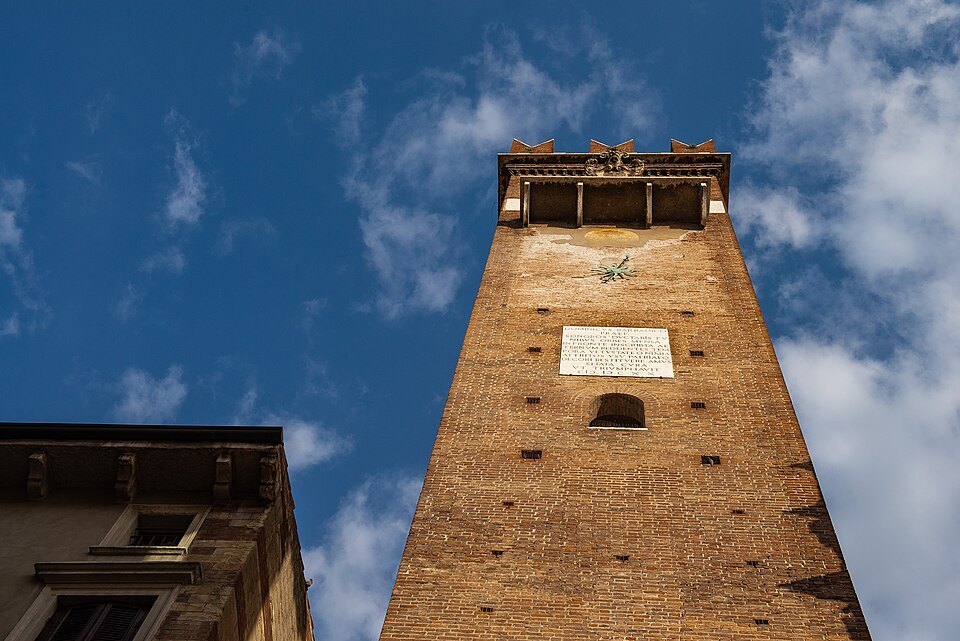
The brick Torre del Gardello is where Cansignorio installed Verona's first public bell clock in 1370. The tower was raised to 44 meters in 1626, and its original bell, nearly two tons and cast by a master named Jacopo, is displayed in Castelvecchio. The much taller Torre dei Lamberti rises behind Palazzo della Ragione. Palazzo Maffei fills one short side with its Baroque front, finished in 1668 and crowned by a balustrade with six statues of pagan gods.
The bone under the arch
Walk under the Arco della Costa toward Piazza dei Signori and look up: a large curved bone hangs from the vault, probably a whale's rib, recorded there since around the middle of the eighteenth century. In Venetian times the covered passage let magistrates walk from their residence in the Domus Nova to the courts in Palazzo della Ragione without mixing with people in the street who might try to bribe them.
Nobody knows for certain why the bone is there. The most plausible explanation is that an apothecary below used it as a shop sign, since powdered whale bone was believed to heal. Others have suggested a fossil. Local legend adds that it will fall on the first honest person to walk beneath it.
How to visit
The square is free and open, and a slow circuit takes about half an hour; add time if climbing the Torre dei Lamberti. The market stalls occupy the center, the old toloneo, so walk the edges as well to see the facades and the portico of the Case Mazzanti at street level.
The square is flat and fully accessible, and it sits between most of the old town's main sights, so it works well as a starting point. Combine it with Piazza dei Signori through the arch, Casa di Giulietta nearby, and the Scaliger tombs.
Nearby
- Inside the loopPiazza dei SignoriThe enclosed square where Verona was governed for centuries, ringed by linked palaces, a Renaissance council…Read the page
- Inside the loopTorre dei LambertiThe medieval civic tower between Piazza delle Erbe and Piazza dei Signori, with two old bells at the top and…Read the page
- Inside the loopJuliet's HouseA genuine medieval tower-house on Via Cappello, tied to Romeo and Juliet by a family name, a hat carved in…Read the page
- Inside the loopPalazzo MaffeiThe baroque palace that closes the end of Piazza delle Erbe, built over Roman Verona's temple and home to a…Read the page