Home · Where to Stay
Verona is compact enough that every central quarter is within walking distance of the Arena; the choice is really between the busy loop, student Veronetta, quiet San Zeno and leafy Borgo Trento.
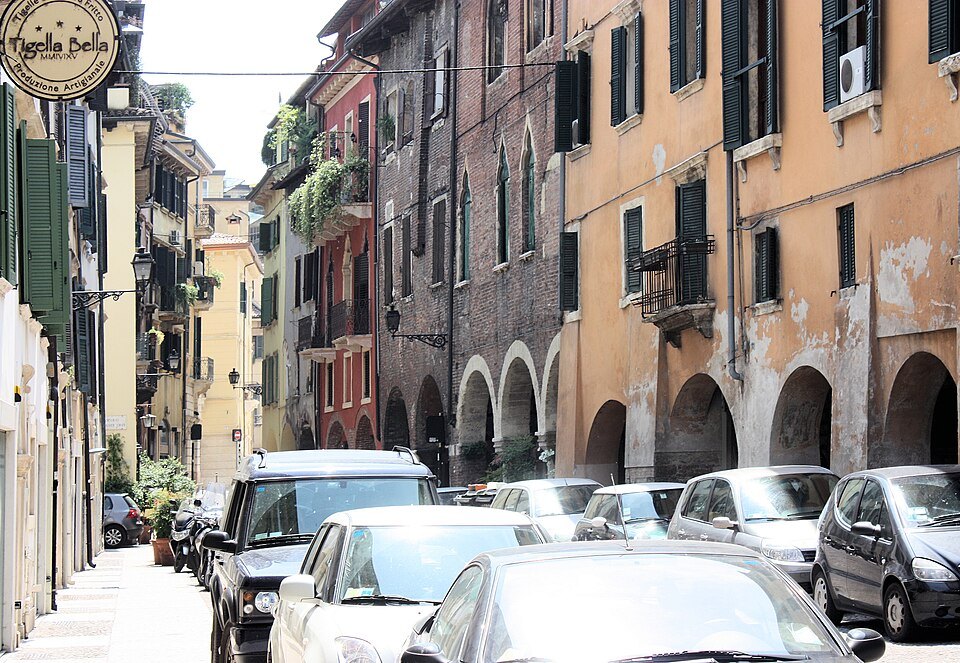
Via Sottoriva, its low arcades and parked carsDguendel, Wikimedia Commons, CC BY 3.0 Inside the loop (Città Antica)First-time visitors and opera-goers who want the sights on the doorstep.The Roman grid inside the bend of the Adige, with the Arena, Piazza Bra and Piazza delle Erbe a few minutes apart. It is the busiest quarter, lively late in the opera season, and inside the limited traffic zone.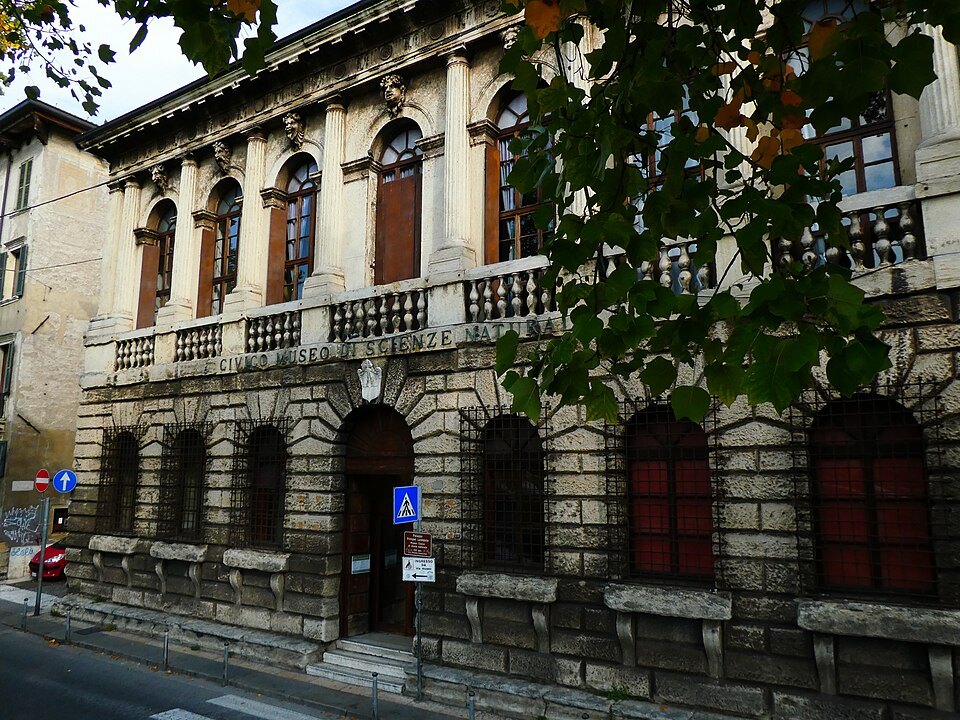
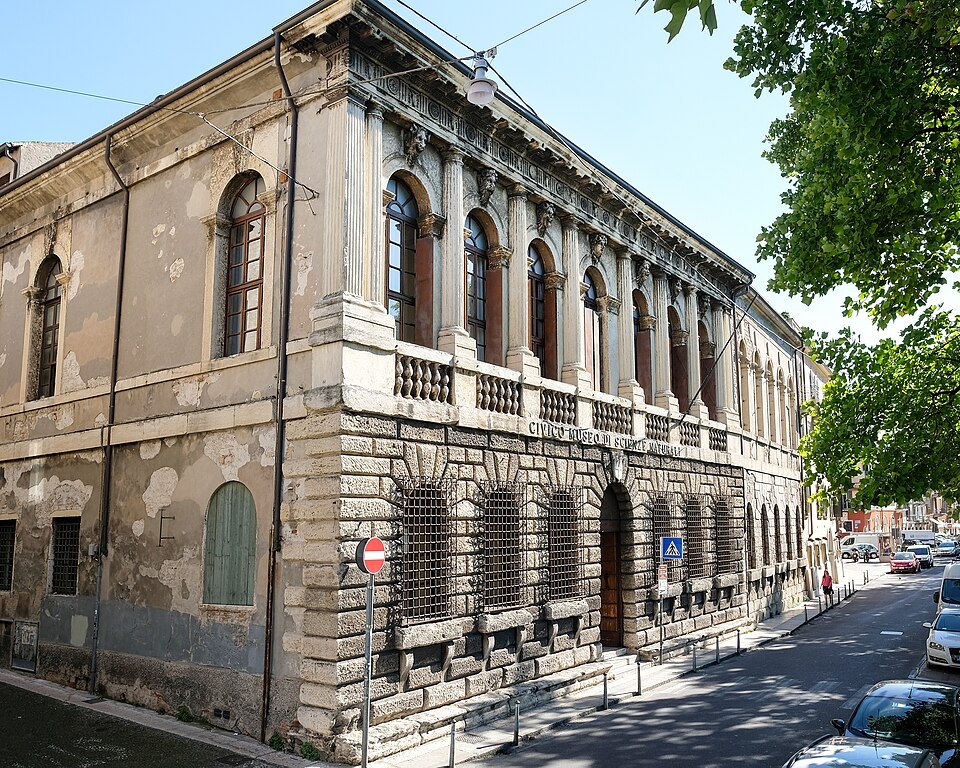
Palazzo Pompei on the Veronetta riverbankSyrio, Wikimedia Commons, CC BY-SA 4.0 VeronettaBudget travelers, students and anyone who likes a lived-in university district.The left bank facing the center, home to the Roman Theater, Giardino Giusti and the University of Verona. Evenings are young and busy, and Ponte Pietra leads straight across to the old town.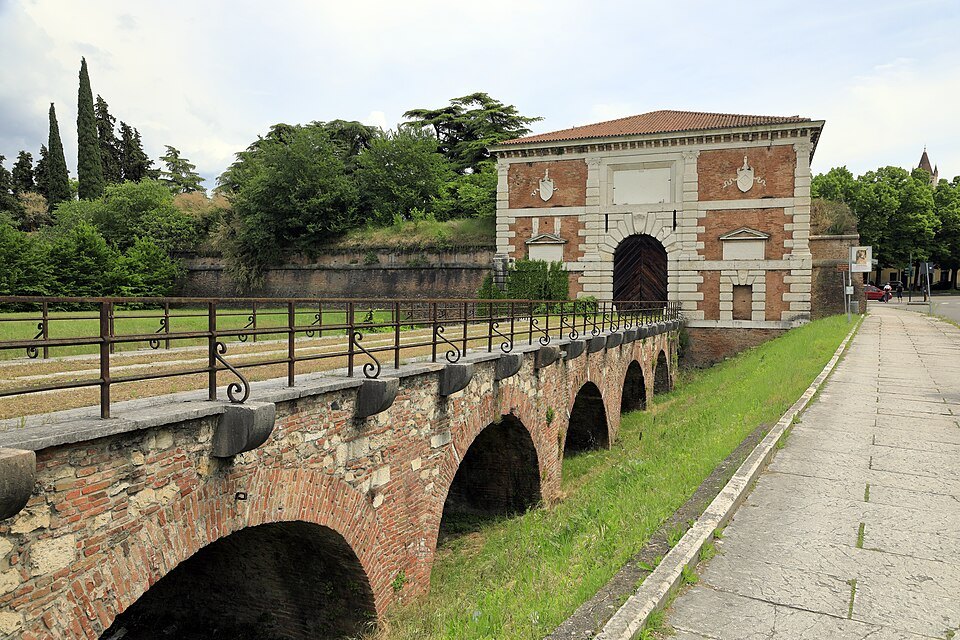
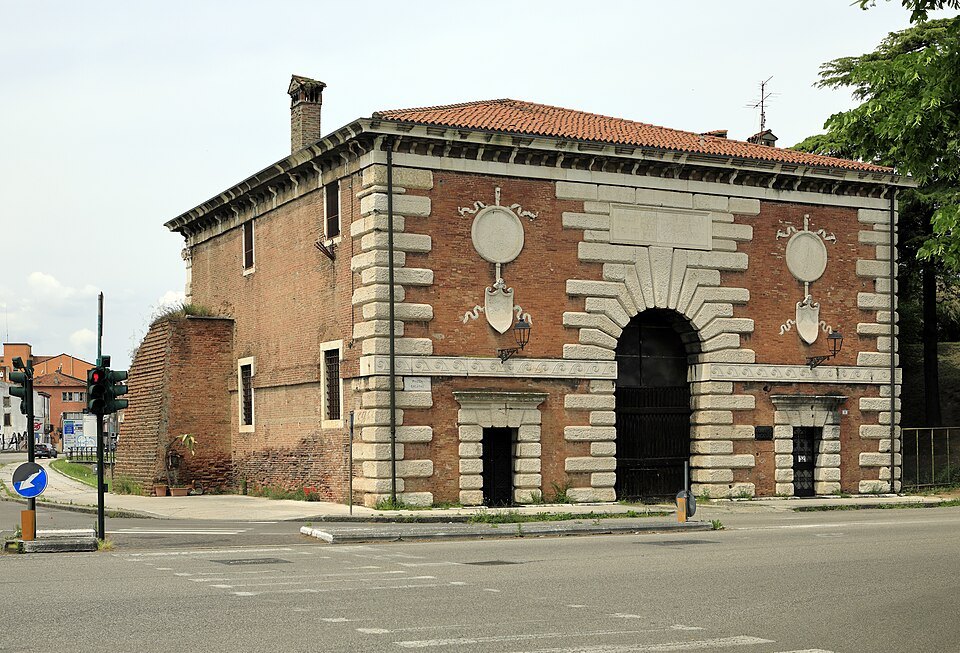
The bridge and brick gate of Porta San ZenoFalk2, Wikimedia Commons, CC BY-SA 4.0 San ZenoSlow travelers, couples and repeat visitors looking for a local feel.An old working-class quarter around the great basilica, west of Castelvecchio. Quieter at night than the center, about a quarter of an hour's walk along the river.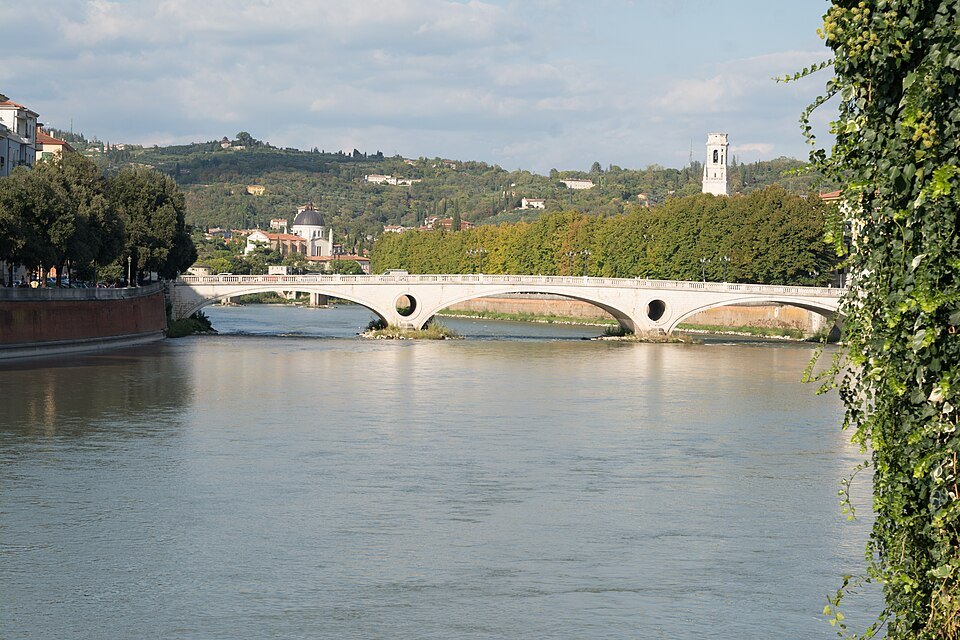
The Ponte della Vittoria's white arches over the Adigedconvertini, Wikimedia Commons, CC BY-SA 2.0 Borgo Trento and ValdonegaFamilies and travelers who want quiet streets and green space.Residential districts north of the river, with Art Nouveau villas in Borgo Trento and garden-city houses on the Valdonega slopes. Calm in the evening, about fifteen minutes' walk from the center across the bridges.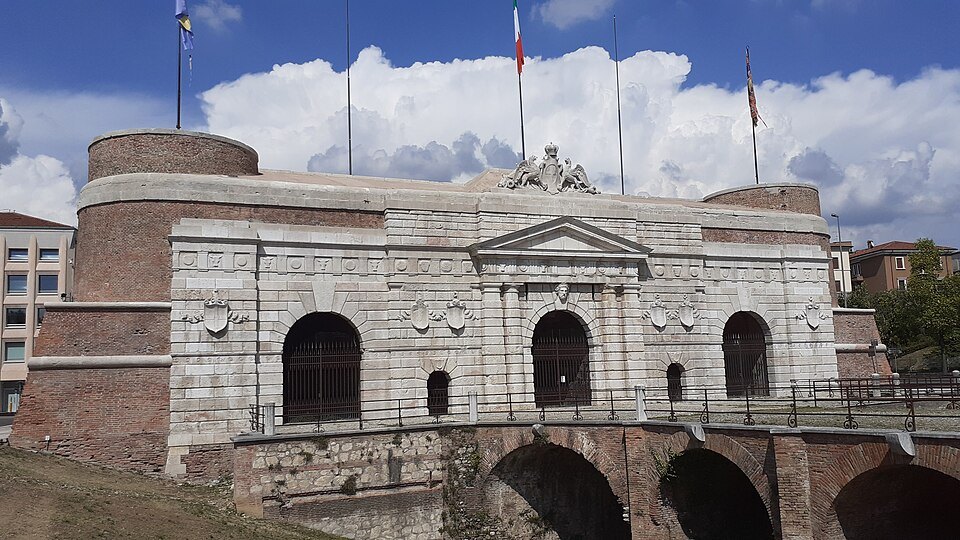
The stone gate of Porta Nuova on the ring of wallsAdert, Wikimedia Commons, CC BY-SA 4.0 Around Porta Nuova stationShort stays, early trains, day trips and drivers.The main station, the airport bus and station garages are all here, south of the old town. The walk to Piazza Bra takes about twenty minutes, and guides disagree on how pleasant the area is at night.
Choosing a base
The shape of Verona makes the decision simple. The historic center fills a tight bend of the Adige, and the other quarters that visitors stay in sit just across the river or just beyond the old walls: Veronetta on the left bank to the east, San Zeno to the west, Borgo Trento and Valdonega to the north, and the area around Porta Nuova station to the south.
None of them is far. The station, the most outlying of the five, is about twenty minutes' walk from Piazza Bra, and travel guides put San Zeno and Borgo Trento at roughly a quarter of an hour from the center. The real differences are noise, crowds and what the streets feel like after dark, and those vary a great deal from one side of the river to the other.
Inside the loop: Città Antica
The Città Antica is the old city enclosed by the river, with the Arena, Piazza Bra and Piazza delle Erbe at its heart. It still follows the street grid of the Roman town, whose paved roads, Wikipedia notes, survive largely intact about six meters below today's surface. The historic city was listed by UNESCO as a World Heritage Site in 2000.
For a first visit it is the obvious choice: travel guides agree that the main sights are within walking distance, many of them only a few minutes apart. It is also the busiest and most touristy part of Verona, and during the opera season, one guide notes, the streets stay lively far into the night.
Note The center is inside the limited traffic zone, watched by camera gates. Hotel guests can be let in by car only if the accommodation registers the number plate, so anyone driving should ask the hotel before arriving. Details are on getting here.
Veronetta
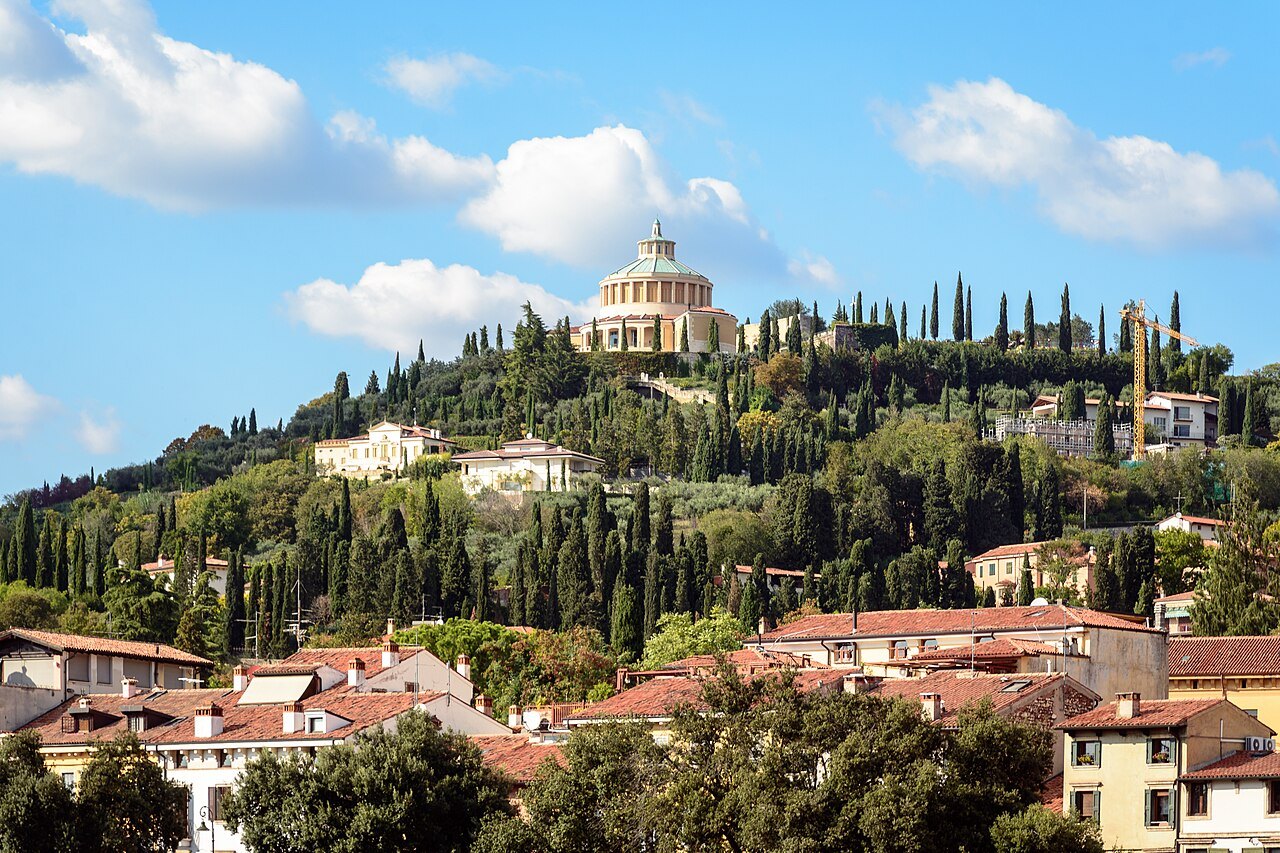
Veronetta lies on the left bank of the Adige, facing the old center. It holds some of the oldest layers of the city, including the Roman Theater, churches such as Santo Stefano and San Giovanni in Valle that were rebuilt after the earthquake of 1117, and Giardino Giusti, with Castel San Pietro on the hill above. The name dates from the Napoleonic era, when the left bank was split from the rest of the city, and began as a slight.
The quarter declined after the Austrians left and after the flood of 1882, and recovery began in the 1970s. Today it is the main home of the University of Verona, and guides describe a young, multicultural, lived-in district with cafés, independent galleries and busy weeknight evenings.
It suits budget-minded travelers, students and anyone who prefers local streets to tourist ones. The old center is a bridge away, with Ponte Pietra the most direct crossing, and Verona's second railway station, Porta Vescovo, lies on the quarter's eastern edge.
San Zeno
San Zeno grew up around the burial place of Verona's eighth bishop, Zeno, who was probably laid to rest around 380 in a Roman cemetery. The basilica that now bears his name was begun in the early ninth century, and the village around it had its own walls, of which the Porta Fura and a thirteenth-century tower survive. The Scaliger walls brought it inside the city in the fourteenth century.
Historically a working-class quarter, San Zeno is associated in local tradition with the authentic spirit of Verona. Guides describe it as quieter and less touristy than the center, with neighborhood squares, traditional places to eat and markets that include antiques and vintage fairs.
It suits slow travelers, couples and repeat visitors. The walk to the center, past Castelvecchio and along the river, takes roughly a quarter of an hour, and evenings are calmer than inside the loop.
Borgo Trento and Valdonega
Borgo Trento sits north of the center, across the first bend of the Adige, and five bridges link it to the old town: Catena, Risorgimento, Castelvecchio, della Vittoria and Garibaldi. It began to grow in the mid-nineteenth century under Austrian rule, around the Franz Joseph arsenal, and is known for its Art Nouveau villas and palaces, many by the architect Ettore Fagiuoli. Its hub is Piazza Vittorio Veneto, and a large civic hospital anchors its northern side.
Guides describe Borgo Trento as residential, elegant and quiet, less visited by tourists and well suited to families, with green space in the gardens of the old arsenal. The walk into the center takes about a quarter of an hour.
Valdonega, further east at the foot of the Torricelle hills, was built from the early twentieth century on the garden-city model, with detached villas among greenery. It is quieter still, and hillside woods surround it on three sides. A Roman villa with mosaic floors, found there in 1957, can still be seen. Ponte Pietra or Ponte Garibaldi lead back to the center.
Around Porta Nuova station
The area around Verona Porta Nuova, south of the old town, is the practical choice for short stays, early trains and day trips. The airport shuttle bus leaves from the bus station in front of the building, and the regional coaches and trains start here too.
Opinions on the atmosphere differ. One guide praises the bars and restaurants around the station, while another finds the area soulless and recommends it only for brief stopovers. Either way, the walk to Piazza Bra takes about twenty minutes, or a few minutes by one of the several city buses that run up to the center; getting around explains the tickets.
It also suits drivers who would rather not deal with the traffic-limited zone at all: the city's parking company runs two garages beside the station.