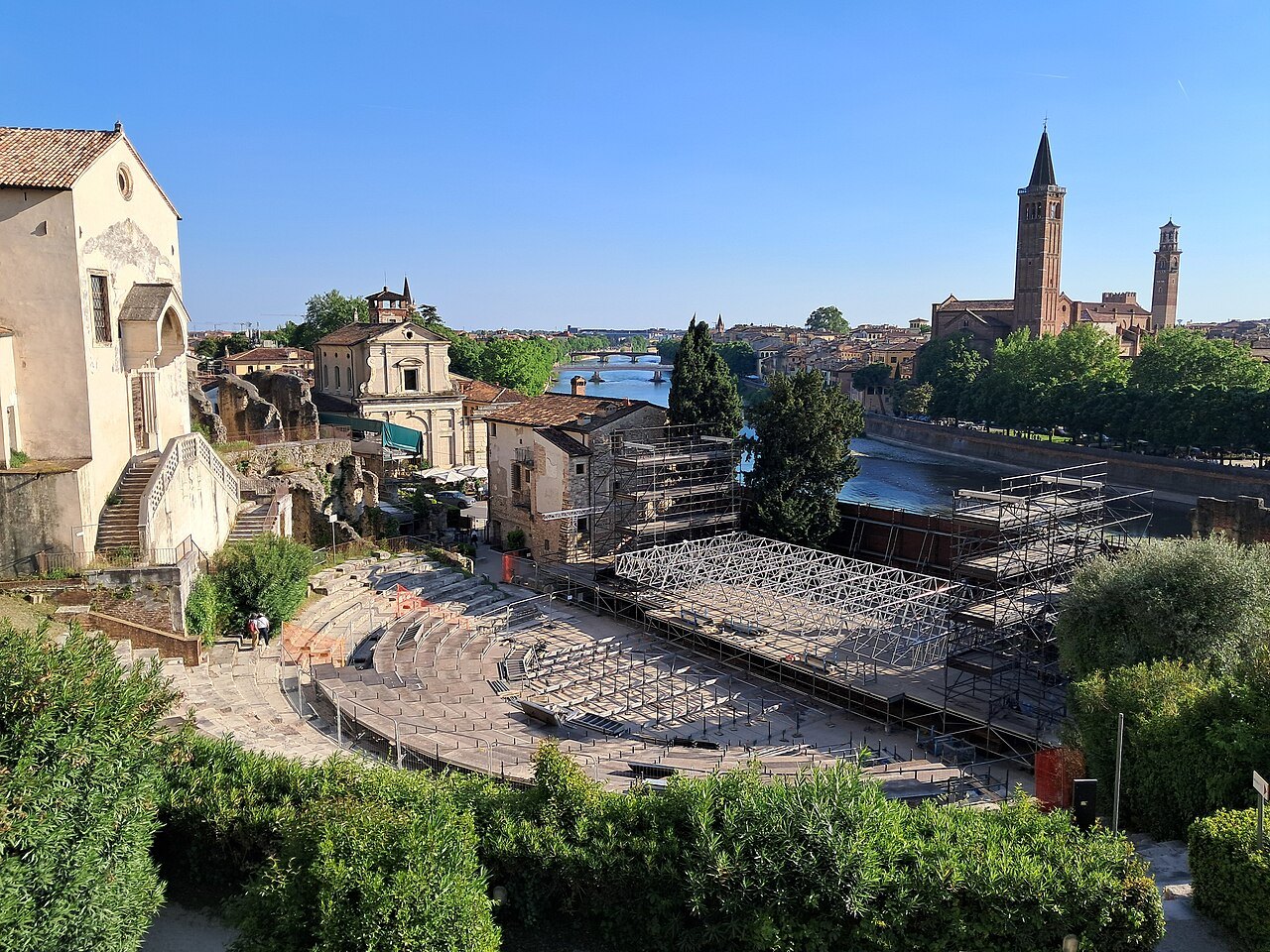
A Roman theater cut into the slope across the Adige, with a medieval church sitting in its seating and an archaeological museum in the convent above.
The parts to look at
- IStage buildingThe low remains of the stage wall at the foot of the slope, facing the river
- IIThe caveaThe semicircle of stone seating rows rising up the hillside behind the stage
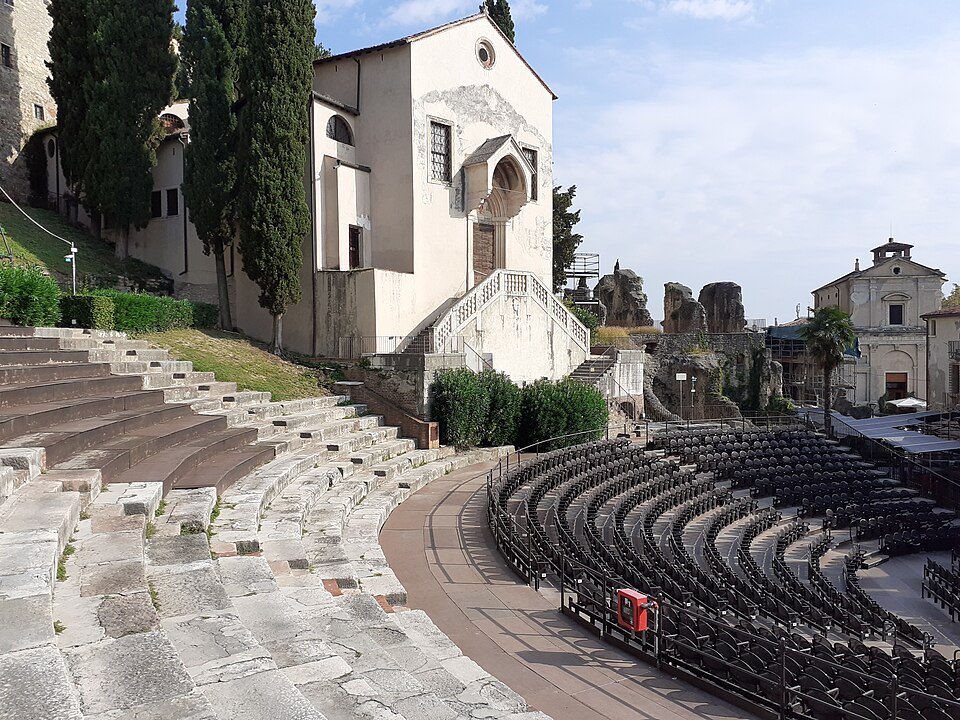
- IIISanti Siro e LiberaThe small church standing inside the upper seating, reached by a baroque double staircase
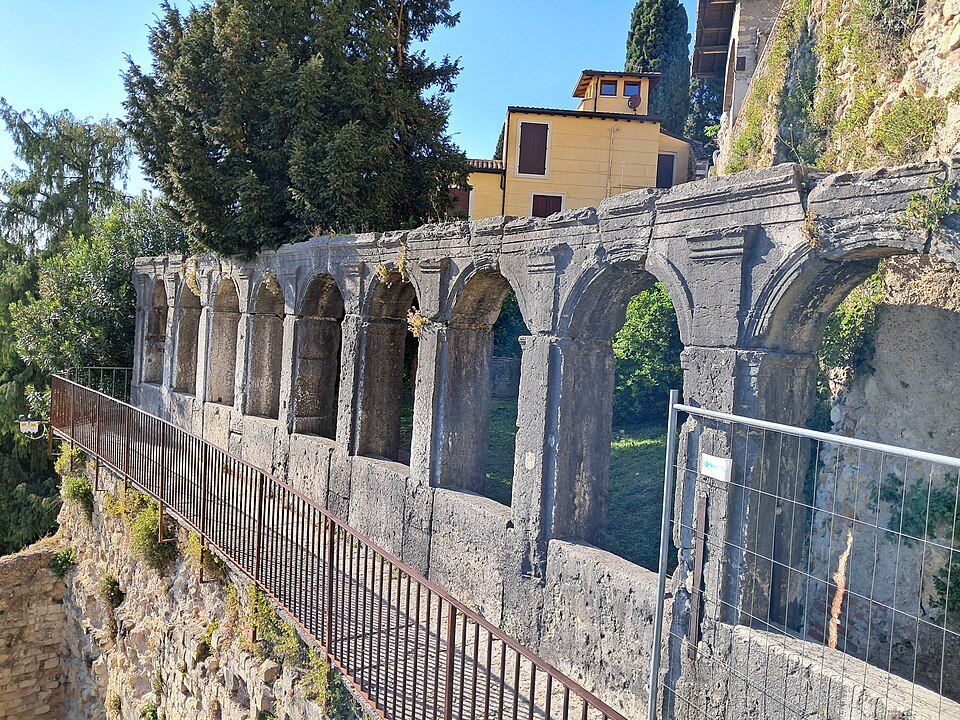
- IVUpper loggia archesReconstructed arcades of the galleries that once crowned the seating
- VMuseum in San GirolamoThe former fifteenth-century convent above the theater, with Roman mosaics, sculpture and everyday objects
- VIThe great terraceThe museum's terrace, with Roman stonework displayed against the view over the river
A theater facing the city
Verona's Roman theater sits on the slope of the Colle San Pietro, on the left bank of the Adige, looking back across the river at the old city. It is a different building from the Arena: that was an amphitheatre for games, this was a theater for plays and recitations, built into a natural hillside.
The excavated theater and the Archaeological Museum in the convent above it are visited together, and the climb between them is the point. Each level looks down on the one below, from the stage ruins to the seating, the church and finally the museum terrace, with Ponte Pietra and the roofs of the city spread out beyond.
Built, buried and dug out
The theater was built in the late first century BC, around the time of Augustus. Before work began, walls were raised along the Adige between Ponte Pietra and the Pons Postumius to hold back floods. The stage building ran about seventy-one meters, and the seating was roughly a hundred and five meters across, climbing in terraces towards a temple on the hilltop.
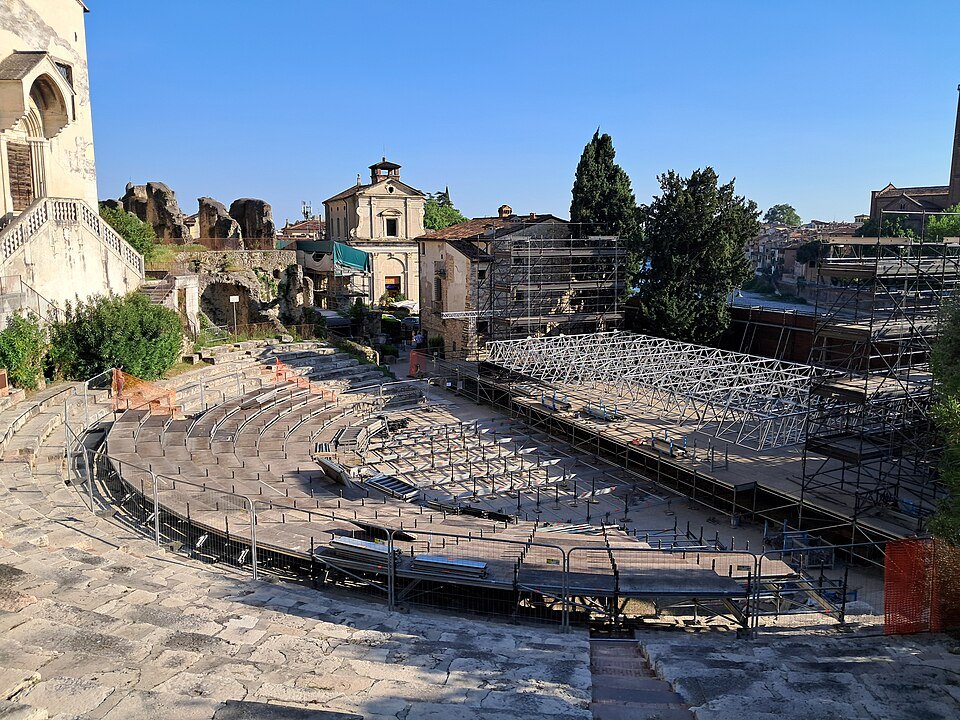
In the Middle Ages the theater fell out of use and disappeared under the city. People built houses directly on the Roman substructures and used the ancient passages and stairways as lanes. In the tenth century a church was built over one of the arches of the upper seating.
In 1834 Andrea Monga, a wealthy Veronese merchant and antiquarian, bought the buildings on the site and began clearing them. Between 1834 and 1844 about thirty houses came down. The city acquired the area in 1904, and further excavation up to 1914 brought the whole seating back to light.
The church in the seats
The church of Santi Siro e Libera was founded in 913, according to the Italian account, by Giovanni, bishop of Cremona, and given in 922 to the Benedictine monastery of Santa Maria in Organo. It stands on Roman substructures at the top of the old seating, which is why it seems to float above the ruins.
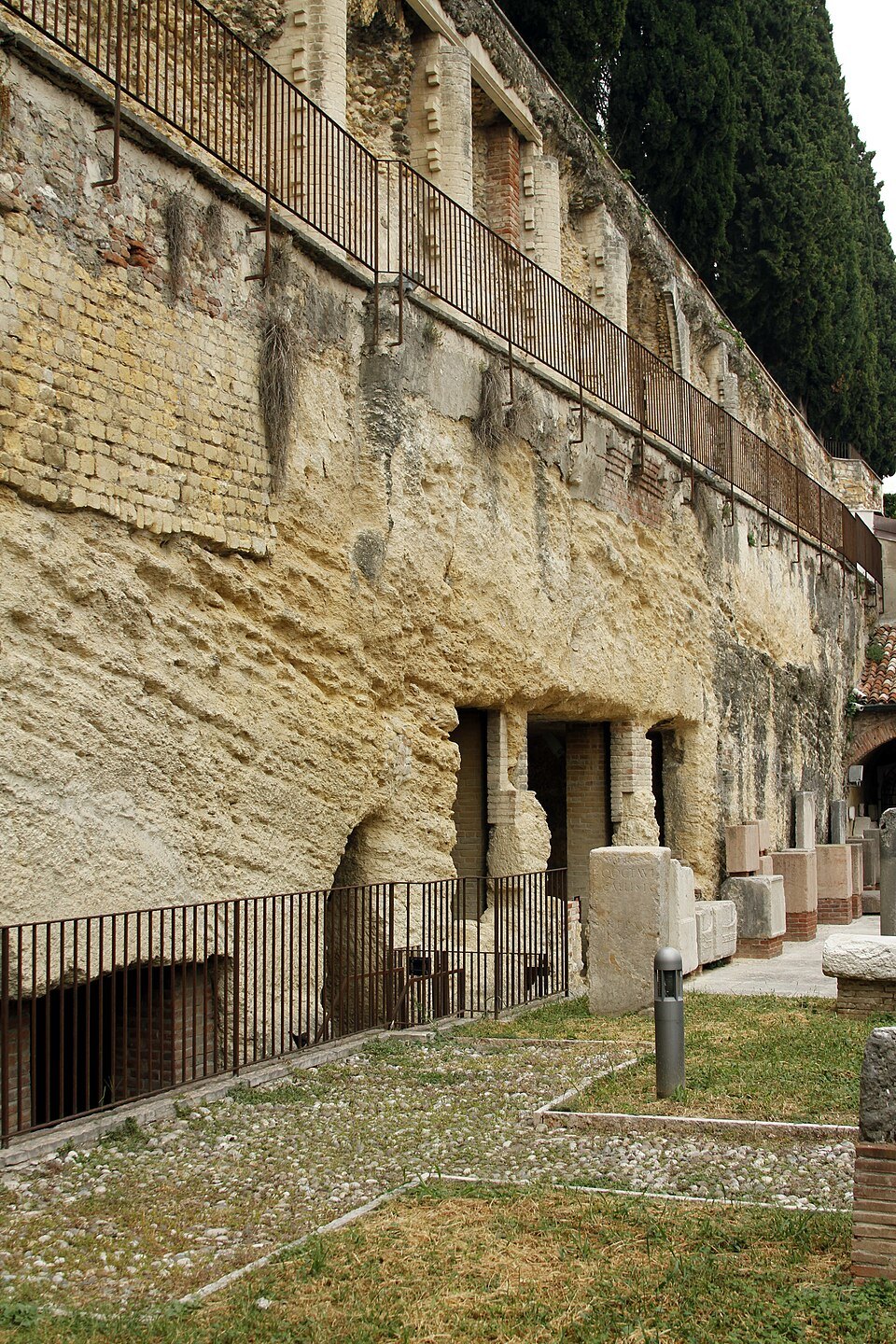
The church was remodeled in Gothic form in the fourteenth century, keeping its portal and porch, and changed again from 1613 by a lay confraternity. Between 1697 and 1703 the two-branched staircase was added to reach the front. Inside are wooden choir stalls carved by German craftsmen between 1717 and 1720, and the tomb of the painter Giambettino Cignaroli.
The museum in the convent
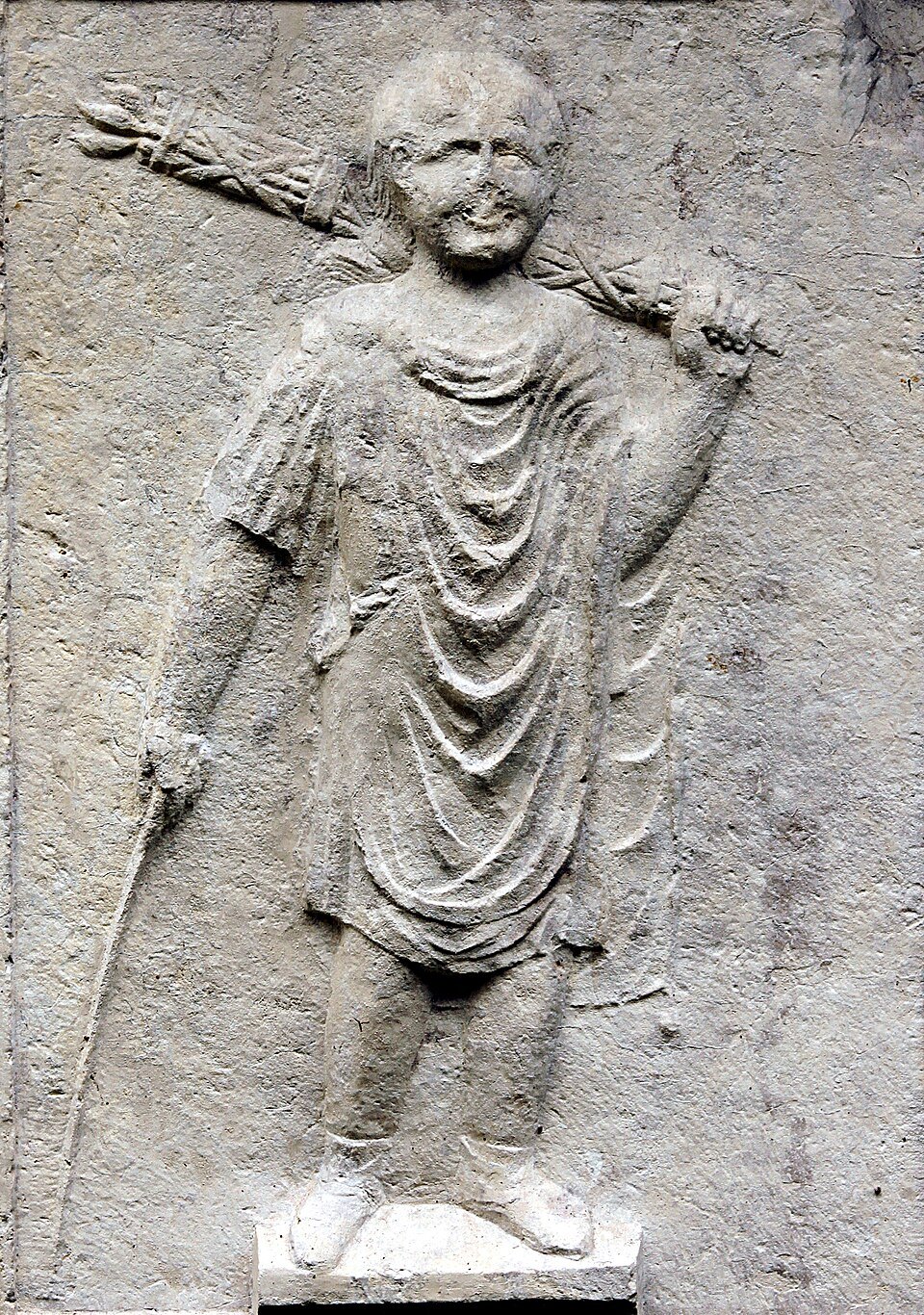
The Archaeological Museum was set up in the 1920s in the former convent of San Girolamo, a late fifteenth-century house of the Gesuati friars; sources give both 1923 and 1924. Its rooms, including the small cells of the old convent, hold sculpture, inscriptions, altars, bronzes, glass, terracotta lamps and pottery found in Verona.
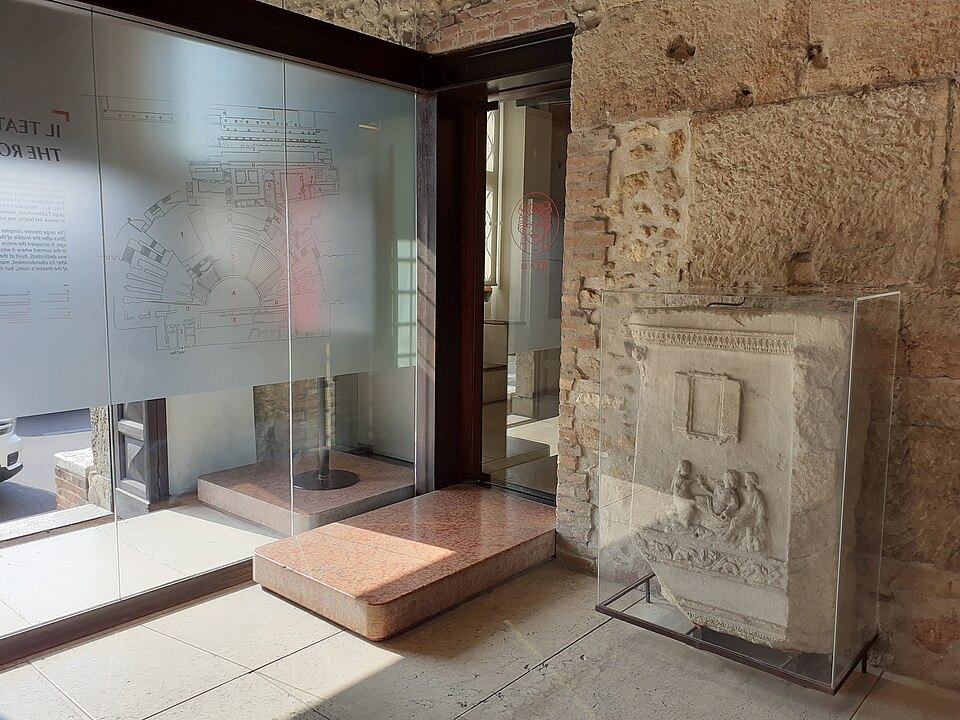
The convent church of San Girolamo was built in 1432 between two cloisters. Its floor and walls now carry Roman mosaics, and its early sixteenth-century ceiling is made of eighteen painted wooden panels. Among the mosaics are a third-century Bacchus with his panther, found at Piazza Bra, and scenes of gladiators in combat, with the fighters' names written beside them.
What you actually see
At the bottom, look for the tuff-block walls of the stage building, where traces of the mechanism for the stage curtain survive. Andrea Monga also assembled a single sphinx from fragments of several different ones found during his digs, a small example of how nineteenth-century excavators pieced the site together.
Climbing the seating, notice how the rows follow the slope of the hill itself, with the old passages and stairways still threading between them. The arches of the upper galleries have been partly rebuilt, and from the top the full width of the theater and its relation to the river become clear.
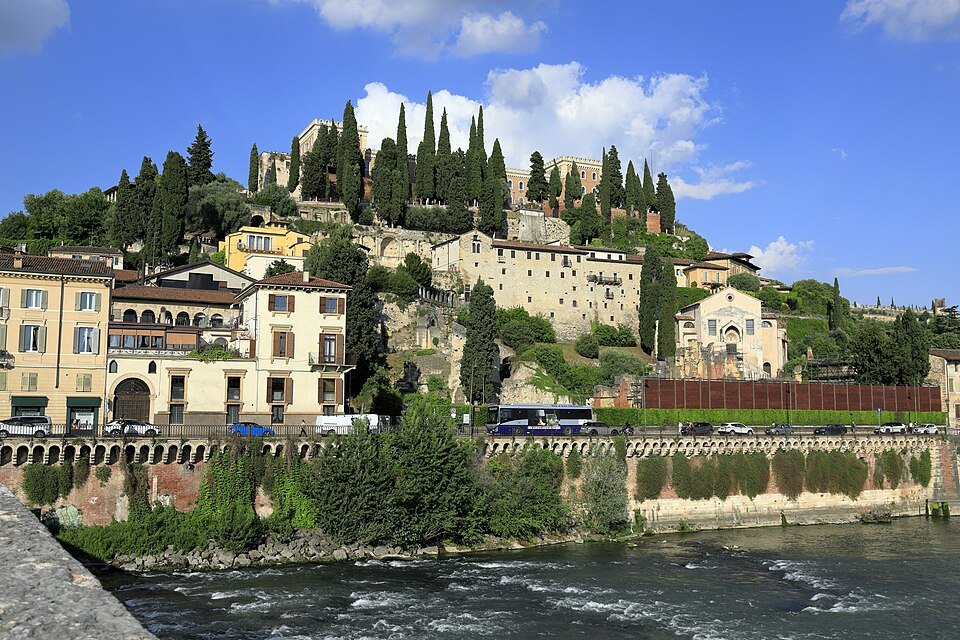
The great terrace of the museum is the reward for the climb. Roman stonework is set out along it, and the view takes in Ponte Pietra, the cathedral quarter and the bend of the Adige below the old city.
Summer on the old stage
The theater is still used for performance. The Estate Teatrale Veronese, a summer season best known for its Shakespeare productions, has been held here every year since 1948, on a modern stage installed over the ruins. Other performances share the same summer stage.
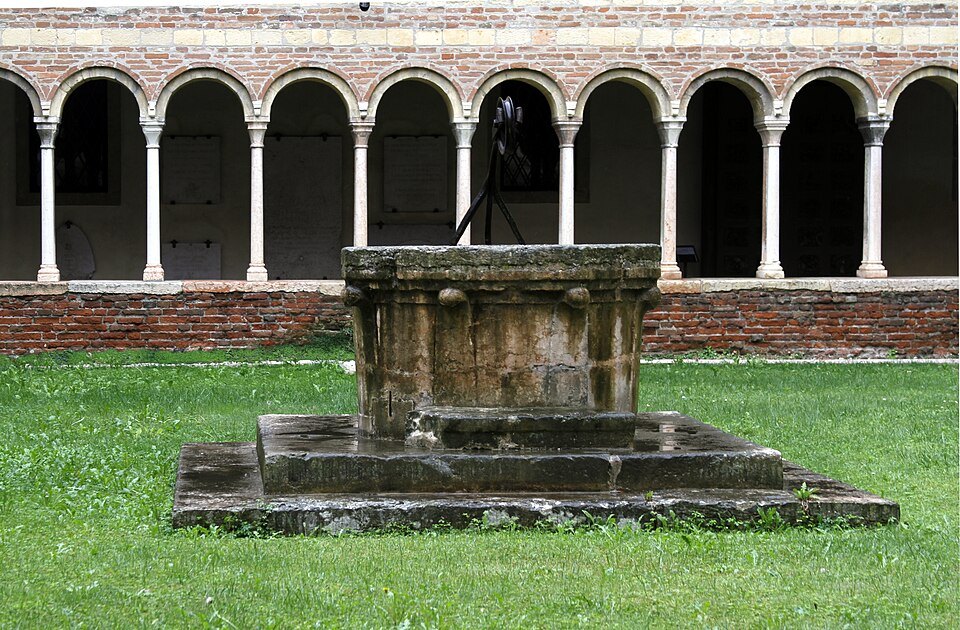
Note In summer the modern stage and its equipment sit over the ancient one, which changes how the ruins look by day. Performances are separate evening events, so check the season calendar and book ahead for an evening under the hill, where the city lights come up across the river.
How to visit
Allow about ninety minutes for the theater and museum together, and wear shoes with grip for the steep stone steps. The museum itself is not wheelchair accessible, though a ramp gives access to the theater seating. The civic museums close one day a week, so check before going.
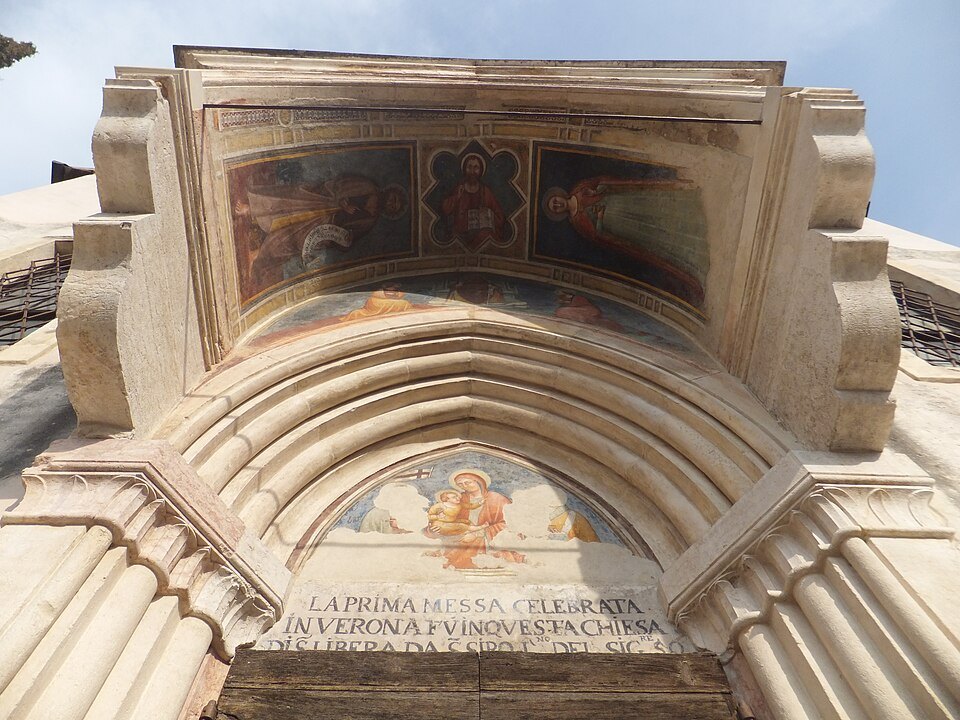
Cross Ponte Pietra to reach the entrance on the riverside road. The funicular has an intermediate stop serving the museum, and afterwards the stairs or the funicular continue up to Castel San Pietro for the widest view of the city, and the ancient city as a whole is covered in Roman Verona.
Nearby
- Over Ponte PietraPonte PietraVerona's oldest bridge, begun by the Romans and patched by every age since, then blown apart in 1945 and…Read the page
- Over Ponte PietraCastel San PietroThe hill above the Roman theater, crowned by Austrian barracks, where a terrace looks straight down on the…Read the page
- Over Ponte PietraGiardino GiustiBehind a palace in Veronetta, a cypress avenue runs from box parterres and an old maze up to a grotto, a…Read the page
- Inside the loopThe DuomoVerona's cathedral complex layers a Romanesque church, a Titian altarpiece, a cloister, a baptistery and…Read the page