Home · Sights · Giardino Giusti
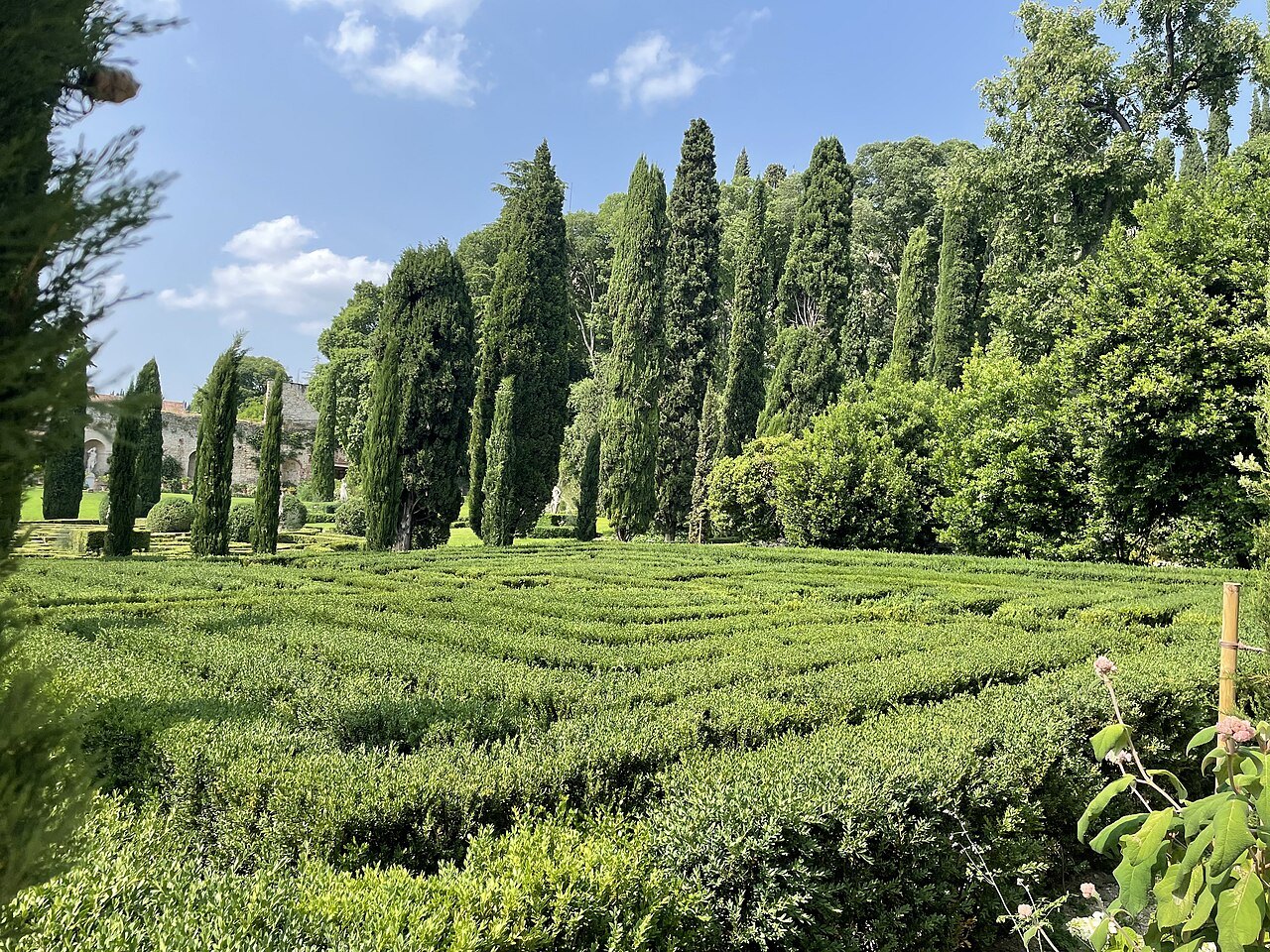
Behind a palace in Veronetta, a cypress avenue runs from box parterres and an old maze up to a grotto, a stone mask and a view over the city.
The parts to look at
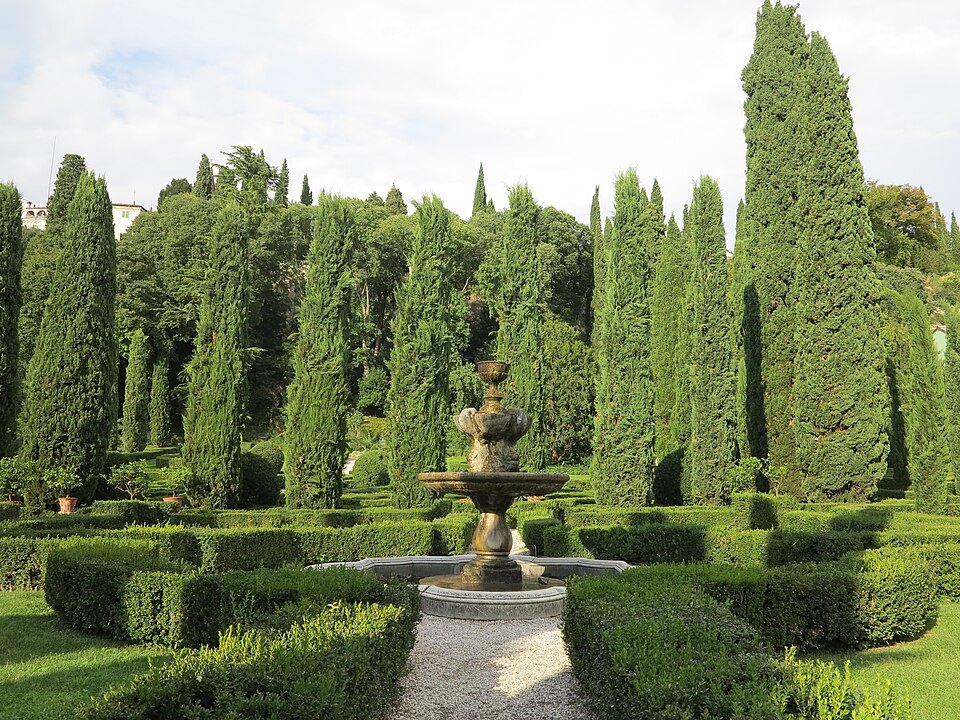
- Cypress avenueThe long central walk of tall cypresses that runs from the palace toward the grotto
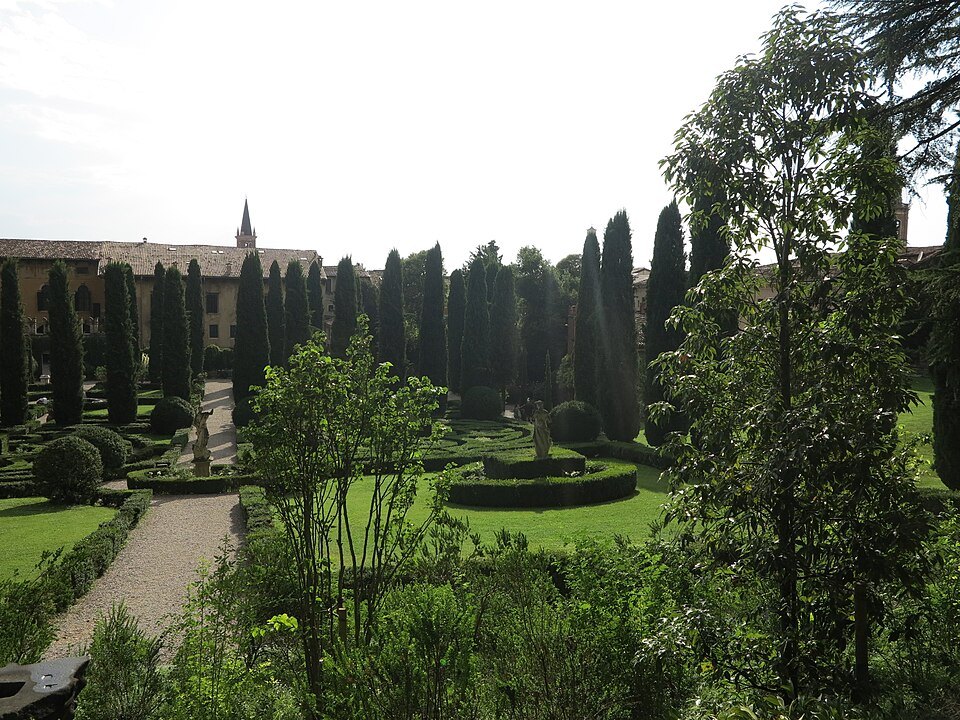
- ParterresSquare rooms of clipped box on the flat lower garden, set with mythological statues
- The mazeA boxwood labyrinth beside the avenue, redesigned in 1786 and still walkable
- The grottoA sixteenth-century grotto at the foot of the slope, its vault once lined with shells and coral
- Tower staircaseA winding stair inside a tower beside the old city walls, climbing to the upper garden
- Mascaron and belvedereA huge carved grotesque mask on the hillside, with the terrace above looking over Verona
From the gate at the foot to the belvedere at the top.
A garden that climbs out of the city
Giardino Giusti is a formal Italian garden laid out in the sixteenth century behind Palazzo Giusti, on the left bank of the Adige in the Veronetta quarter. It starts flat and orderly at the back of the palace, with clipped box hedges and statues, then rises up a steep wooded slope to terraces that look back across the river at the towers and domes of the old city.
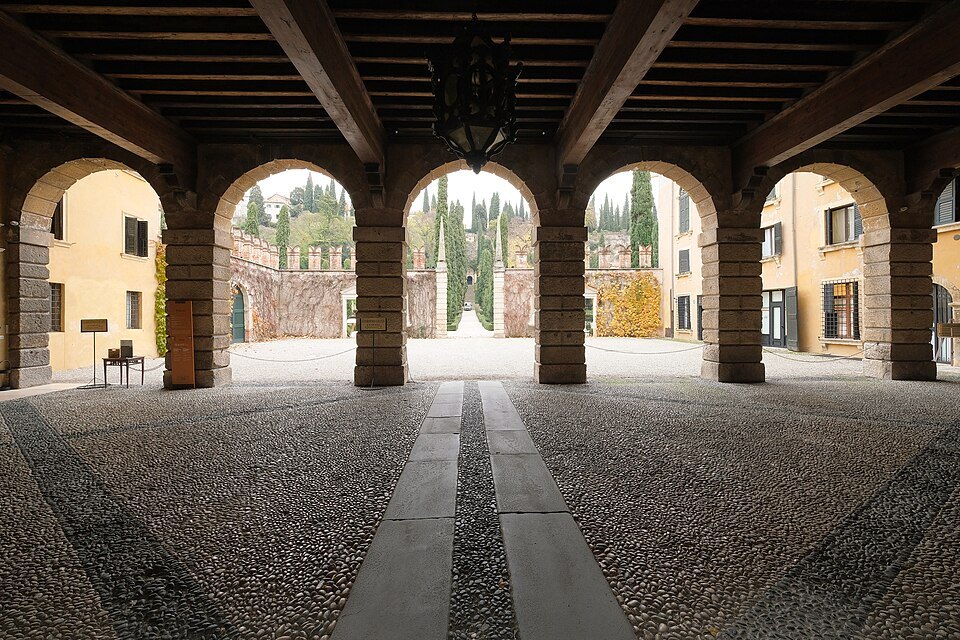
It rewards visitors who want a pause between churches and museums. The garden is still owned by the Giusti family, who have held the site for centuries, and it is kept, in their own words, in the old manner. When the Grand Tour became fashionable, visitVerona notes, it turned into an obligatory stop for poets, artists and the crowned heads of Europe passing through Verona.
From wool dyers to a nobleman's paradise
The Giusti family came to Verona from Tuscany in the late thirteenth century and worked in wool dyeing. In 1406 Provolo Giusti bought land beside the old Roman road, the Via Postumia, and the dye works stood here until the sixteenth century, when the production site was turned into a palace with a formal garden.
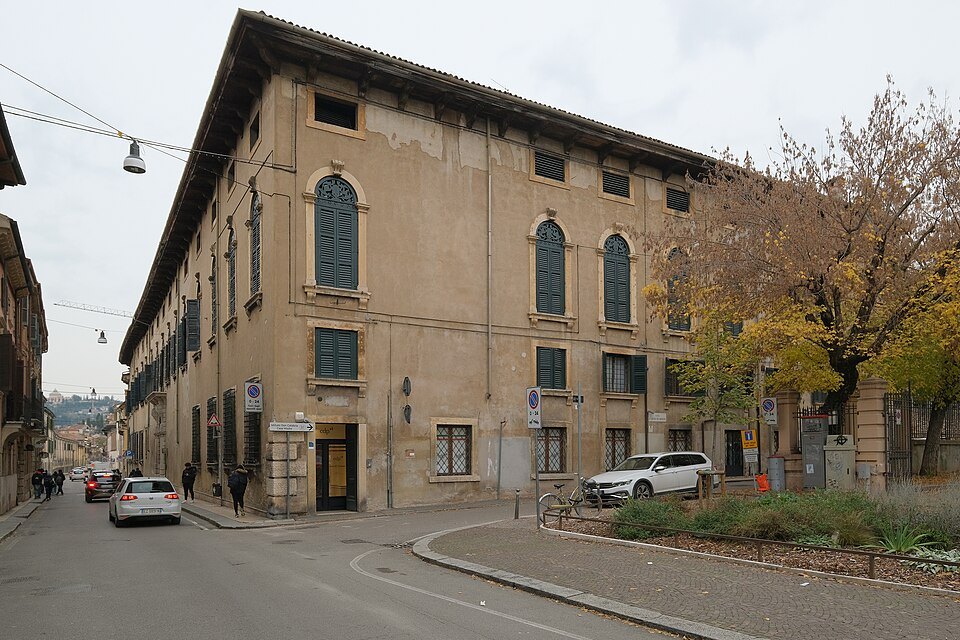
The man behind that change was Agostino Giusti, born in 1548 and dead in 1615, a diplomat who served the Medici and the Republic of Venice, a member of Verona's philharmonic academy and a collector of Roman inscriptions. Sources differ on the start date: some put the beginning of work around 1570, while others date the planting of the garden to 1580.
The garden was admired early. The English traveler Thomas Coryat visited in 1611 and called it, according to Wikipedia, a second paradise. The family's importance to the place became part of its name: the Austrian emperor later allowed the Giusti to style themselves Giusti del Giardino, "of the garden."
Visitors, changes and the storm of 2020
The garden lists a long line of famous guests: Cosimo III de' Medici, the French writer Charles de Brosses, the Emperor Joseph II, King Carlo Felice of Sardinia, Tsar Alexander I, John Ruskin and, according to the garden, the young Mozart in 1769. Goethe came in 1786 and admired an ancient cypress near the entrance, which he mentioned in his Italian Journey.
The layout was not frozen. The garden dates the present design of the parterres to 1765, and the maze was redesigned in 1786 by the architect Luigi Trezza. The plants suffered badly in the Second World War, Wikipedia records that the maze was rebuilt after 1945, and one guide notes another restoration of the maze in the 1990s.
On 23 August 2020 a violent storm tore through Verona. The garden lost the Goethe cypress, which it describes as more than six hundred years old, although some reports give a lower age. Europa Nostra, which put the garden on its list of seven most endangered heritage sites, says about thirty trees, a third of the total, were destroyed that year, and the damage also took in parts of the maze, boxwood in the parterres and three seventeenth-century statues.
The lower garden
The central axis is the cypress avenue, a long walk between tall, dark trees that leads the eye straight to the grotto and the mask above it. After 2020 new cypresses were planted along the avenue, so many of the trees are younger and slimmer than the old photographs suggest; they will take years to reach the height of the ones they replaced.
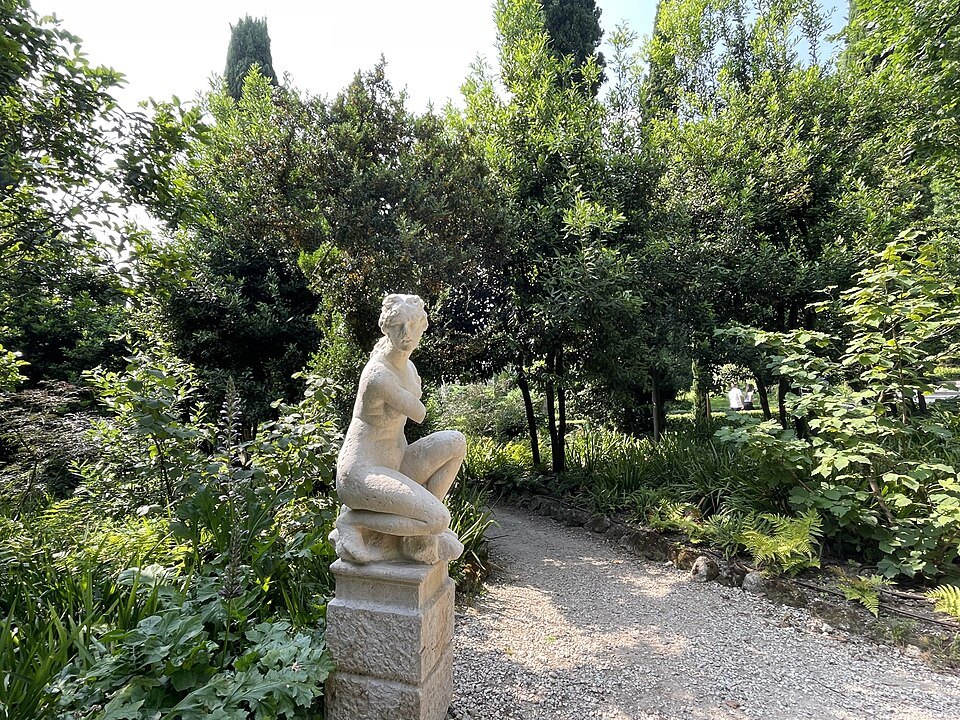
On either side lie the parterres, square green rooms edged with box. Look for the five statues of Diana, Venus, Atalanta, Apollo and Adonis by the sculptor Lorenzo Muttoni, and for the pots of citrus trees, which the garden links to the golden fruit of the mythical Garden of the Hesperides. Roman inscriptions and fragments from Agostino Giusti's collection are set around the grounds.
The maze sits beside the avenue. visitVerona calls it one of the oldest mazes in Europe, and the garden notes that its paths can still be walked today. After the storm, the maze and the damaged hedges were restored and replanted.
The grotto, the tower and the mask
At the end of the avenue the garden becomes theatrical. The grotto has a sixteenth-century architectural front, and inside, the vault still carries shells, corals, mother-of-pearl and sponges; the back wall was lined with mirrors. The garden also records a grotto chapel dated 1591.
To reach the upper garden, look for the tower beside the fourteenth-century city walls. Inside it a winding staircase, described by the garden as secret, leads up to the upper garden and the terraces above the avenue.
Above the grotto looms the mascaron, a huge grotesque face carved into the hillside and attributed to Bartolomeo Ridolfi. It was designed to belch flames and smoke from its mouth to startle guests. The terrace at its level serves as a belvedere, and the highest points of the garden give one of the widest views over Verona.
How to visit
The entrance is at Via Giardino Giusti 2 in Veronetta. Individual visitors do not need to book: tickets are sold at the garden's own ticket office and online, and groups of more than ten are asked to arrange their visit by email in advance. A combined ticket also covers Palazzo Maffei, and guided tours can be booked. Check the garden's own site for opening times before going; more on tickets is on booking ahead.
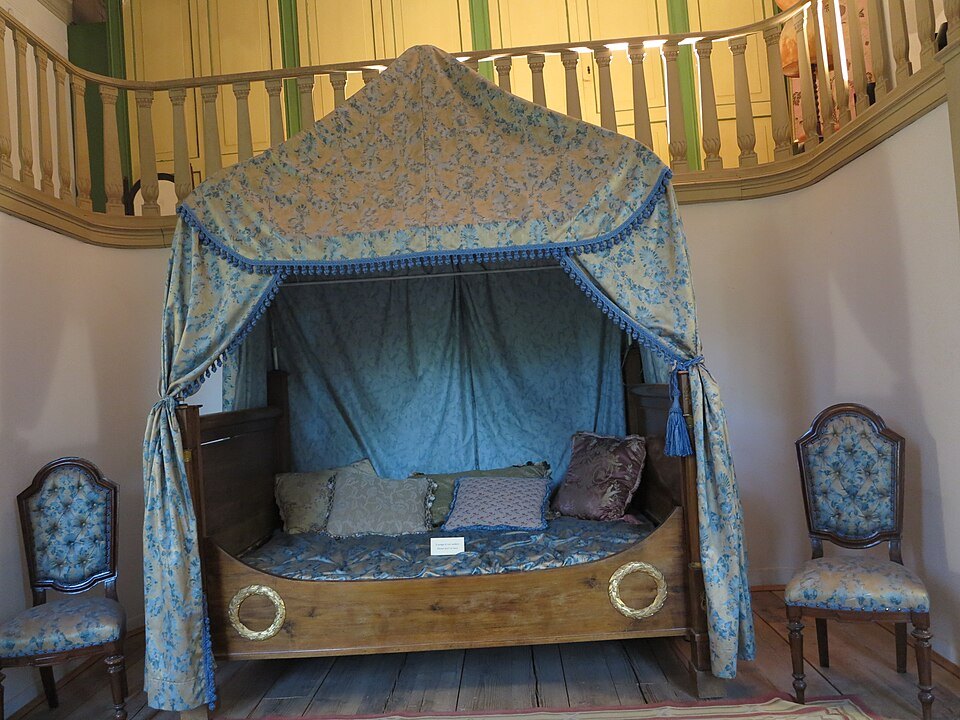
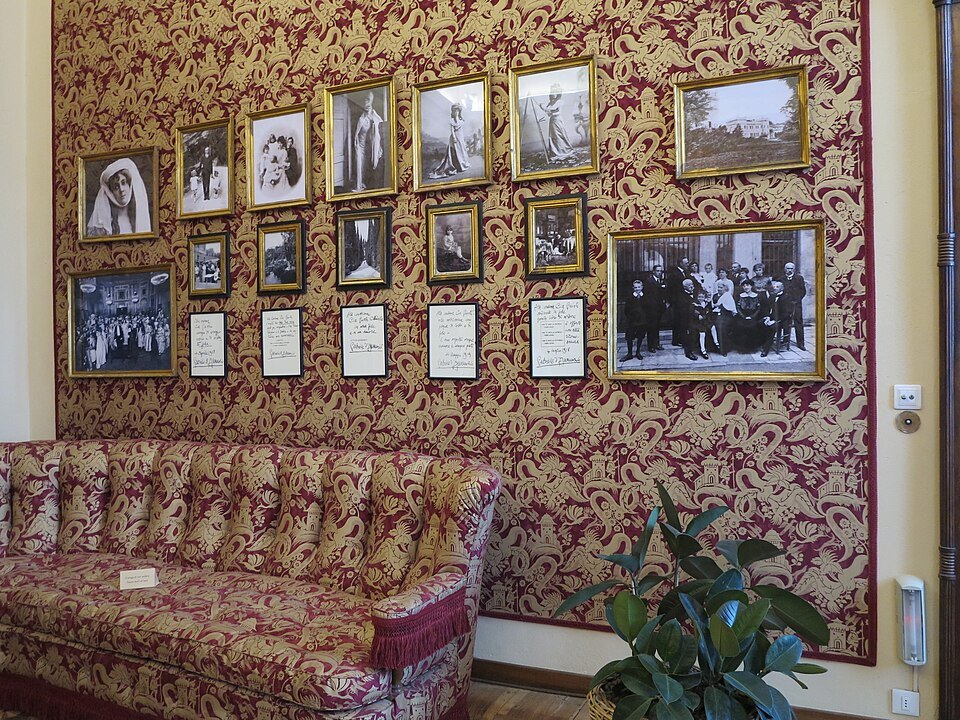
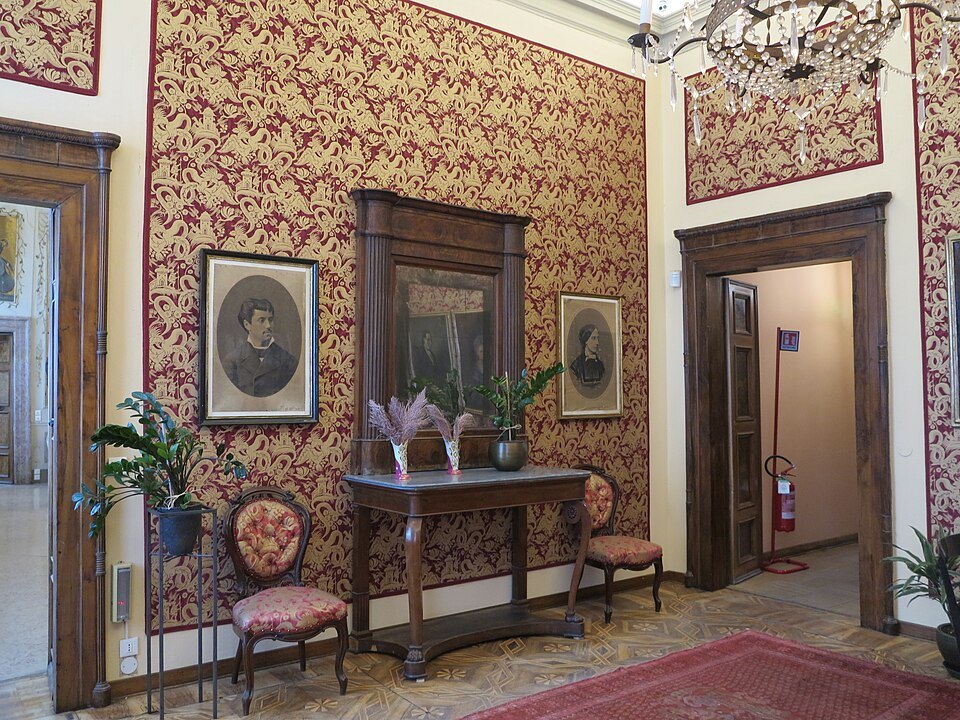
Note The upper garden is reached by stairs and steep paths, so the lower parterres and the avenue are the easy part for anyone with limited mobility. The period apartment inside the palace, which shows how the Giusti family lived, is a separate part of the visit.
The garden sits roughly ten minutes on foot from the city center. It pairs naturally with the other sights on this side of the river: cross Ponte Pietra, see the Roman Theater, and finish with the view from Castel San Pietro, or reverse the order and end the day among the cypresses.
Nearby
- Over Ponte PietraThe Roman TheatreA Roman theater cut into the slope across the Adige, with a medieval church sitting in its seating and an…Read the page
- Over Ponte PietraCastel San PietroThe hill above the Roman theater, crowned by Austrian barracks, where a terrace looks straight down on the…Read the page
- Over Ponte PietraPonte PietraVerona's oldest bridge, begun by the Romans and patched by every age since, then blown apart in 1945 and…Read the page