The oldest stage in Verona
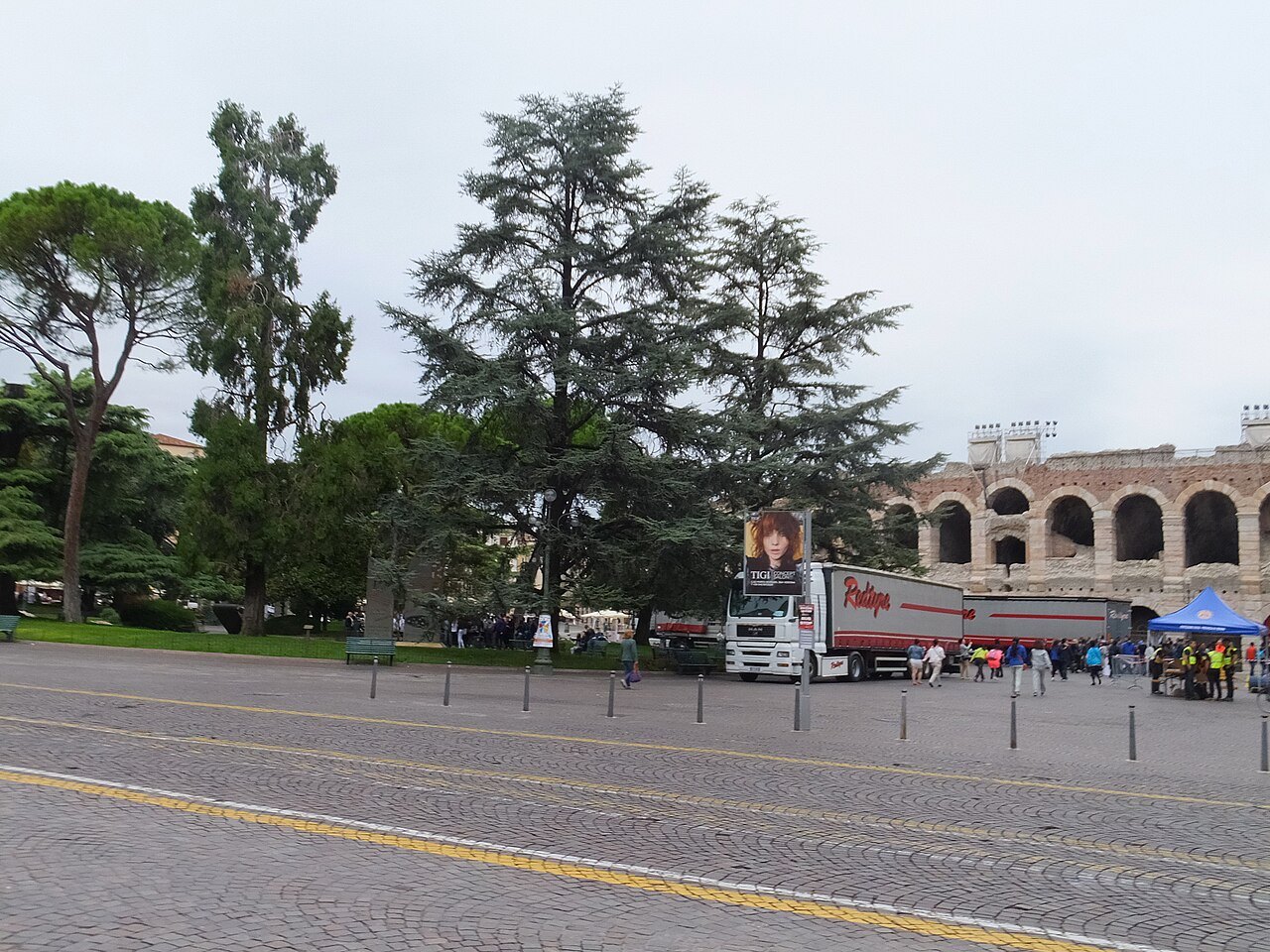
The Arena is the Roman amphitheatre at the edge of Piazza Bra, and the building most visitors to Verona see first. It was built in the Julio-Claudian period, probably finished around AD thirty, which makes it older than the Colosseum in Rome. Among surviving Roman amphitheatres it ranks among the largest, and its seating bowl is one of the best preserved anywhere.
It matters because it never stopped being used. Gladiators fought here, medieval courts settled disputes here, knights jousted, bulls were baited, and opera has been staged on its floor since 1913. Walking the corridors under the seats is the most direct way in the city to feel the scale of the Roman town that once stood on this ground.
Built for thirty thousand
The overall ellipse measures about five hundred and twenty by four hundred and twenty Roman feet, and the original outer wall rose around thirty-one meters in three tiers of arches. It probably held around thirty thousand spectators. The inner structure was cast in Roman concrete, while the facades and pillars were cut from red and white limestone quarried in the hills north of the city and laid without mortar.
Crowd flow was planned as carefully as the stone. Seventy-two entrances were numbered in sequence around the ring, and dozens of internal passages, the vomitoria, fed spectators up to their rows. Below the corridors ran ring-shaped drains, and a well found at the center of the floor in the eighteenth century was part of the system that kept water off the arena.
Earthquake, quarry, and a new life
The outer ring is almost entirely gone. Stone was taken from it in late antiquity for the city walls, and a violent earthquake brought down most of what remained; most accounts date that quake to January 1117, though the city museums give 1183. Only four arches of the outer wall survive, the section known as the Ala, or wing.
The medieval city found other uses for the shell. Judicial duels between hired champions were fought on the floor, and in 1278 some two hundred Cathar heretics were burned here on the orders of Alberto I della Scala. City statutes from 1276 confined prostitutes to the arches of the Arena, and later the arcades were rented out as workshops and homes.
From jousts to Aida
The first documented joust took place in 1590, the last official one in 1716. Bull hunts drew crowds through the eighteenth and nineteenth centuries, and Napoleon watched one in 1805; a rhinoceros was exhibited here in 1751. Through it all the city kept spending to hold the structure together, with a systematic restoration decided as early as 1568.
Scipione Maffei's study of amphitheatres in 1728 pushed the work toward careful conservation, and earth built up on the arena floor was cleared soon after. Families living in the arches were evicted in 1820. Between 1953 and 1956 the engineer Riccardo Morandi secured the Ala with tensioned steel cables, which is why the tall wing still stands today.

In 1913 the tenor Giovanni Zenatello and the impresario Ottone Rovato staged Verdi's Aida on the arena floor to mark the centenary of the composer's birth, launching a festival interrupted only by wars, with a permanent organization created in 1936. The summer stage now takes up roughly a third of the bowl and seats about twenty-two thousand people; for how those evenings work, see the opera season.
What to look at
Start outside at the Ala. Stand back far enough to take in all three tiers and imagine that arcade running around the entire building. On the ground-floor arches, look for Roman numerals cut into the stone above the openings; the surviving blocks of the wing carry the numbers LXIV to LXVII.
Inside, the vaulted corridors are the real surprise, rough and cool, with the stone bedding exposed. The limestone is not uniform: watch how the pinkish and white blocks alternate through the seating. At the top of the steps the view opens over Piazza Bra, the Gran Guardia, and the rooftops toward the river.

At the edge of the floor, look for the low wall of the podium that once separated the audience from the fighting. A channel ran around the first step, once covered by stone slabs pierced with small round holes for drainage, part of the same system as the drains beneath the corridors.
Visiting when the sets are up
Allow about an hour to walk the corridors, climb the cavea, and look at the Ala from outside. Tickets can be bought online or at the desk on Piazza Bra, and the site is managed by the city museums, so check their official page for the day planned.
From April through October, staging for the opera season occupies part of the monument: painted flats, scaffolding, and stacks of modern seating share space with the ancient stone, both on the floor and against the outer walls as crews build and store that season's sets. Not every area of the bowl can be visited during this build-up, and the view of the empty ring is clearest outside the festival months.
The site is only partly accessible for people with limited mobility, so anyone with specific needs should check with the ticket desk before planning a route through the corridors and steps.
Pair it with the rest of the city

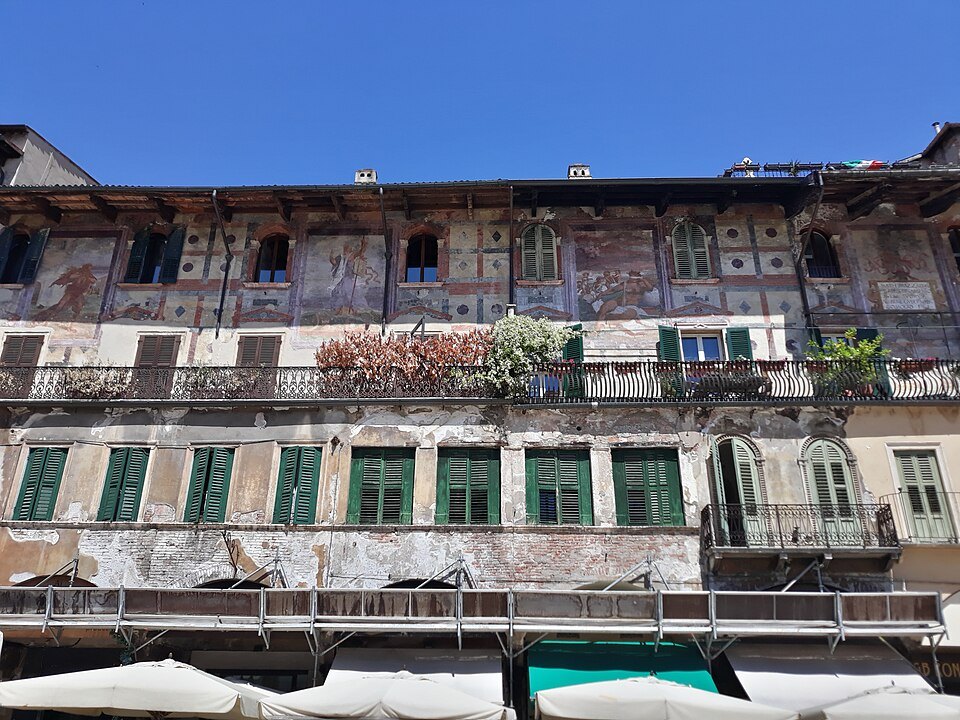
The Arena sits on Piazza Bra, so combine the two before walking on toward Piazza Erbe, the next natural stop for anyone tracing the old Roman town on foot. For the wider layout of gates, streets, and the theater across the river, see Roman Verona, which places the amphitheatre within the city that built it.
Read next
- The Opera SeasonWhat an evening of opera in the Arena is like, from the gates to the last actSeats, dress, bags, candles, rain delays and the walk out: how an opera night inside Verona's Roman amphitheater actually unfolds, step by step.Read
- Getting AroundArriving in Verona by car when the old center is a limited-traffic zoneVerona's historic center is a camera-watched limited-traffic zone. Who may drive in, what hotel guests must do, and where visitors leave the car instead.Read