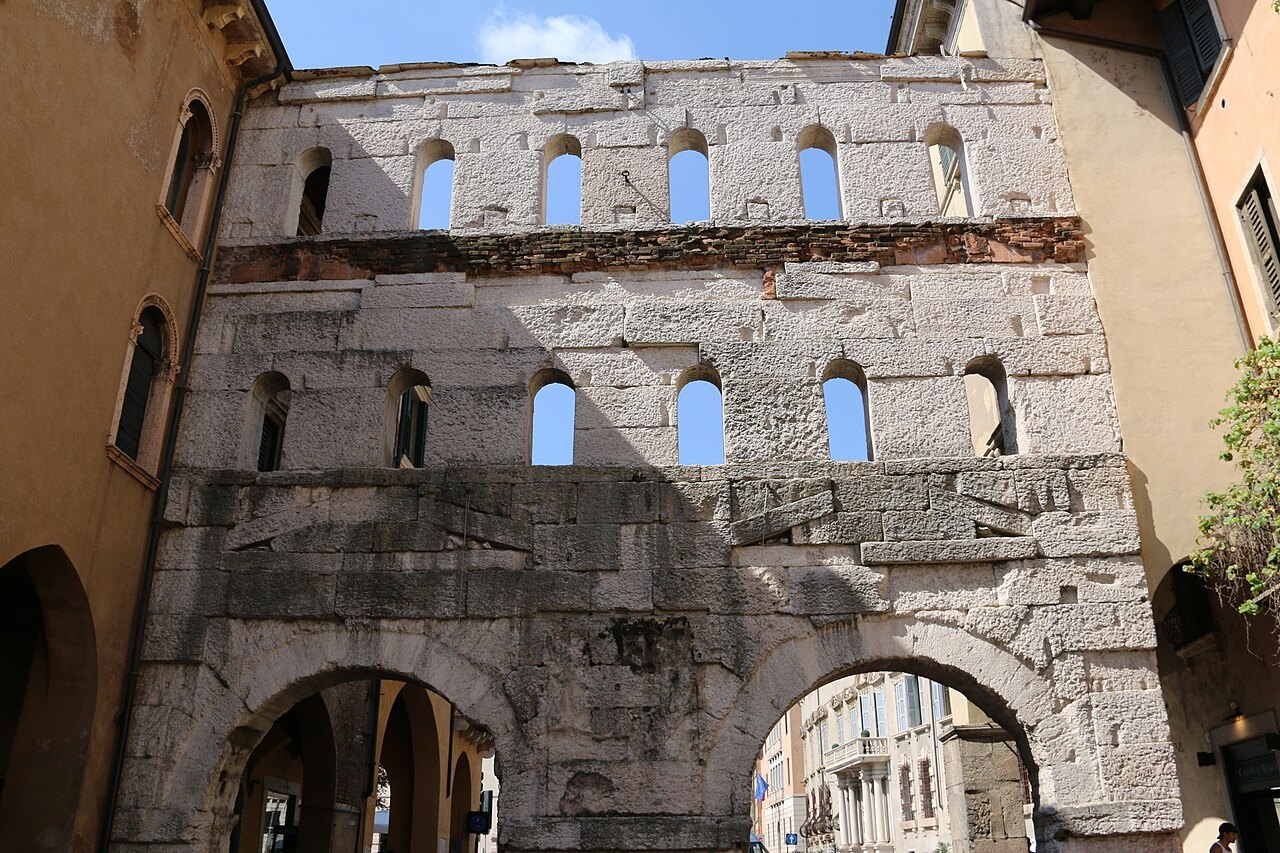
A white limestone Roman gate still standing across a busy street, carved with the date an emperor rebuilt the city walls in AD 265.
The parts to look at
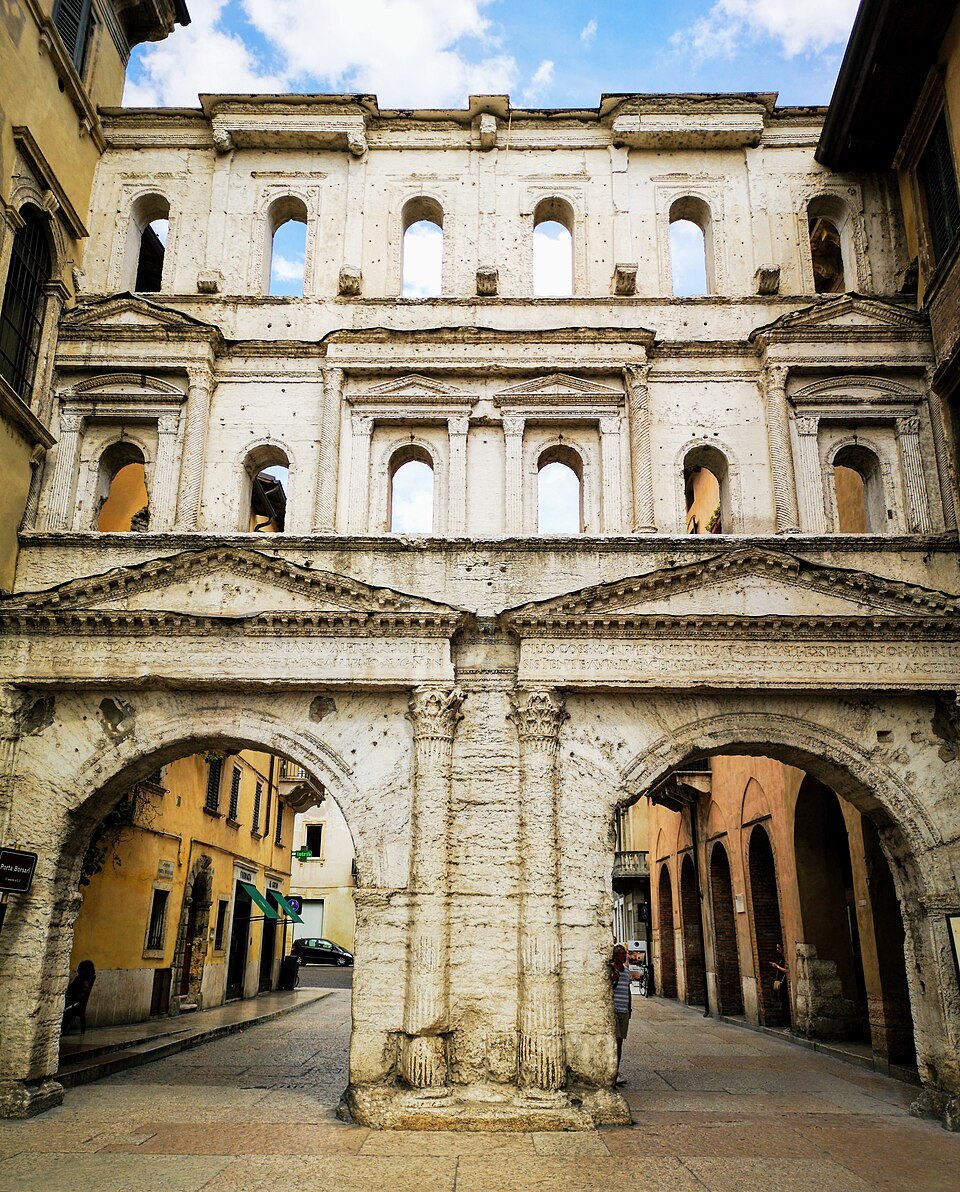
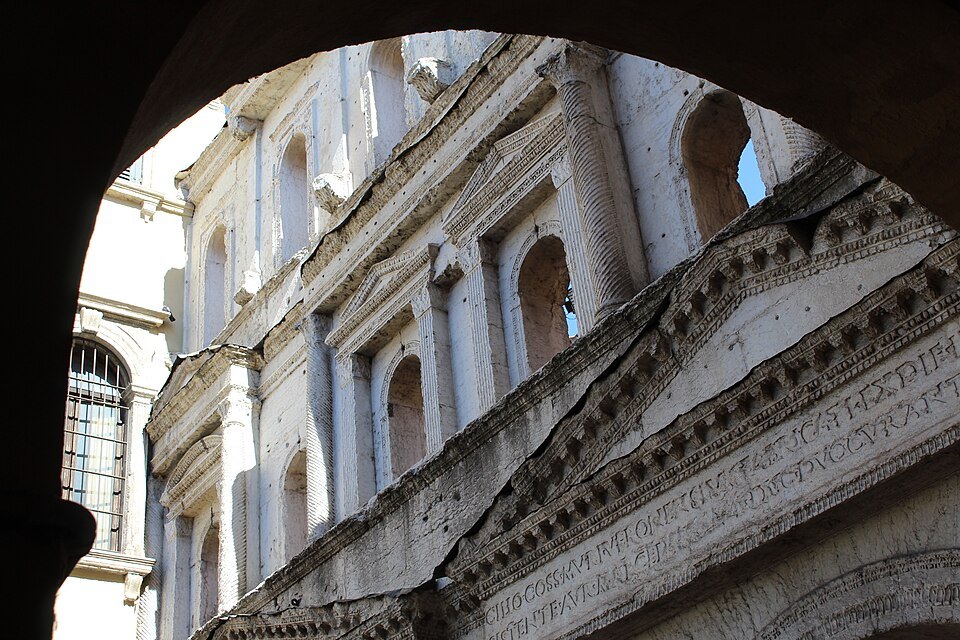
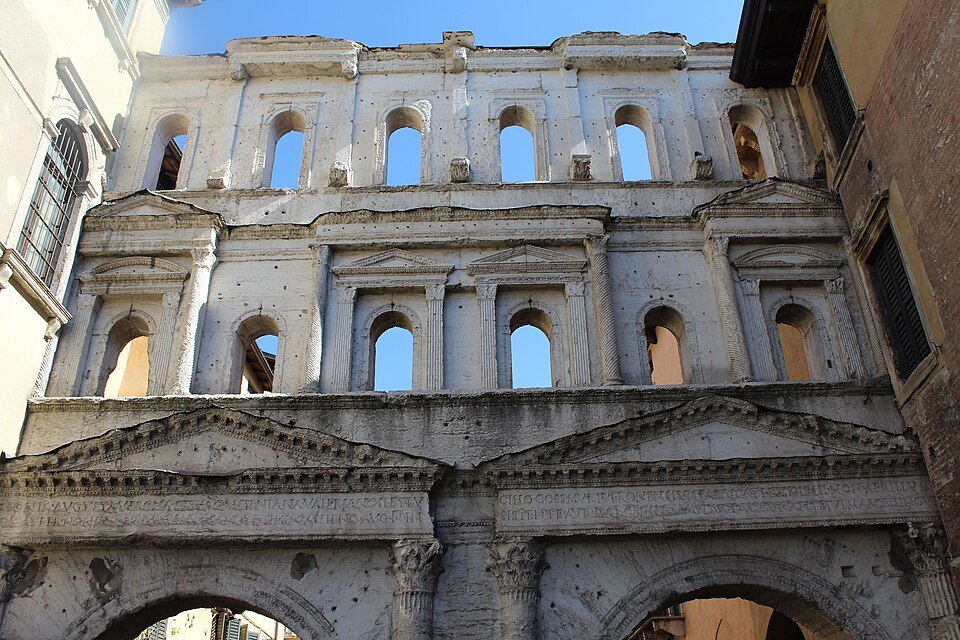
- IThe two archesTwin passages for traffic in and out, framed by Corinthian half-columns and a pediment
- IIThe Gallienus inscriptionCarved on the band above the arches, recording the walls built in AD 265
- IIIThe two window storeysTwelve arched openings in two rows, some set in small pedimented niches
- IVCorso Porta BorsariThe old decumanus, running from the gate toward the Roman forum
- VPorta LeoniThe other surviving Roman gate, half a facade built into later houses
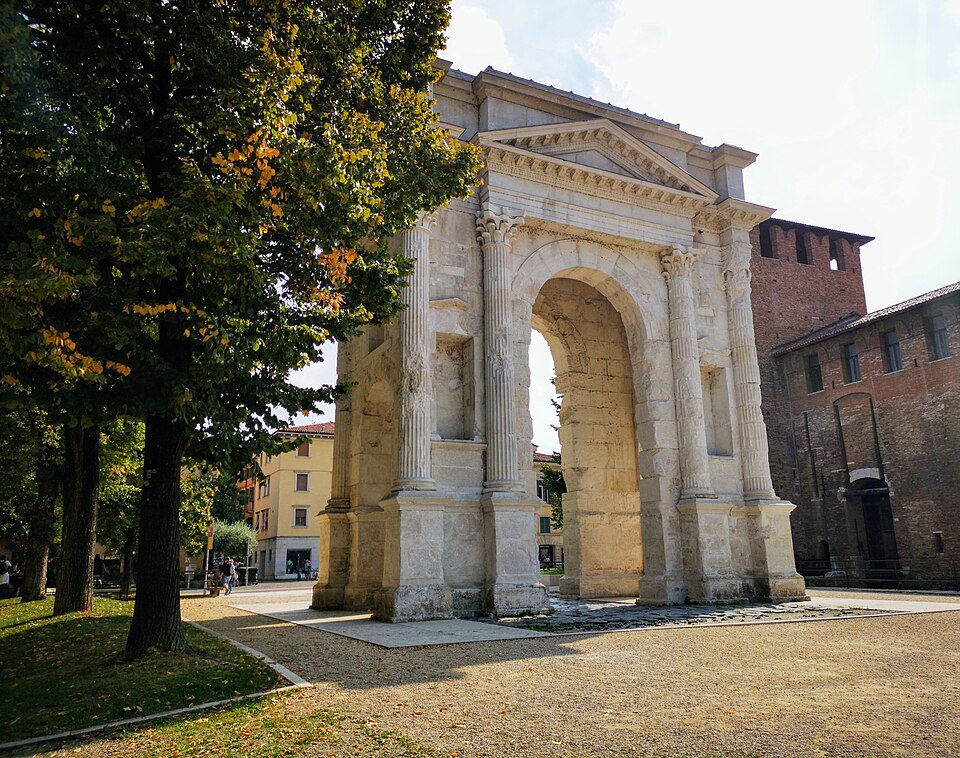
- VIArco dei GaviA first-century arch taken down in 1805 and rebuilt beside Castelvecchio
A Roman gate still in use
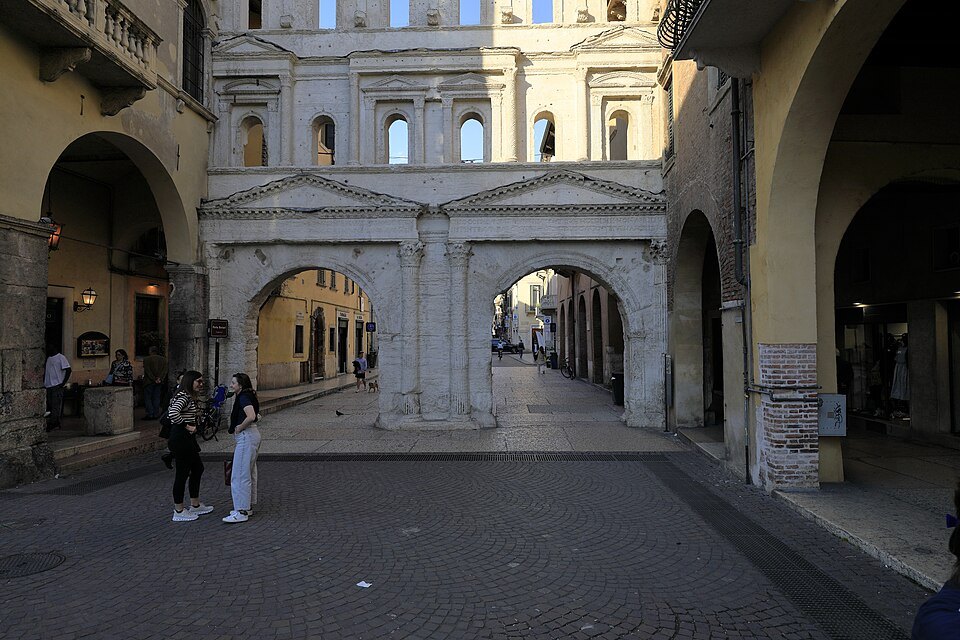
Porta Borsari is the surviving outer face of the main gate of Roman Verona. It stands right in the street, about thirteen meters high and roughly as wide, and people still walk through its two arches every day. After the Arena, it is one of the best preserved Roman monuments in the city, and it costs nothing to see.
What makes it worth a stop is the reading it rewards. The stonework carries a dated inscription, the layout of the street behind it is the Roman plan, and the gate sits on the line of one of the great roads of northern Italy. It is a good first step into Roman Verona.
Porta Iovia and the Via Postumia
The first gate here was built in the second half of the first century BC, when Verona was walled as a Roman town. It was brick. In the first century AD it was given the monumental facade of white limestone that survives, quarried in the hills north of the city. Behind that facade there was once an inner courtyard and a second face toward the town; both have gone.
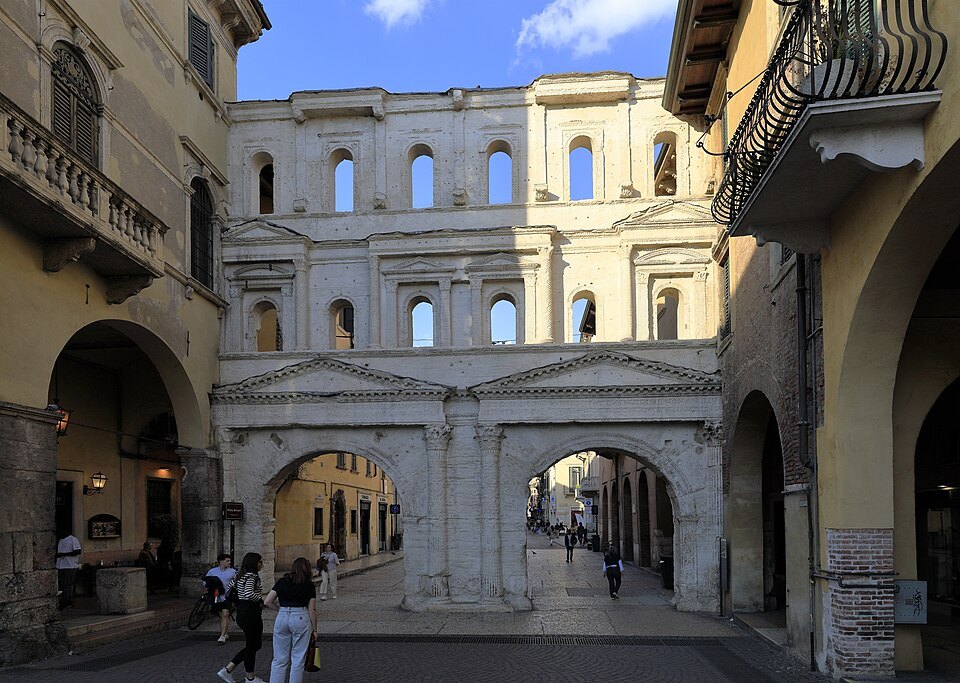
The Romans called it Porta Iovia, after a small temple of Jupiter nearby. The Via Postumia passed through it and continued inside the walls as the decumanus maximus, the main east–west street. Because this was the principal entrance, it was richly decorated to impress anyone arriving. A posting station with its own administrative staff operated close by, serving travelers and officials on the road, so this was the busiest threshold in the Roman town as well as its grandest.
Gallienus and the walls of 265
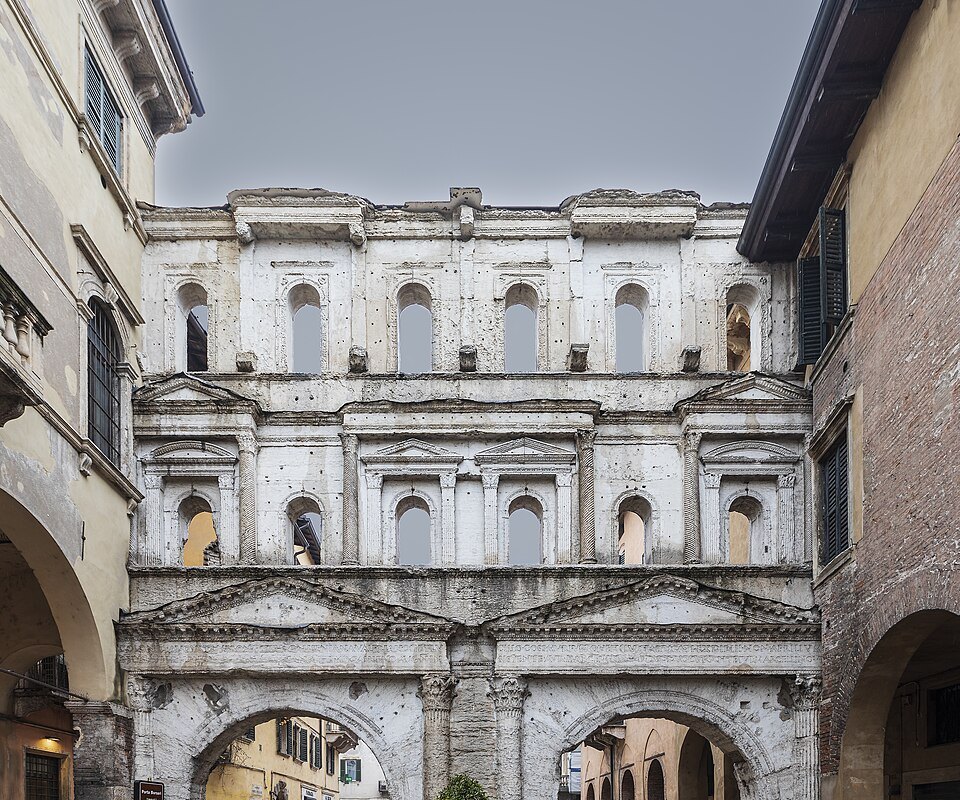
The long inscription above the arches dates to AD 265. It names the city Colonia Augusta Verona Nova Gallieniana, credits the order to the emperor Gallienus, and records that the walls of Verona were built from the third of April and dedicated on the fourth of December. The work was supervised by Aurelius Marcellinus, given the title dux ducum.
Those seven months were a restoration and expansion rather than a fresh start. The circuit was extended by about 550 meters to bring the Arena inside the defenses, and the builders reused a great deal of salvaged stone to move quickly. Fragments of these walls still turn up along several streets in the center.
Why it is called Borsari
The present name is medieval. It comes from the bursarii, officials who collected the duties owed to the bishop on goods carried in and out of the city at this point. The name stuck to the gate and to the street behind it, even after the tolls were long forgotten.
The gate needed care in modern times as well. A restoration in the 1970s and 1980s stabilized damaged blocks with epoxy resins and bronze dowels, which is part of the reason the carving still reads so clearly.
What to look at
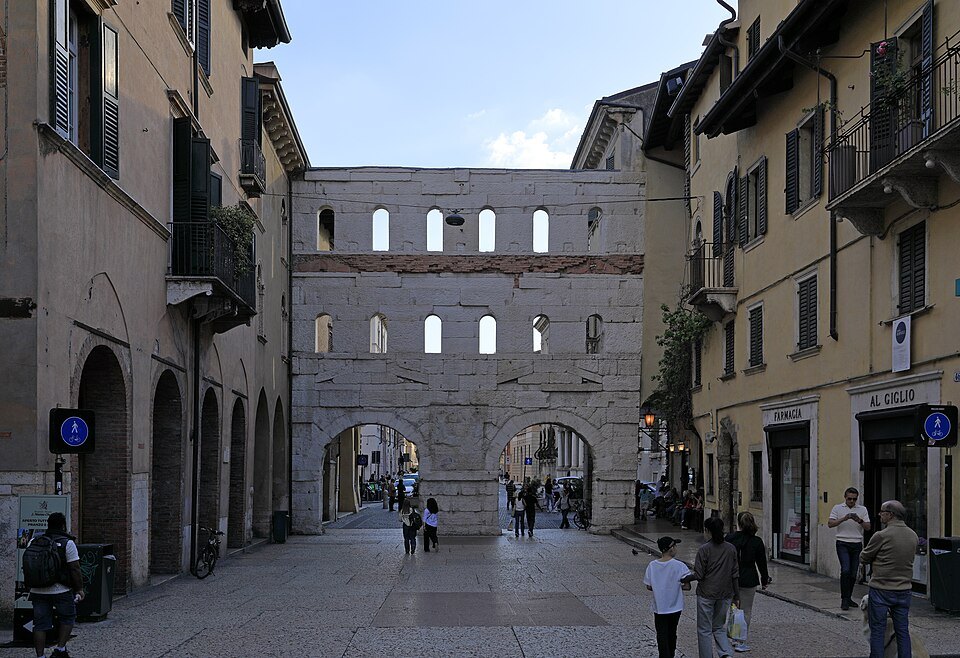
Stand back on the outer side and read the facade from the ground up. The two arches are framed by half-columns with Corinthian capitals carrying an entablature and a pediment. Above them rise two storeys of arched windows, six in each row, some tucked into little niches with triangular pediments of their own. The whole front is a stage set, not a working wall.
Then look for the inscription on the band above the arches; the name Gallieniana is the word to find. Walk through, and Corso Porta Borsari runs straight ahead along the line of the decumanus toward Piazza Erbe, which occupies the site of the Roman forum.
Porta Leoni and the Arco dei Gavi
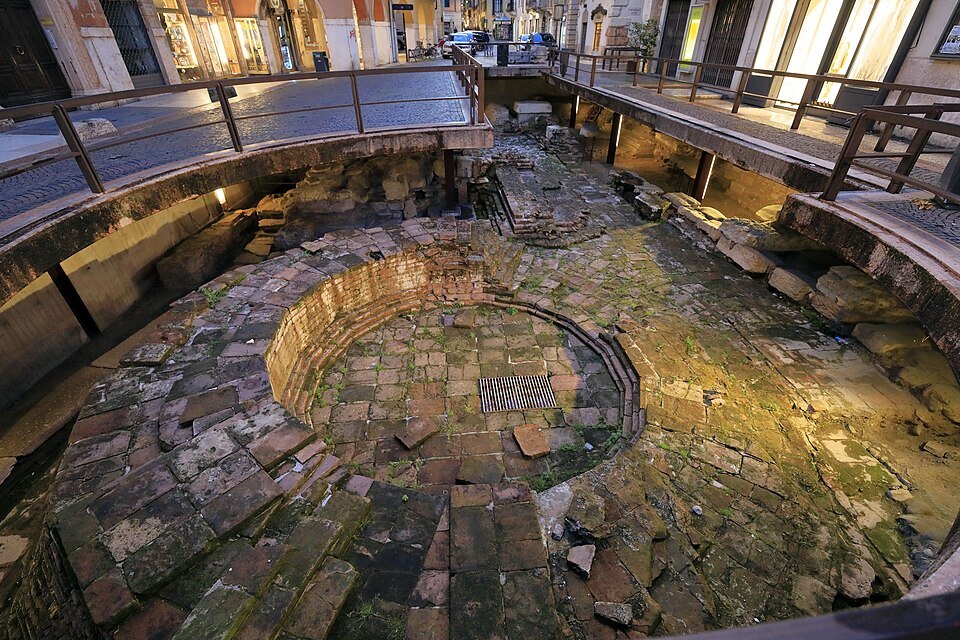
Verona's other surviving Roman gate is Porta Leoni, on the line of the cardo, the north–south axis. It too began as a republican gate and was faced in white stone under the empire; it had a square plan, an inner court and two sixteen-sided towers facing the countryside. Only half of the inner facade survives, built into a later house, with foundations exposed below street level.
Its ancient name is unknown. An inscription found there names four magistrates who paid for the walls, gates and sewers, and it is treated as a founding record of Roman Verona. The modern name comes from a Roman tomb decorated with lions that once stood nearby.
The Arco dei Gavi is a first-century arch raised by the Gavia family on the Via Postumia just outside the walls, signed twice by its architect, Lucius Vitruvius Cerdo. French engineers dismantled it in 1805; it was reassembled from its original blocks in 1932 beside Castelvecchio.
How to visit
The gate stands in a public street, so there is no ticket and no opening time to plan around. Ten minutes is enough to study the facade and find the inscription; the traffic of people through the arches is part of the scene, and a quieter moment makes photographs easier.
It fits naturally into a walk between the Arena and Piazza Erbe: follow the corso outward to the gate, then continue along the same line to the Arco dei Gavi and Castelvecchio. Porta Leoni lies a short walk away on the other side of the old center, and pairing the two gates shows how the Roman grid still shapes the streets.
Nearby
- Inside the loopPiazza delle ErbeThe long market square laid over Verona's Roman forum, crowded with stalls, painted houses, a Roman statue on…Read the page
- West along the AdigeCastelvecchioA brick fortress of the della Scala lords on the Adige, with its own fortified bridge and one of Italy's most…Read the page
- The Arena and Piazza BraThe ArenaA Roman amphitheatre finished around AD 30 that has been used, lived in and restored for nearly two thousand…Read the page
- Inside the loopPalazzo MaffeiThe baroque palace that closes the end of Piazza delle Erbe, built over Roman Verona's temple and home to a…Read the page