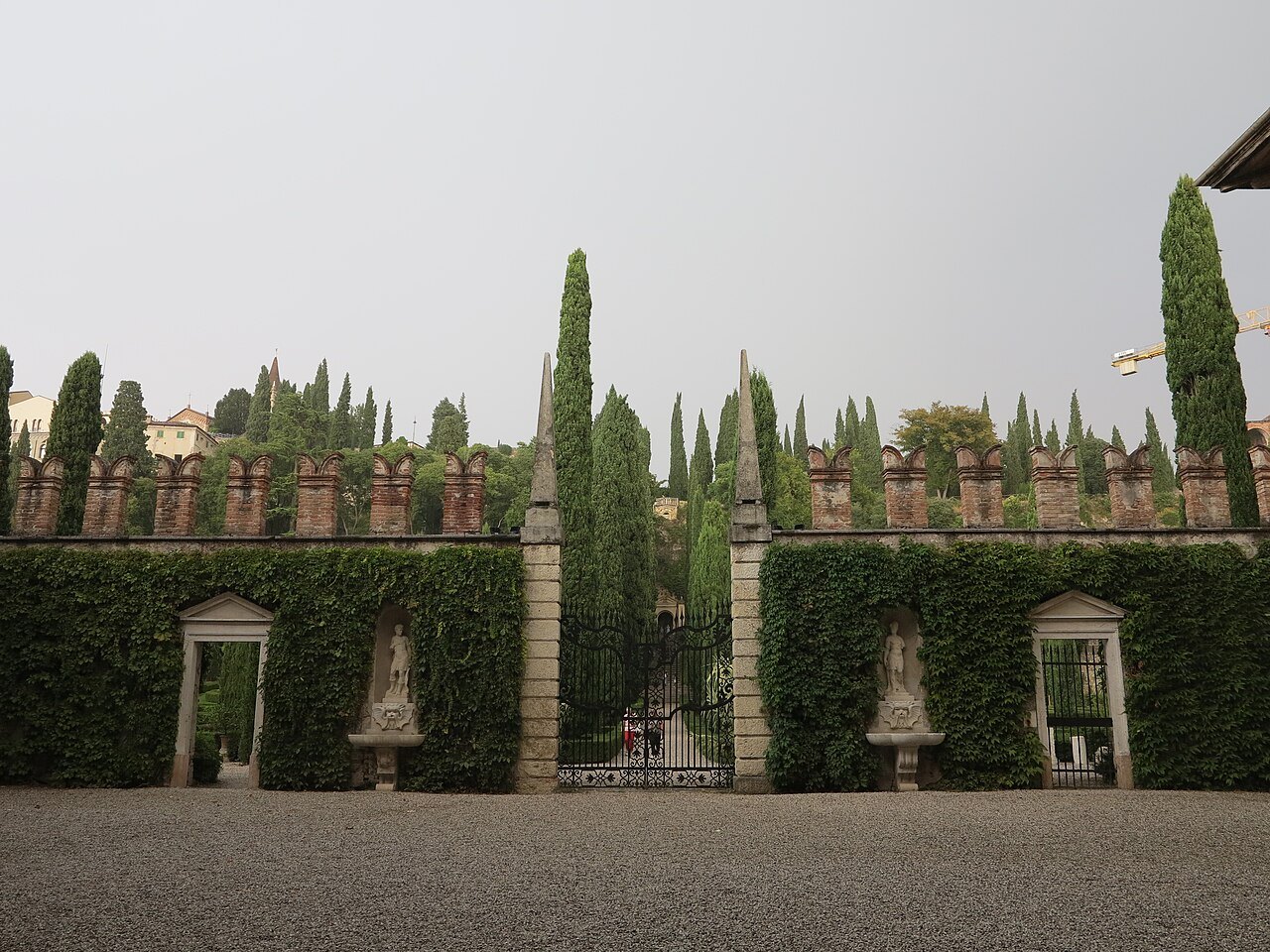
A stage above the river
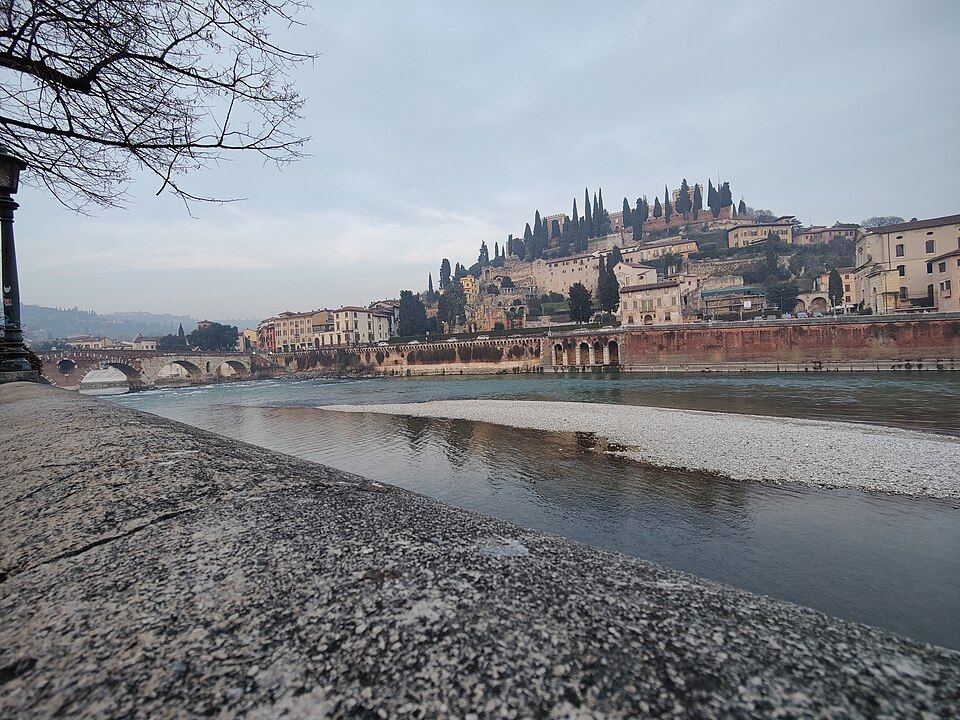
Verona's Roman theater climbs the slope of the Colle San Pietro on the left bank of the Adige, facing the old city across the water. It has nothing to do with the Arena, which was built for games and spectacle; this was a theater for plays and recitations, cut into a hillside that already did half the architect's work. The stage building and seating were raised in the late first century BC, in the age of Augustus, after engineers had first built flood walls along the river between Ponte Pietra and the Pons Postumius.
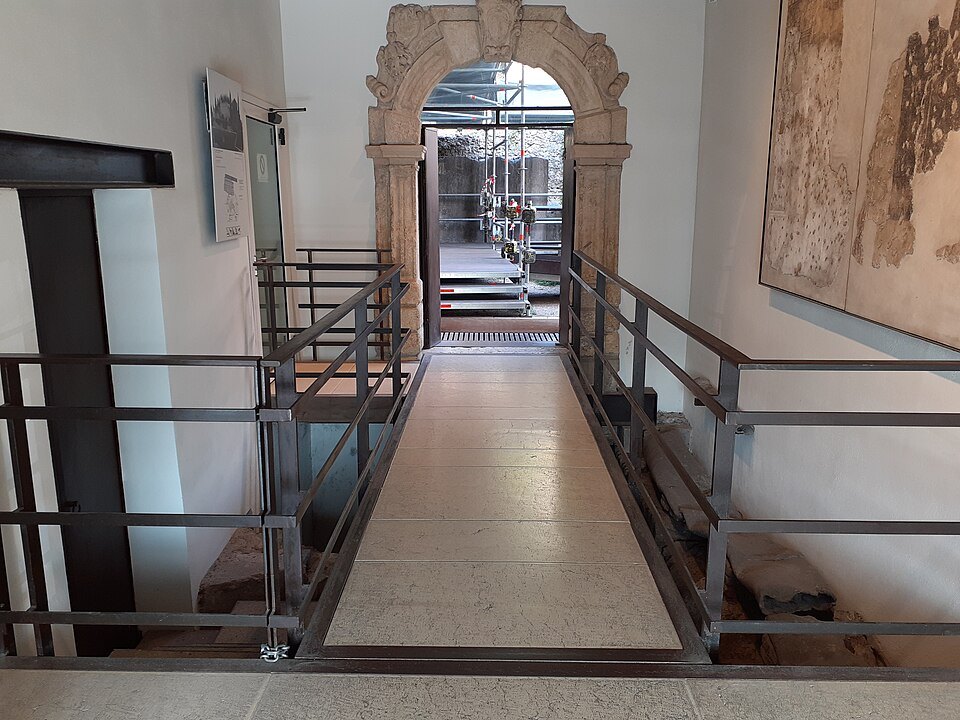
For centuries the theater simply vanished. Houses went up on top of the Roman substructures in the Middle Ages, and the ancient stairways and passages became ordinary lanes between them. A church was even built over one of the arches of the upper seating in the tenth century. It took a private antiquarian buying up the site in the nineteenth century, and then the city finishing the work into the twentieth, to bring the whole seating bank back into daylight.
Reaching the theater
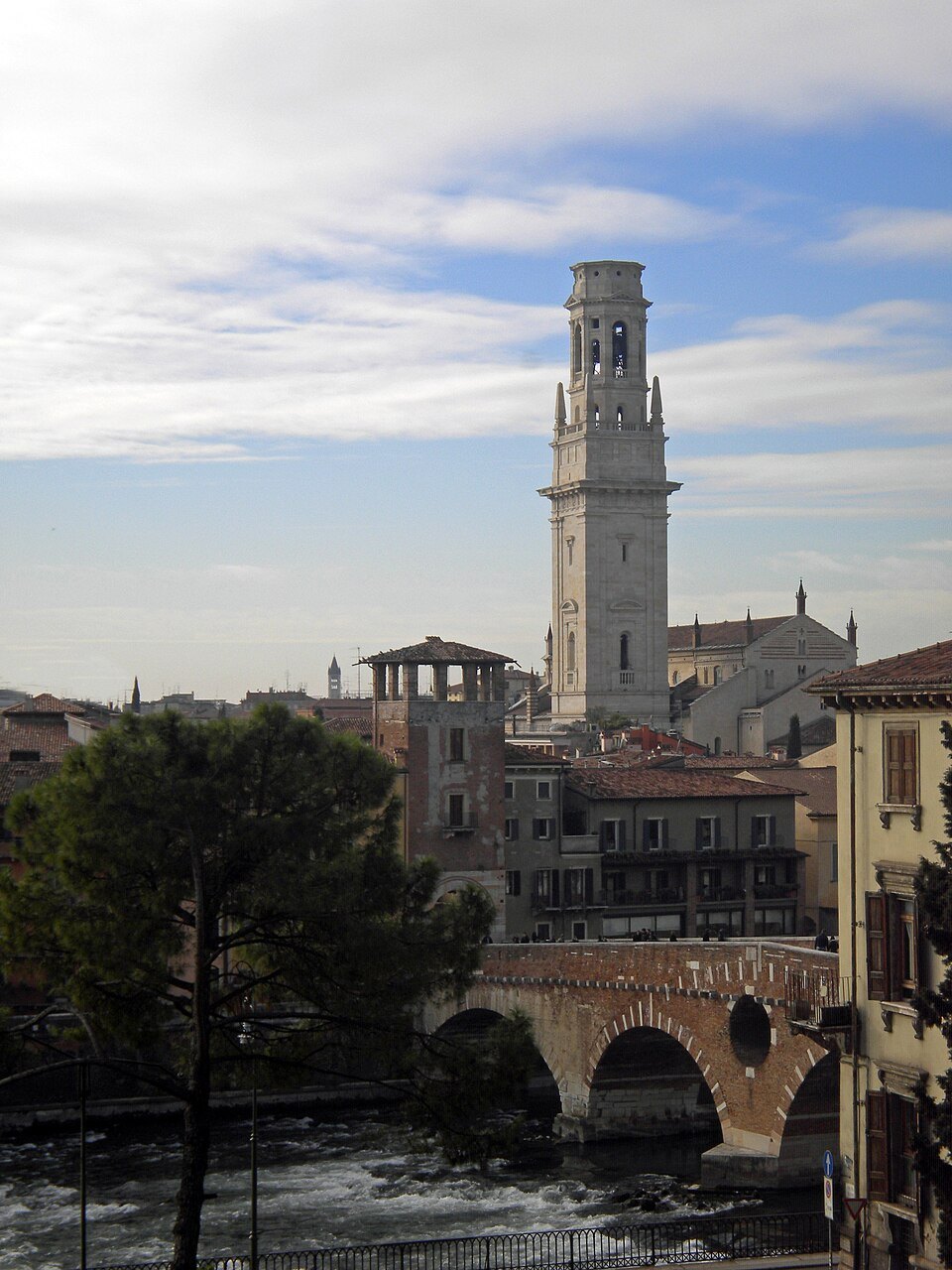
The entrance sits on the riverside road on the far bank from the historic center, reached by crossing Ponte Pietra, the rebuilt Roman bridge that frames the theater from across the water. The walk from the old town takes only a few minutes, and the approach itself is part of the experience: the bridge gives the first clear view of the seating rising against the hill before the visitor ever reaches the gate.
Inside, the visit is really one long climb rather than a single flat site. Each level looks down on the one before it: the stage ruins, then the seating, then the church that sits oddly among the upper rows, and finally the terrace of the museum higher still. Wear shoes with some grip, since the stone steps are steep and often uneven, and allow roughly ninety minutes to take the whole sequence at an unhurried pace.
What survives on the ground
At the base of the hill are the tuff-block walls of the stage building, about seventy-one meters across in its original form, where traces of the mechanism that once worked the stage curtain can still be made out. The seating above spanned roughly a hundred and five meters at its widest, climbing in terraces that originally rose toward a temple on the hilltop. Much of what is visible today was recovered only in the early twentieth century, after decades of clearing houses off the slope.
One curious survivor from that recovery is a sphinx assembled by the nineteenth-century excavator Andrea Monga out of fragments from several different sphinxes found on the site. It stands as a small, honest reminder that putting a Roman theater back together was partly reconstruction and partly educated guesswork. Climbing through the seating, the old passages and stairways that were once simply back lanes for medieval houses still thread between the rows, and the partly rebuilt arches of the upper galleries show how much of the climb is original stone and how much is later repair.
The church in the seats
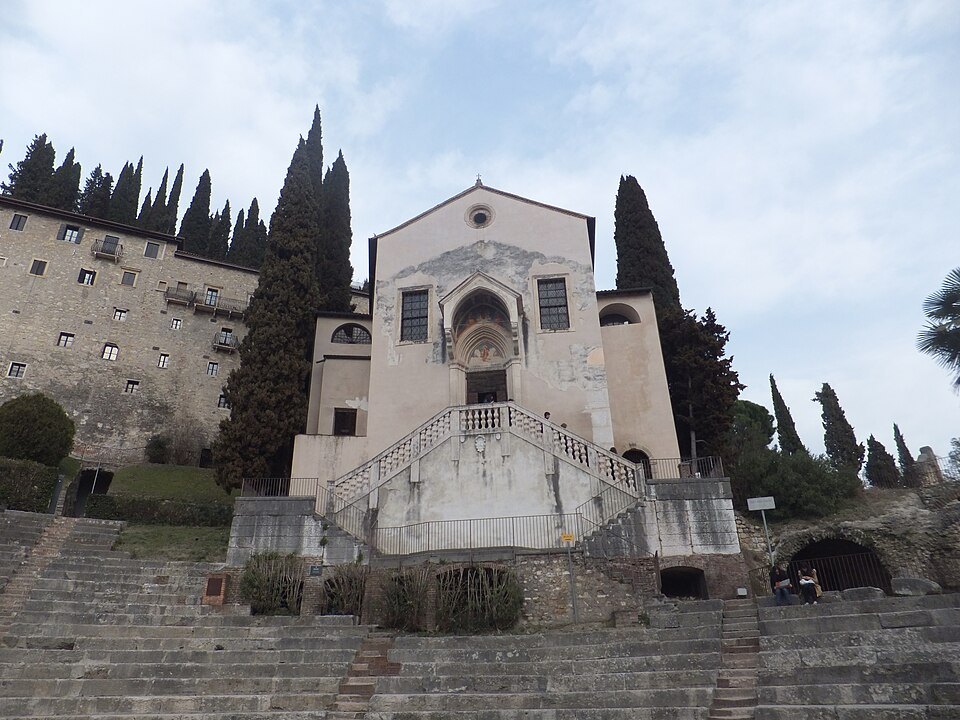
Partway up the seating stands the church of Santi Siro e Libera, founded in the early tenth century and later given to a Benedictine monastery across the river. It sits directly on Roman substructures, which is why it appears to float above the ruins rather than stand beside them. The building was remodeled in Gothic style in the fourteenth century and reworked again from the early seventeenth, with a two-branched staircase added around the turn of the eighteenth century to give it a proper approach from below.
Inside are carved wooden choir stalls made by German craftsmen in the early eighteenth century and the tomb of the painter Giambettino Cignaroli. The church is easy to treat as a mere waypoint on the climb to the museum, but it rewards a few minutes on its own, if only because so little else in Verona shows so plainly how one era simply built on top of another without clearing away what came before.
The climb to the museum
At the top, the former convent of San Girolamo now houses the Archaeological Museum, set up in the former Gesuati friars' house in the 1920s. Its small rooms, including former monastic cells, hold sculpture, inscriptions, altars, bronzes, glass, terracotta lamps and pottery recovered from Roman Verona. The adjoining convent church, built in 1432, has a floor and walls now covered in Roman mosaics, among them a third-century depiction of Bacchus with his panther and scenes of gladiators fighting with their names inscribed beside them.
The real payoff, though, is the terrace outside. Roman stonework is laid out along its length, and the view takes in Ponte Pietra, the cathedral quarter and the bend of the Adige below the old city in one sweep. From here, stairs or the funicular continue further up to Castel San Pietro for the widest view over Verona as a whole, and the broader context for everything seen on the climb is covered in the overview of Roman Verona.
Evenings under the hill
The theater has never entirely stopped being a theater. Since 1948 it has hosted the Estate Teatrale Veronese, a summer season best known for its Shakespeare productions, performed on a modern stage installed directly over the ancient one. Other concerts and performances share the same summer stage through the season, turning the ruins into a working venue again for a few months each year.
This changes how the site looks by day: visitors touring the theater in summer will find the modern stage and its equipment sitting over the ancient stonework, altering the usual sightlines across the seating. The performances themselves are separate evening events, ticketed apart from the daytime visit, so anyone wanting a night under the hill should check the season calendar and book ahead. An evening performance here means watching the stage from the old stone seats as the city's lights come up across the river behind it.
Planning the visit
The museum itself is not wheelchair accessible, though a ramp does give access to the theater seating for visitors who cannot manage the steps. The civic museums close for one day each week, so it is worth checking the current schedule before setting out, particularly if the Roman theater is the only stop planned on that side of the river. Combining it with the walk across Ponte Pietra and up to Castel San Pietro makes a natural half-day loop on foot.
Anyone building a longer day around Roman Verona might pair the theater with the amphitheater on the other side of the center, or simply treat the climb from river to hilltop terrace as one continuous walk. Either way, the theater rewards patience: it is a site best taken slowly, floor by floor, rather than rushed in a single pass.
Read next
- The Opera SeasonWhat an evening of opera in the Arena is like, from the gates to the last actSeats, dress, bags, candles, rain delays and the walk out: how an opera night inside Verona's Roman amphitheater actually unfolds, step by step.Read
- Ponte PietraHow Ponte Pietra was pulled out of the Adige stone by stone and put back togetherHow Verona's oldest bridge was blown up in 1945 and rebuilt from its own recovered stones.Read
- Castel San PietroWhere to stand for the view of the Adige loop in the morning and at sunsetThe terrace below Castel San Pietro looks across the Adige at the whole old town. How to get up, what you see, and how the light changes morning to dusk.Read