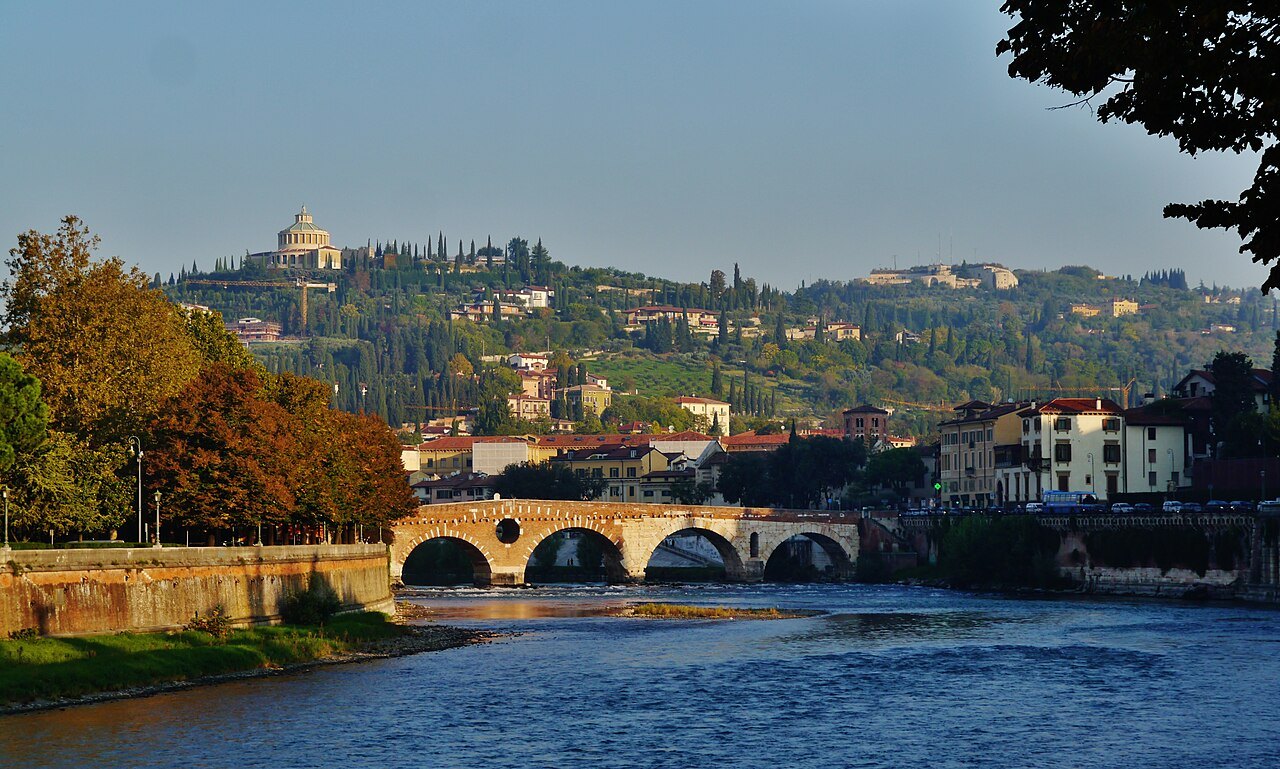
A convent above the ruins
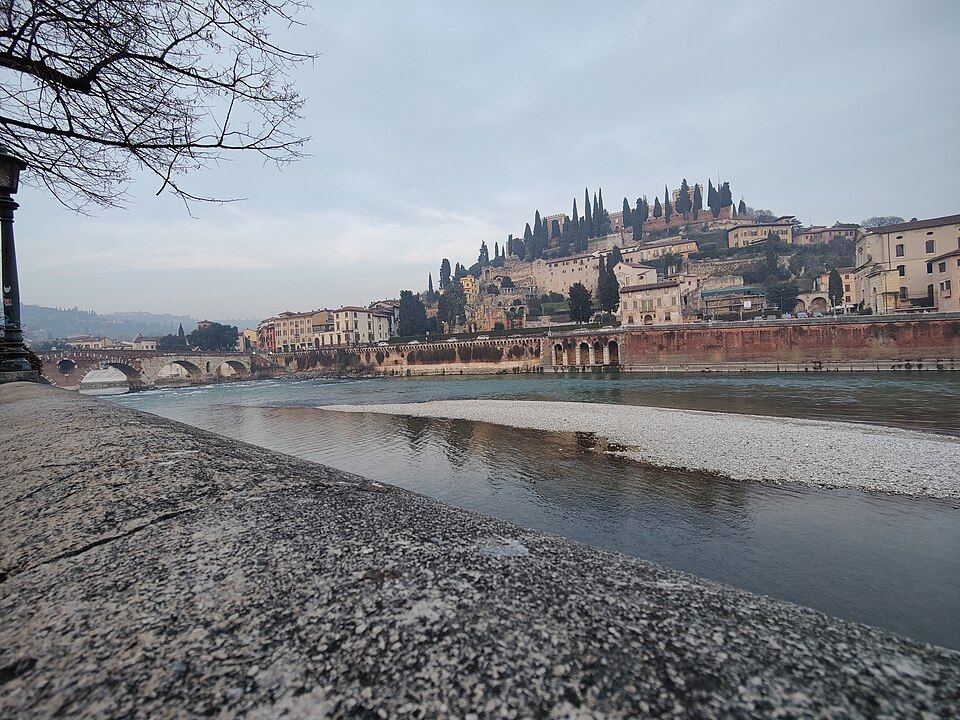
Verona's Roman theater climbs the slope of the Colle San Pietro on the left bank of the Adige, facing the old city across the water. It is not the Arena: the Arena was built for games, this was built for plays and recitations, set into a natural hillside rather than standing free. The theater and the Archaeological Museum above it are visited as one site, and the climb between them is as much the point as either building on its own.
Each level looks down on the one before it. From the stage ruins the eye climbs to the seating, then to the church wedged into the upper rows, and finally to the museum terrace, where Ponte Pietra and the roofs of the city spread out below. The museum occupies the former convent of San Girolamo, a late fifteenth-century house built for the Gesuati friars, and its rooms, down to the small cells where the friars once slept, now hold centuries of Roman Verona.
The church inside the seating
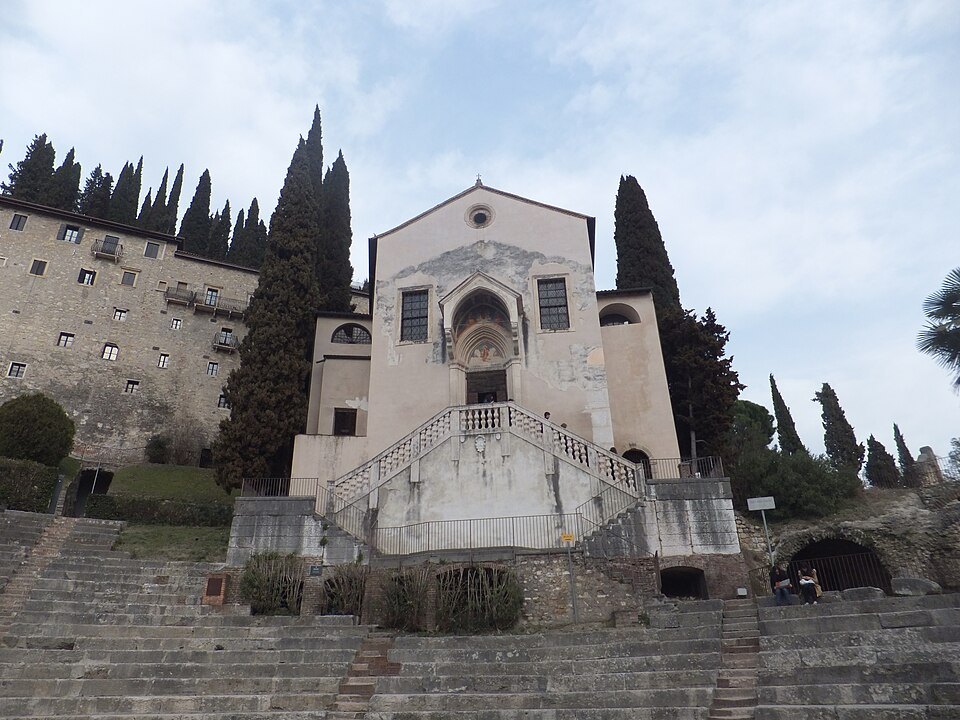
Partway up the ancient seating stands the church of Santi Siro e Libera, founded in the tenth century and later given to a Benedictine monastery. It sits directly on Roman substructures, which is why it appears to float above the ruins rather than stand beside them, wedged into the curve of the old auditorium. A two-branched staircase, added in the early eighteenth century, still carries visitors up to its front door.
The church was remodeled in Gothic style in the fourteenth century, keeping its original portal and porch, and altered again in the early seventeenth century under a lay confraternity. Inside, wooden choir stalls carved by German craftsmen in the early eighteenth century line the interior, and the painter Giambettino Cignaroli is buried there. Visitors climbing toward the museum pass directly by its staircase, and it is worth the short stop even for those not continuing further up.
Inside the museum
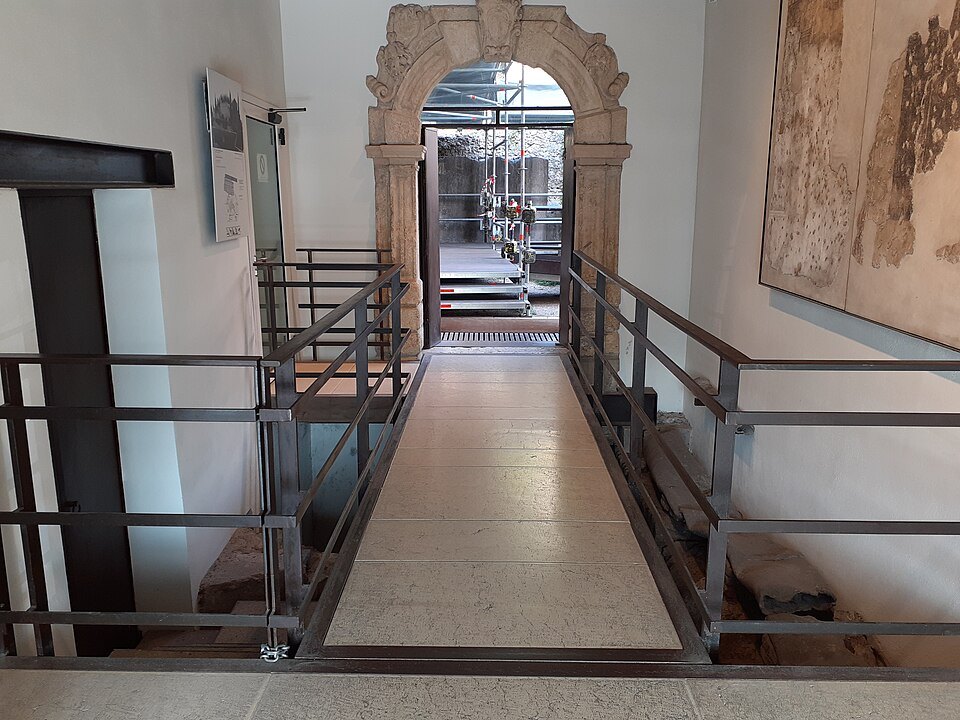
The Archaeological Museum was established in the former convent in the 1920s, and its collection draws entirely on Roman Verona: sculpture, inscriptions, altars, bronzes, glass, terracotta lamps and pottery recovered from the city and its surroundings. The rooms are modest in scale, following the old monastic plan rather than any grand museum layout, which keeps the objects close and the visit unhurried.
Among the sculpture is a sphinx assembled by Andrea Monga, the nineteenth-century merchant and antiquarian who began excavating the theater, out of fragments from several different sphinxes found during his digs. It stands as a small, frank reminder of how early excavators pieced together what they found, sometimes combining pieces that were never meant to sit together. Labels throughout note findspots across the city, tying the collection back to streets and squares visitors may already have walked through.
The mosaics of San Girolamo
The convent's own church, San Girolamo, was built between two cloisters in the early fifteenth century and now serves as one of the museum's principal rooms. Its floor and walls carry Roman mosaics brought in from elsewhere in the city, and its ceiling, finished in the early sixteenth century, is made of eighteen painted wooden panels set above the nave.
Among the mosaics is a third-century depiction of Bacchus with his panther, found at Piazza Bra, where the Arena now stands. Nearby are mosaic scenes of gladiators in combat, with the names of individual fighters written beside their figures, a detail that turns an abstract contest into a record of real men once watched by a Roman crowd. The combination of the church's own architecture and the transplanted Roman floors makes this one of the more unexpected rooms in the city.
What to look for in the theater
At the base of the site, the tuff-block walls of the stage building still show traces of the mechanism that once worked the stage curtain, a detail easy to miss without pausing to look closely at the stonework. The stage ran for some seventy-one meters and the seating stretched about a hundred and five meters across, climbing the hillside toward a temple that once stood at the top.
Climbing through the seating, the rows follow the natural slope of the hill rather than any built substructure, with old passages and stairways still threading between the terraces. Houses were built directly onto these ruins in the Middle Ages, and lanes ran along the ancient stairways for centuries before the site was cleared between 1834 and 1914. The arches of the upper galleries have been partly rebuilt, and from the top the full width of the theater, and its relationship to the river below, becomes clear for the first time.
The museum terrace above is the payoff for the climb: Roman stonework set out along its length, and a view across Ponte Pietra, the cathedral quarter and the bend of the Adige beneath the old city. It is a good spot to sit for a few minutes before heading back down, particularly for visitors planning to continue on to Castel San Pietro afterward.
Summer on the old stage
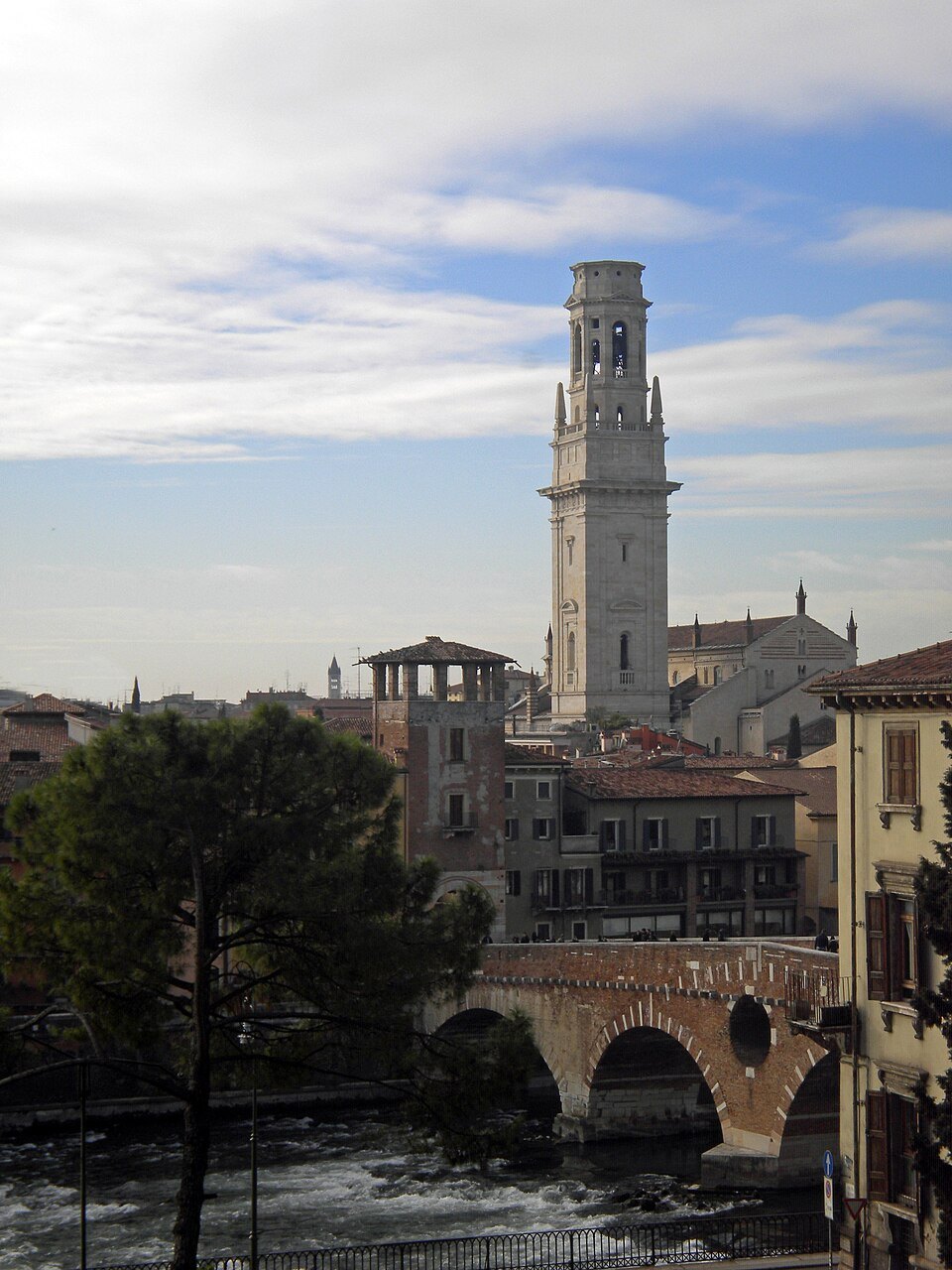
The theater is not simply a ruin to be viewed from above; it is still used for performance. The Estate Teatrale Veronese, a summer season best known for its Shakespeare productions, has been staged here every year since 1948, with other concerts and plays sharing the same modern stage. That stage sits directly over the ancient one, changing how the ruins look and read by day during the season.
Performances are separate evening events from the daytime visit to the ruins and museum, so visitors interested in seeing a play or concert should check the season calendar and book ahead through the official channels, as seats and dates vary year to year. An evening performance here means watching from the old hillside as the city lights come up across the river, a different experience from the daytime climb through stone and mosaic. Anyone weighing an evening at the theater against opera at the Arena should treat them as two distinct kinds of evening out.
Planning the visit
Allow about ninety minutes to cover the theater and museum together, more if the mosaics or the church draw a longer look. The steps are steep and uneven in places, so shoes with some grip are worth having; the museum itself is not wheelchair accessible, though a ramp gives access to the theater seating below. Civic museums in Verona close one day a week, so it is worth checking the current schedule before setting out.
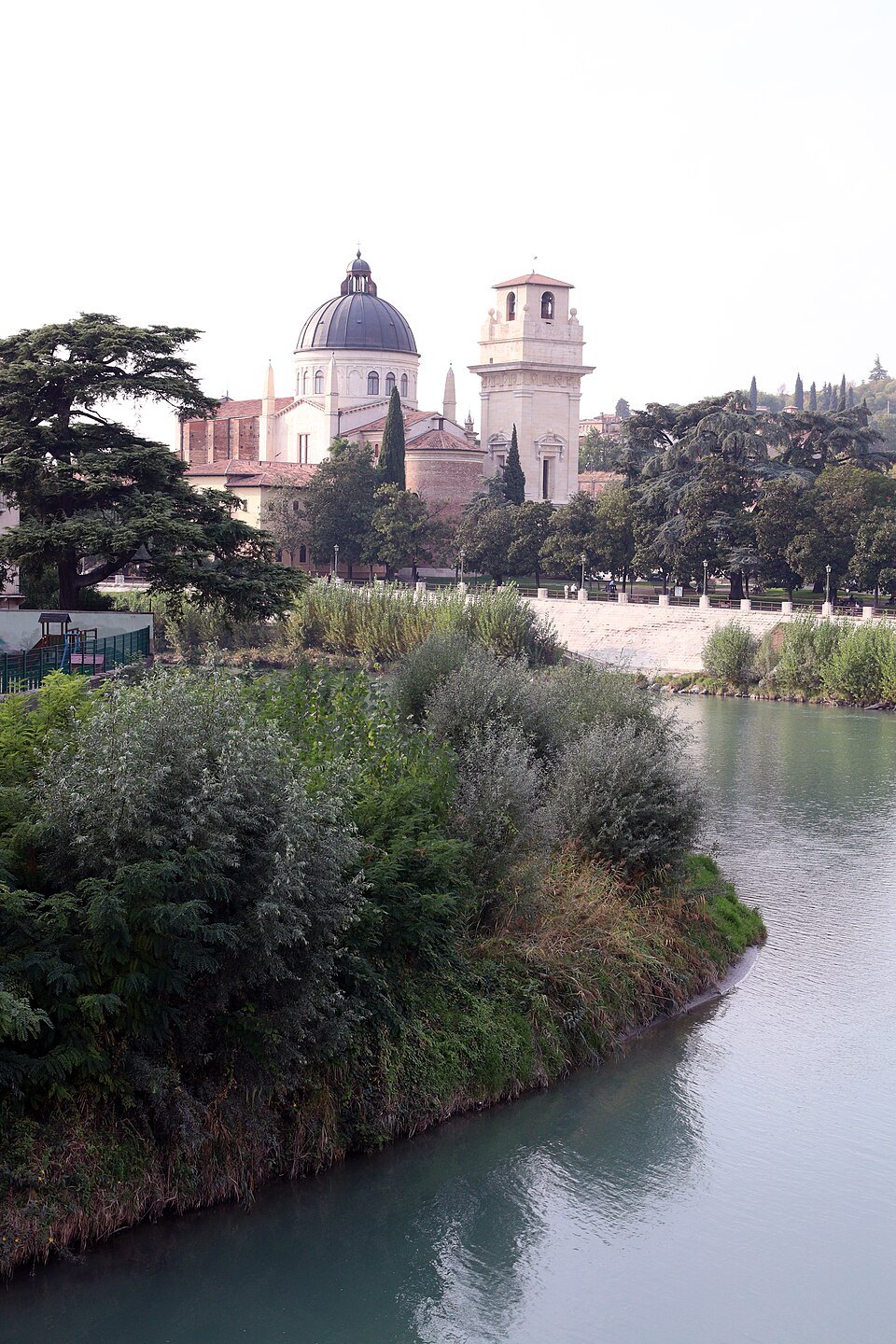
The entrance sits on the riverside road reached by crossing Ponte Pietra from the old city, a short walk from Piazza Erbe and the historic center. The funicular that serves Castel San Pietro has an intermediate stop at the museum, offering an alternative to the stairs on the way up or down. For the fuller picture of how this theater fits into the ancient city as a whole, see the overview of Roman Verona.
Read next
- The Roman TheatreGoing to a summer play or concert in the Roman Theater above the riverHow to visit Verona's Roman theater by day and return for a summer play or concert on the modern stage above it.Read
- Ponte PietraHow Ponte Pietra was pulled out of the Adige stone by stone and put back togetherHow Verona's oldest bridge was blown up in 1945 and rebuilt from its own recovered stones.Read
- Castel San PietroWhere to stand for the view of the Adige loop in the morning and at sunsetThe terrace below Castel San Pietro looks across the Adige at the whole old town. How to get up, what you see, and how the light changes morning to dusk.Read